The Speaker of the Australian parliament, Bronwyn Bishop, finds herself in more trouble over expenses claimed for charter helicopter flights, and other overseas expenses.
It now comes to light the Ms Bishop has chartered two helicopter flights to attend Liberal Party fundraisers, knowing full well that this is well outside the guidelines for tax-payer funded expenses.
But Ms Bishop states that she has paid back those expenses, so that makes it alright. No, Ms Bishop, it does notmake it OK! What about willingly defrauding the Commonwealth, by making claims for payment to which you are not entitled? That’s like saying if a person gives back the money after they have robbed a bank, there is no offence. The police would not see it that way!
There is only one thing that should happen here. Ms Bishop should resign as Speaker, and resign from the parliament. If she cant or wont, then the Prime Minister must remove her from the Speakers role. But as Ms Bishop still can’t she that she has done anything wrong, and has this “don’t you know who I am attitude,” so believes that there is no need for her to go. She has been caught red-handed with her nose wallowing in the public trough!
In truth, she is not likely to do either, and the Prime Minister is also not likely to sack her as Speaker as he lacks the guts to do so. As Speaker she has not done a good job. Rather than show independence and impartiality that a Speaker should, she has shown a blatant and distinct bias toward the Liberal Party.
The Australian public deserve better than this, but politicians continue to demonstrate that they are there for themselves, and for what they can gouge from the public purse in terms of allowances, junkets and perks, rather than giving the Australian public a parliament which they have a right to deserve.
As a non-minister, Ms Bishop is number 7 in the list of the Top Ten Liberal Party spenders.
A full inquiry into Ms Bishop’s public funded expenses is long overdue.
An interesting move on the part of the current Federal Government, essentially cementing Tony Abbott’s clear opposition to the ‘eyesores’ that are wind farms. The directive to the Clean Energy Finance Corporation from its shareholders – the Treasurer and the Minister for Finance – essentially denies the possibility for finance for any new wind farms, and speaks volumes about the opinion of the emerging renewable energy technologies held by the current Federal Government.
Such a shame that ideology has again appeared to trump any real action on climate change, the embracing of new and renewable forms of energy security, or, dare I say, anything that might diminish the power of those individuals and corporations who are heavily invested in the resources sector.
Now apparently not satisfied with banning the Clean Energy Finance Corporation from investing in wind farms, the current Federal Government has now extended that ban to solar energy as well.
If this is direct action in response to climate change, then God help the Commonwealth of Australia!
There are many reasons why Greece finds itself in a precarious financial position, one of which is its poor record at collecting tax. But is it really true that in 2010 the government collected only 10% of the tax it was due, asks David Rhodes.
A graphic published by the Washington Post on Sunday suggested that 89.5% of the country’s tax receipts remained uncollected in 2010.
In Germany the corresponding figure was just 2.3%, the newspaper’s Wonkblog reported.
This left many social media users claiming that the root cause of Greece’s problems is that the vast majority of its taxpayers that year simply didn’t pay their taxes.
But that is a mistake.
The widely misinterpreted figure of 89.5% comes from an OECD report which actually relates to historic tax debts – not tax that Greece was due to collect from its citizens in 2010.
The reason the figure is so big, according to tax blogger Richard Murphy, has to do with the way the Greeks have been keeping their accounts.
“Sensible tax authorities take a view on this issue every year and say, ‘We’ll write off a proportion of our tax debts that we know we are never going to recover.’ Greece, though, is recording this extraordinary large number because they haven’t bothered to write off their old debts. This is a poor indictment of the way every thing in Greece is done, “Let’s do it tomorrow”, but when tomorrow comes it’s all too hard
“This is an accounting anomaly.”
Greece does indeed have a “massive” tax collection problem, Murphy says, but it certainly hasn’t been failing to collect 89.5% of taxes owed in any one year.
So how much tax did the Greeks collect in 2010?
In fact, no reliable figure seems to be available – at least, not as a proportion of the overall amount of tax that should have been collected.
What we do know is that, according to the OECD, in 2010 the Greek government collected 70.3bn euros ($93.1bn), or 34% of the country’s total gross domestic product (GDP) – slightly below the EU average of 38.5%.
In part this is because Greece has a large “shadow economy” – earning money without paying income tax, or perhaps avoiding paying VAT.
You might assume that businesses in the construction industry or tourism might be the main culprits when it comes to tax evasion, but a report published earlier this year by a group of US academics found that the primary tax-evading industries in Greece included medicine, law, engineering, and the media.
A study quoted by the IMF suggests that between 1999 and 2010 the shadow economy in Greece made up 27% of the country’s GDP – compared to an average of 20.2% in other rich countries.
That means that nearly one in four euros that potentially could be taxed in the country’s economy simply weren’t declared to the authorities, and the Greek government missed out on approximately 28bn euros ($31bn) of additional revenue each year.
But Richard Murphy, who has studied the size of the shadow economy in Europe, says Greece is not as bad as some of its neighbours.
“Greece has a problem but Bulgaria, and Romania are worst. Italy is up there alongside it. But it is an issue which has clearly contributed to the current Greek crisis,” he says.
There is also evidence to suggest that the Greeks aren’t very good at collecting taxes even outside the shadow economy.
In 2011, an OECD survey ranked Greece as one of the worst rich countries in the world at collecting VAT receipts and social security payments.
When the OECD had tried to do similar surveys between 2005 and 2009 they found that the data was simply “missing”.
As part of any deal that will see Greece remain inside the Eurozone its international creditors are demanding that the Syriza government enacts a range of tax reforms.
This includes simplifying the VAT system, closing tax loopholes and creating an independent tax collection agency free from government interference.
But Greece’s creditors have made similar demands before.
Home of the “Little Envelope”
Here’s a little envelope for you! Nudge-nudge, wink-wink!
Here’s a thing that the Greeks are good at!
As Greece is a country facing bankruptcy, the Greek citizens find they can no longer afford the expensive and customary cash-filled “fakelaki” (φακελάκι) or “little envelope” (bribe) paid to public sector workers.
Greece, who is dependent on international aid to remain solvent, has always had rampant corruption that has hampered efforts to raise taxes and reform its poor economy.
The health sector and the tax authorities topped the country’s corruption rankings for 2011 public sector bribes. While the economic crisis has not reduced corruption itself, it has reduced the price of corruption that Greeks can afford to pay.
Greeks have suffered steep cuts to pensions and wages as part of austerity measures now in place.
Greece will need to revamp its tax system and improve its public sector and a long list of other reforms to improve it’s solvency.
The struggle (against corruption) is not easy but a long, difficult and painful process which demands persistent political pressure to it, but as the Greeks are reluctant to comply with the EU imposed austerity measures, so too will they be reluctant to go without the fakelaki. But they are going to have to want to stop it, and of course fakelaki is “something for nothing”, and is so widespread, so it is most likely that nothing will be done to stop it.
Greece will try to bring more to the table in negotiations for a debt deal and Prime Minister Alexis Tsipras will probably speak with European Commission chief Jean-Claude Juncker by phone on Saturday to try to end the deadlock, a Greek minister said.
Time is fast running out for Greece to secure a cash-for-reforms deal with its international creditors to avoid a default at the end of June that could see Greece removed from the euro zone. Depositors are pulling billions out of Greek banks, leading the government to consider the imposition of capital controls to stop the flow of currency out of the country.
It remains uncertain how far Greece’s leftist government, which won a January election vowing to pull its people out of austerity, is willing to bend in order to secure an agreement or what kind of additional offers it could make.
A young woman walks past a graffiti called ‘Death of Euro’ by French street artist Goin, in central Athens on Friday. Photo: Aris Messinis
While Greece has dug its heels over demands for pension cuts and tax rises, its leaders have continued to sound positive ahead of an emergency euro zone summit on Monday.
“We will try to supplement our proposal so that we get closer to a solution,” State Minister Alekos Flabouraris told Greek Mega television in a morning news show.
“We are not going there with the old proposal. Some work is being done to see where we can converge, so that we achieve a mutually beneficial solution.”
The European Central Bank has kept Greek lenders afloat and on Friday raised the ceiling on so-called emergency liquidity assistance, which the banks rely on to keep their doors open, by 1.8 billion euros.
What Greece can bring to the discussions to assist them to meet their fiscal responsibilities remains uncertain. It seems unlikely that Greece will leave the Euro zone, as this may lead to a knock-on effect to other struggling Euro economies.
If the latest information onJetstar NZ is true, full service carriers might start sending teams from all over the world to study and if possible replicate the benefits that the Qantas budget subsidiary is unintentionally delivering for Air New Zealand.
Consider the fundamentals behind this story:
Jetstar NZ can’t give its seats away at around $NZ 100 for a short one way flight, leaving Air NZ to charge up to $340 for the same trip.
Yet on the face of it, New Zealand, comprising two islands, and one mobile and prosperous society, could not have been better set up to suit the advent of high frequency short distance low cost flying.
It is the last place on earth that a full service carrier could successfully compete with a low fare carrier, especially where some fares may be three times as high on the former as on the latter.
It is the last place where a low cost carrier could fail. But while we can’t measure the monetary extent to which Jetstar NZ is a failure, its Head of New Zealand, Grant Kerr, says in the interview that at best on some major routes he has only 24 per cent of the market.
What this means is that Jetstar NZ has mopped up the lowest paying quarter of the passenger uplift on those routes, thus lifting the average fare being collected by Air NZ for the other three quarters of sector in terms of head count.
Air NZ has every reason to be grateful to Qantas for the manner in which it is conducting its business in New Zealand, a golden windfall which it must wish will continue indefinitely.
The article suggests that unpunctuality is the major reason business travelers avoid the huge savings to be made flying Jetstar NZ. The incident in which a check in clerk jumped the counter to punch out a passenger, a radio station shock jock, in 2010 seems to have faded with time.
However the real lesson from Jetstar NZ’s admitted lack of traction with higher yielding passengers may be that the unintended value of low cost competitors is to lift average yields for those carriers that have developed a strong brand following among customers who will not shift their support just because of price.
If this lesson is applicable in Australia it means that over time Qantas and Virgin Australia would be better off letting someone else compete in the low fare domestic market rather than their self owned or controlled budget brands of Jetstar and Tigerair respectively, and deal with that external competition from the position of strength that comes from keeping the higher paying customers for themselves.
At the moment in NZ, everything Jetstar does can be seen as directly benefiting Air New Zealand.
IF the Abbott government thought that removing $80 billion from state health and education budgets over the next 10 years would prompt the states to mildly request an increase in the rate and coverage of the GST, it was mistaken.
That would have been preferable, of course, from the federal Coalition’s point of view. Because, under the proposed plan, Mr Hockey would get to keep the $80 billion for federal coffers and then look like a white knight, riding to the rescue of the struggling states when they begged for a higher GST to be imposed on the entire Australian population.
There are obvious problems with that, however, from the states’ point of view.
For a start, the cuts are more or less immediate, while any boost from extra GST funds would take years to appear. Trying to get re-elected when they’ve had a massive budget cut foisted on them would be challenging for the state governments, to say the least.
Not only that, but the state governments would also then be cast as the villains behind the push for a GST increase – another bad look.
There is nothing inherently wrong with the idea of raising the GST or with broadening its application to cover some goods and services – such as food – that are currently exempt.
But any changes in the GST should occur in the context of broad tax reform. They should not be enacted in isolation and they should certainly not be enacted as the result of what many will see as a piece of bullying by the federal Coalition.
Prime Minister Abbott appears to believe that he can afford to make enemies in his first budget, since he has the rest of his term to make up lost ground in the popularity stakes.
This too, may prove to be a miscalculation.
The states’ mostly Liberal premiers and chief ministers appear unanimous in their condemnation of the federal government’s tactic, which they insist contradicts everything they were led to believe before the budget.
NSW Premier Mike Baird, who has described the cuts as ‘‘a kick in the guts’’, will host his interstate counterparts at a weekend meeting to discuss a response. Mr Abbott has already hinted at some form of compromise, but it isn’t yet clear what this might be.
Meanwhile, the widespread backlash against a number of aspects of the budget may have emboldened the government’s parliamentary opponents, some of whom have sworn to block particular measures in the senate.
Mr Abbott has also stated that if the Senate (which his Party does not control) do not pass the budget (or parts thereof) then he will petition the Governor-General for a double dissolution of parliament. This may prove to be the biggest miscalculation he could make. Since coming to power, Mr Abbott has made few friends on either side of the House, with continued gaffes, unfortunate comment and sexist attitudes. Mr Abbott cannot afford a double dissolution. Such an action may well end his Prime Ministership and would certainly would cost some of his Liberal Party colleagues their places in Parliament!
Such a move would be surprising if even as bold a punter as the Prime Minister would risk a gambit with such an uncertain outcome.
The coming budget will reveal the Prime Minister as a barefaced liar.
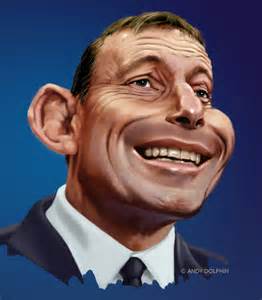
Tony Abbott; Cartoon by Andrew Dolphin
“I trust everyone listened to what Joe Hockey said last week and again this week,” he told an SBS interviewer on election eve last September. “No cuts to education, no cuts to health, no change to pensions, no change to the GST and no cuts to the ABC or SBS.”
Of that lot, it’s likely only the GST will be untouched. The ABC will be hit ruthlessly, with tens of millions of dollars slashed in what the government’s weasel spinners will try to sell as an “efficiency dividend”.
When I wrote here last November that “the fight for the ABC is on”, I knew the Tories would be vindictive. I had no idea they would get so viciously personal; led by Mr Murdoch’s myrmidons, of course. Just recently, News Corpse writers have likened the ABC managing director, Mark Scott, to Joseph Goebbels and Vladimir Putin. Individual journalists are frequently targeted by name. The Australian spent an entire week monstering the Media Watch presenter, Paul Barry, for some perceived offence to its editor-in-chief’s delicate sensibilities. The madder ideologues, like the mouths for hire at Melbourne’s lunar Right Institute of Public Affairs, shrill that the place should be sold off altogether.
Watch this space. The battle for the ABC is just warming up.
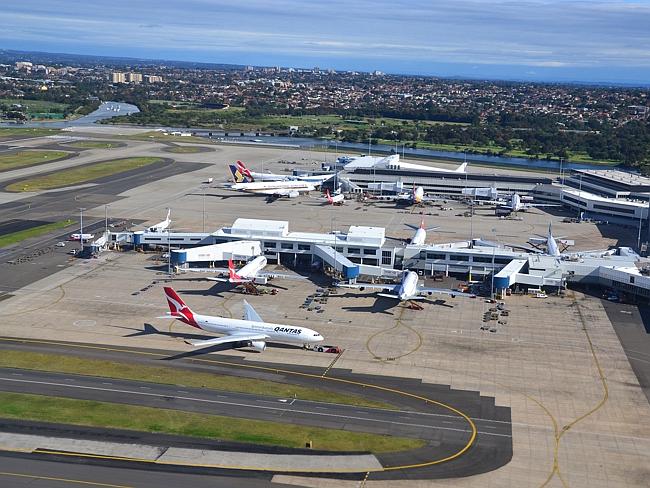
Sydney airport. Picture: newtown graffiti. Source: Flickr
RESULTS are in, and it’s not looking great for Australian airports. The Australian Competition and Consumer Commission (ACCC) has released its annual Airport Monitoring Report for 2012-13 and found Australian airports are poor when it comes to passenger service.
Reporting annually on the performance of Brisbane, Melbourne, Perth, and Sydney airports it found more investment is needed to deal with congestion, passenger growth and service levels.
Sydney airport came in worst for service. Picture: Source: Flickr
“The 2012-13 report shows that all monitored airports continued to be profitable, however, for the second year in a row, only one airport achieved a quality of service rating higher than ‘satisfactory’ while there were continued signs of congestion”, said ACCC Chairman Rod Sims.
“Brisbane was the only airport to improve its quality of service, while Sydney Airport’s overall quality of service was again rated the lowest among monitored airports”, he said.
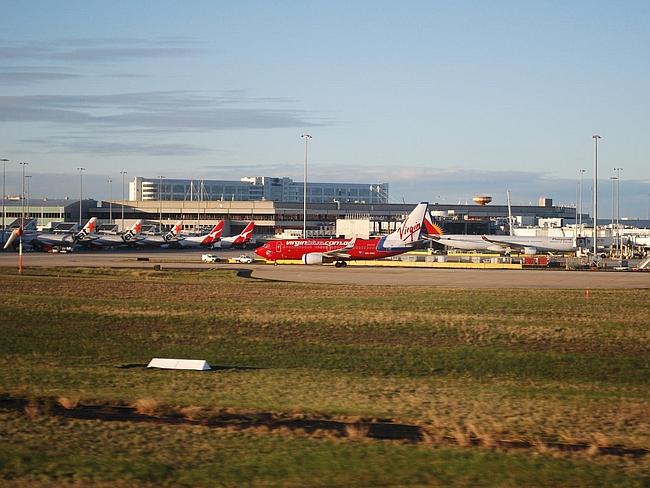
Brisbane airport came out tops. Picture: PhillipC. Source: Flickr
Challenges
Brisbane airport came out tops. Picture: PhillipC. Source: Flickr
However when it comes to airport car parks, all airports managed to perform in terms of revenue. “All airports also reported higher car parking revenues in 2012-13’ Mr Sims said.
Sydney took first place for most expensive at $56 for eight hours, $32 for three hours and $16 for one hour.
In comparison, short term parking at Perth Airport is $22 for eight hours, $23 for three hours and $6 for one hour.
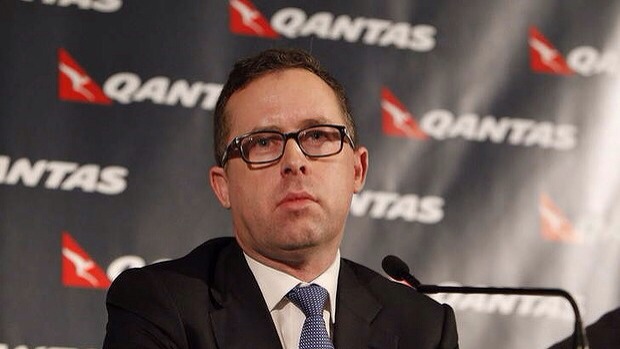
The Coalition’s partial repeal of the QANTAS Sale Act has passed the Australian parliament’s lower house, as the Senate launched a public inquiry into the airline’s finances. MPs voted 83-53 to support the government’s bill, with independent Victorian MP Cathy McGowan siding with the Coalition. At the same time, the Senate with a Labour/Greens majority will vote down the bill, launched an inquiry into QANTAS’ finances and what measures could be used to support the company, including renationalising it or guaranteeing its debts.
The debate came after Joe Hockey denied pressuring QANTAS to reverse an earlier position on the carbon tax during a phone call with chief executive Alan Joyce yesterday. Greens senator Lee Rhiannon said she wanted Mr Joyce called to give evidence to the new inquiry and for Qantas’s books to be opened up to examination. “Clearly something has gone wrong with QANTAS — it is vital that we use the Senate inquiry to understand what has happened,” Senator Rhiannon said.
In the House of Representatives, Bill Shorten labelled the Coalition a bunch of “cheese-eating surrender monkeys”, a derogatory term for the French. “It’s taken 94 years to build QANTAS; it’s taken the Abbott government 94 minutes to tear QANTAS down. “Shame,” the Opposition Leader said after the vote.
The government’s bill would open the door for a structural separation of QANTAS’ domestic and international arms, repealing the 49 per cent cap on foreign investment in QANTAS and removing the barrier to foreign airlines buying more than 35 per cent of the company. Deputy Prime Minister Warren Truss told parliament QANTAS’ foreign ownership limits were “regulatory handcuffs” that must be removed if QANTAS is to remain in Australia and “grow”.
“Good government is not about playing favourites or being a banker for major companies when times are tough,” Mr Truss said. In my opinion, good business is not having to come to government expecting bail-outs or debt guarantees. Good business is making a profit while working under the regulatory framework in place at any time.
Mr Shorten said even if the bill passed the Senate, it would take years for QANTAS to overcome new regulatory processes that would allow it to raise sufficient foreign capital. In real terms, the bill has little to no chance of passing the senate.
Tasmanian MP Andrew Wilkie voted with the Labor Party, while Clive Palmer and Greens deputy leader Adam Bandt were not present for the vote. Again on an issue as important as this, key parliamentarians are absent from the house.
Later, in question time, the government attacked Labor for suggesting Qantas’s world-famous safety record could be compromised if maintenance jobs were sent offshore. Mr Abbott described the suggestion as “irresponsible’’ and “reckless’’. “The leader of the opposition is trying to suggest that without the restrictions that exist under the Qantas Sale Act an airline can’t be safe,’’ he said.
Independent Bob Katter also questioned the impact on safety of overseas maintenance. “Surely, this must be one whose maintenance is based in Australia, not one whose market advantage comes from a cut-rate cheap jack overseas-based workforce?,’’ he asked Industry Minister Ian Macfarlane. The minister said QANTAS wasn’t the only airline to have a safe flying record. There are other airlines flying in Australia dont necessarily have their maintenance carried out in Australia. Does that make those airlines less safe?.
The Treasurer earlier revealed he yesterday spoke with Mr Joyce about the company’s apparent change of mind on the impact of the carbon tax on the airline’s profitability. QANTAS yesterday released a statement saying the carbon tax was “among the significant challenges” faced by the airline, apparently contradicting its earlier position that its “current issues are not related to carbon pricing”. Then Mr Joyce dramatically reversed his rhetoric on the company’s wellbeing, saying the airline was “extremely healthy”, just four months after warning of its possible demise. QANTAS yesterday said it had not been able to recover the carbon cost by increasing fares because of intense competition, while revealing it had cost $59 million in the past six months on top of $106m last financial year. “It is absolutely one of the factors that’s impacting the airline,” Mr Joyce said.
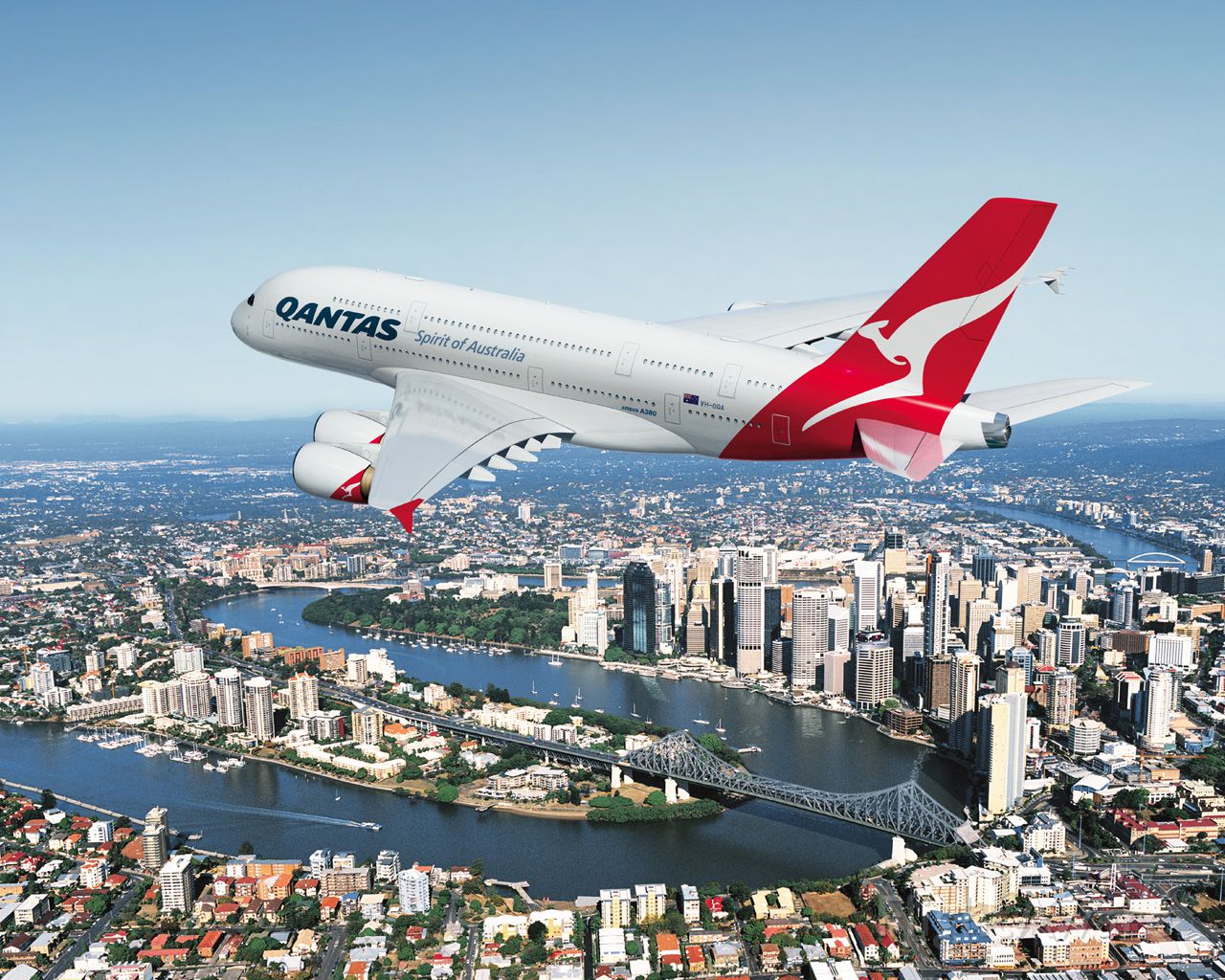
QANTAS is more than just an airline. It is an Australian airline, an Australian icon, with firm place in the Australian psyche. The “Flying Kangaroo” is a logo of special significance to all Australians. It has been stated that boarding a QANTAS aircraft is like “getting home before being at home”. Mr Joyce being Irish, has failed to realise this. He sees QANTAS in terms of aircraft, infrastructure and staff. As I said before on this web site, Australian business does not support CEOs who lose money and whose comapnies do not turn a profit. They sack them, usually with outrageous severance packages. I believe the axe is about to fall on Mr Joyce, probably sooner than later.
Is this legislation likely to be passed into law? I suspect not. Will QANTAS be allowed to to become more efficient? I believe it must, if it is going to remain a competitive world airline. A compromise position must be found.
In 2013 QANTAS for the first time has secured a place (8th) in the top ten world airlines in terms of service, value for money etc. All efforts must be used to make the airline competitive.
The Australian Coalition Government strategy of providing assistance to QANTAS is reminiscent of the American strategy during the Vietnam War. Who can forget the chilling phrase from that era, ”Before we save the village , we have to destroy it”?
As a management strategy, that doesn’t have much going for it.
Views Anthony Inatey, Bathurst
Sounds like QANTAS will go the way of Vegemite. It will be Australian only in name. No doubt they’ll have the nerve though to ”still call Australia home”.
Geoff Gordon, Cronulla
If QANTAS is sold will Messrs Joyce and Clifford be an inclusion? Ed. – But then Joyce is Irish, isn’t he?
Bill Carpenter, Bowral
Market forces across the global economy will ultimately determine the future shape of QANTAS, not the Australian government nor the unions. QANTAS jobs will be lost overseas with or without the government’s changes to the ownership rules because this country is one of the dearest on the planet for the cost of labour. The unions may claim to rely on QANTAS for their future but research proves the flying public would mostly prefer to rely on cheaper airlines that offer comparable standards.
Phillip Regan, Aberglasslyn
If it is good enough for the federal government to provide a debt guarantee for the banks, why not do the same for the airline industry? Or why not let the banks be swallowed by the big boys overseas?
Mike Powter, Leonay
Tony Abbott reckons Virgin Australia is ”as Australian as QANTAS”. How on earth can that be when Virgin is majority-owned by overseas airlines who, when push comes to shove, will ditch Australia like a hot potato.
Russell Mills, Redfern
When you get on a QANTAS plane overseas and are greeted by cheerful Aussies you breathe a sigh of relief. You are home before you get home. QANTAS is not just another business. It’s who we are, and we are a country which needs a flag-raising carrier to show the world we are a strong nation. We need the planes with kangaroos on the tail.
Jill Power, Manly Vale
While I’m normally angered by politicians doing things appropriately falling to the role of the Governor-General, such as farewelling or welcoming our troops, I can think of no better person than Tony Abbott when it comes to ceremoniously lifting the kangaroo off the tail of the plane the day QANTAS ceases to be Australian.
Michael Creswell, Waterloo
If the Prime Minister wishes to allow greater foreign ownership (which will mean controlling ownership), then why not overlay the kangaroo symbol with some gold stars or plaster a striped background on the tailplane? All national airlines are supported by their various governments, so let us not pretend that it will be a national airline any more. The new owners can remove the present board, remove operations to their own country, and we will be free of yet another piece of bothersome industry.
Donald Hawes, Blayney
If there was more foreign ownership of QANTAS perhaps the fares would be reduced, the service improved and more people would once again want to fly with QANTAS.
Carolyn Wills, Cremorne
I don’t know whether a level playing field can be achieved when you are in the air but I do wonder why the words chief executive Joyce used about the 5000 jobs do not appear to have been accurately reported in print, let alone discussed. What he said on TV was ”the equivalent of 5000 full-time jobs”. Does that mean 10,000 part-time? Get your parachutes on!
Comment:
QANTAS was always at risk of overseas ownership when Alan Joyce was appointed as CEO. Here’s a Irishman who claim to fame was that he has worked for Aer Lingus. From the moment of his appointment to QANTAS, he has slashed jobs, sent maintenance work off-shore all in a glorified and yet vain attempt to make QANTAS more profitable. Has he succeeded? No! Oh sure, he has pulled QANTAS into one of the world’s top ten airlines, and JetStar into one of Asia’s best budget carriers and brokered a deal with Emirates on long haul flights to the UK, but the airline is still haemorrhaging money.
Sadly he has not grasped the concept that to most Australians, QANTAS is more than an airline, it’s an Australian icon, an essential part of the Australian psyche. Russell Mills (above) quite rightly described boarding a QANTAS aircraft as “you are home before you get home”. Mr Joyce has no concept of this.
Also, don’t forget that a QANTAS’ majority shareholder is British Airways, so in a way, QANTAS is already overseas owned. So the Irishman thinks, what’s a little bit more?
There’s only one way to ensure that QANTAS remains Australian, and that for it to have government ownership. But it still has to be profitable. It’s not doing that now, and foreign ownership will not change that.
Lastly, what do Australian companies do with CEOs that don’t perform? Sack them with outrageous severance packages. Goodbye Mr Joyce! You’re not long for QANTAS!
George Brown is a decorated soldier and health professional and 40 year veteran in the field of emergency nursing and paramedical practice, both military and civilian areas. He has senior management positions in the delivery of paramedical services. Opinions expressed in these columns are solely those of the author and should not be construed as being those of any organization to which he may be connected.
He was born in the UK of Scottish ancestry from Aberdeen and a member of the Clan MacDougall. He is a member of the Macedonian community in Newcastle, and speaks fluent Macedonian. While this may seem a contradiction, it is his wife who is Macedonian, and as a result he embraced the Macedonian language and the Orthodox faith.
His interests include aviation and digital photography, and he always enjoys the opportunity to combine the two. Navigate to his Flickr site to see recent additions to his photo library.
Џорџ Браун е украсени војник и професионално здравствено лице и 40 годишен ветеран во областа на за итни случаи старечки и парамедицински пракса, двете воени и цивилни области. Тој има високи менаџерски позиции во испораката на парамедицински услуги. Мислењата изразени во овие колумни се исклучиво на авторот и не треба да се толкува како оние на било која организација тој може да биде поврзан.
Тој е роден во Велика Британија на шкотскиот потекло од Абердин и член на Kланот MacDougall. Тој е член на македонската заедница во Њукасл, и зборува течно македонски. Иако ова можеби изгледа контрадикција, тоа е неговата сопруга кој е македонски, и како резултат научил македонскиот јазик и ја примија православната вера.
Неговите интереси вклучуваат авијација и дигитална фотографија, и тој секогаш ужива во можност да се комбинираат двете. Отиди до неговиот Фликр сајт да видите последните дополнувања на неговата слика библиотека.
Discussion on the law that applies to or affects Australia's emergency services and emergency management, by Michael Eburn, PhD, Australian Lawyer. Email: meburn@australianemergencylaw.com
Oh, let's see...distinguished Gen-X'er, frustrated writer and mom living in the confines of a small town that thinks it's a big deal. And have I mentioned Walmart yet?







 Words, By George!
