Words, By George!

Mundane Musings ­­║ Mindful Mutterings ║ Madcap Mischief

  • Welcome!
  • Main
    • PHOTO GALLERY
      • Avoca, Co. Wicklow
      • Bitola, Macedonia
      • Coventry, Warwickshire
      • Devizes, Wiltshire
      • Fishguard, South Wales
      • Liverpool, UK
      • Pontsycyllte Aqueduct
      • Prilep, Macedonia
      • Standedge Tunnels
  • Liked Links
  • About the Author
    • Contact the Author
    • Inspirations
  • Books I’ve Read
  • My Stories
    • 1%
    • A Meeting With Death
    • Rachel
    • The Holiday

The World Was My Lobster

Posted by George Brown on 26/08/2015
Posted in: Culture, Entertainment, Literature. Tagged: George Cole, Minder, The World Was My Lobster. Leave a comment

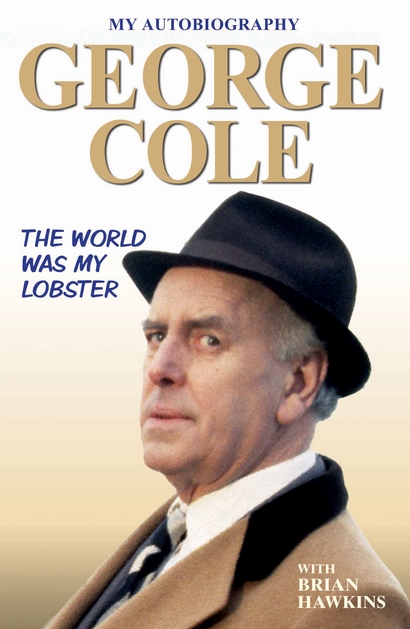
Being a long-term fan of Minder, and with the recent passing of George Cole (aka Arthur Daley), I decided to acquire a copy of his autobiography, “The World Was My Lobster”.  The Mail On Sunday described the book as “Delightful”. This is my review of that book.

The World Was My Lobster by George Cole with Brian Hawkins

The World Was My Lobster by George Cole with Brian Hawkins

Born on the 22/04/1925 and adopted when he was only 10 days old, George Cole grew up in Tooting in south London in the 1920s and 30s. After finishing school at the age of 14, he saw a newspaper advertisement seeking a small boy to join the cast of “The White Horse Inn” and was selected the following day. A year later, he found himself in the West End play “Cottage to Let” playing a cheeky wartime evacuee. Here he met well-known actor Alastair Sim who, with his wife Naomi, took him as an evacuee in their country house and coached him in the finer skills of acting.

He spent his National Service in the RAF, operating bars in RAF bases in the UK and Germany.

He talks openly, humorously and with sensitively about his adoption. He didn’t realise that he was adopted until he impatiently went looking for Christmas presents, and on top of his mother’s wardrobe found his adotion papers.  He speaks well of his adoptive parents who raised him in a caring and loving environment.

His career started with a walk-on part the stage musical “The White Horse Inn” in 1939, and continued until his death having included such roles as David Bliss in the radio and television versions of “A Life of Bliss”, Flash Harry in the St. Trinian’s films, and of course he ie best known for his role as Arthur Daley in Thames Television’s “Minder.”

George states that “Minder” was a vehicle for his co-star Dennis Waterman, who had recently finished starring in “The Sweeney” as Det Sgt George Carter.  The Sweeney is Cockney rhyming slang for the Metropolitan Police’s Flying Squad; Sweeney Todd = Flying Squad.

Dennis wanted Denholm Elliott to play Arthur Daley, but Verity Lambert, the show’s production executive, didn’t think that Denholm quite fitted the part of Arthur, but when she saw George, she states “he was Arthur Daley.” And so it was.  “Minder”  ran from 1979 until 1994, over 10 seasons and 108 episodes.

Interestingly, I had believed that the term “minder” (meaning a personal bodyguard, or to mind someone) had entered the British lexicon as a result of the show, but Cole seems to insist that it existed before that.  The show was also known for its frequent use of cockney rhyming slang, and other misquoted sayings  – hence “the world is your lobster” and the term “a nice little earner”. The name Arthur Daley has also become synonymous with a dishonest (car) salesman or small time crook.

The book however, in my opinion was not what I expected it to be.  I think that I had expected it to be filled with humorous anecdotes collected and amassed over a 70 year acting career on stage, radio and television.  While there was some of that, unfortunately the book really appeared to be a chronicle of the plays, programmes in which George had appeared throughout his career

In part, the book appeared poorly researched or erroneous.  While filming “Minder” in Australia, George describes the prescence of camels in the Australian outback thus:

“I had no idea there would be camels roaming around in the desert.  Apparently, the early British colonists introduced them.  They thought if they had deserts over there, they would need a few camels, so they packed some up and shipped them over there.”

Of course with a bit of research, it would have been identified that the first camels were imported in 1860 specifically for the Burke and Wills expedition into Australia’s interior. More than 15,000 camels with their handlers came to Australia between 1870 and 1900, primarily for transport use across the centre of the arid continent.  They were often managed by Afghan camel drivers (or cameleers) who arrived in Australia in the late 19th century to help reach the country’s unexplored interior. It is said that as a tribute to those Afghan camel drivers, the train running on the central Australian railway is called “The Ghan.” As a result, today there are now more than one million feral camels in outback Australia, with their number doubling every 8-10 years. Their impact on the desert environment is significant.

What I was suprised about was the amount of work George had done throughout his career that I was unaware of.  Although he was best known for “Minder”, “Root into Europe” and “Flash Harry” the spiv* in the “St. Trinians” series, he also had an extensive career on stage in plays, dramas and even the occasional musical such as the “The Pirates of Penzance” were he played Major-General Stanley.

He was married to Penny for 48 years and lived in Stoke Row, Oxfordshire for 70 years. He had four children.  He described himself as a very private man off-stage/camera.  He says  “I keep myself to myself” and hated doing interviews and valued his privacy. He relates in the book how he stopped off at a pub near his house to buy some eggs.  While having a drink there he and his wife got to talking with the landlord. The landlord asked Cole if he was thinking of moving into the area.  Cole replied that he had lived nearby for over 20 years and that he had never been in the pub before!

All in all, “The World Was My Lobster” was a good-humoured light read which I believe had so much potential, but as it seemed to be more a chronology of Coles’ work, to me it never quite reached that potential.

George passed away on the 5/08/2015.  He was 90 years old. May he rest in peace.

*A spiv is a petty criminal who deals in illicit, black market or stolen goods – usually all three. The word was used during the Second World War and in the post-war period when many goods rermained rationed due to “shortages”. An example of a spiv described by Cole as that of Private Walker in Dad’s Army played by the late James Beck.

Japan – 70 years on

Posted by George Brown on 19/08/2015
Posted in: Culture, History, Military. Tagged: apology, history, Japan, war in the pacific, WW2. Leave a comment

A day ahead of the August 15, 2015, seventieth anniversary of the end of World War II, Prime Minister Abe Shinzō issued his statement to mark the milestone date.

The statement spells out the Abe administration’s historical take on Japan’s role in the war and its seven decades as a pacifist nation since then, touching on the vocabulary many viewed as required in any statement released on this occasion—“colonial rule,” “aggression,” and, most importantly, “deep remorse” and “apology”—reiterating that the position expressed by previous administrations “will remain unshakable into the future.”

Previous administrations have also made statements to mark milestone anniversaries. In August 1995, Prime Minister Murayama Tomiichi issued a statement 50 years after the end of the war admitting that Japan, “through its colonial rule and aggression, caused tremendous damage and suffering to the people of many countries, particularly to those of Asian nations.” Ten years later, an August 2005 statement by Prime Minister Koizumi Jun’ichirō largely followed in the footsteps of the Murayama statement.

Prime Minister Abe, meanwhile, opened his speech by stressing its broader focus on the past, present, and future courses Japan has and will take: “we must calmly reflect upon the road to war, the path we have taken since it ended, and the era of the 20th century. We must learn from the lessons of history the wisdom for our future.”

In late February, the prime minister commissioned an advisory panel headed by Nishimuro Taizō, chairman of Japan Post, to help him craft his statement. On August 6 this group delivered its final report, which expanded on the “aggression” concept, noting that Japan “caused much harm to various countries, largely in Asia, through a reckless war.”

Abe’s seventieth anniversary statement drew on this report to an extent, seeking in particular to make use of the four key phrases that had appeared in the statements one and two decades earlier: “colonial rule,” “aggression,” “remorse,” and “apology.” Going a step further in the vocabulary department, the Abe statement also touched on 悔悟 (kaigo, “repentance” or “contrition”) to clarify Japan’s historical stance. It remains to be seen, though, how these terms will be evaluated in the less strenuously apologetic context in which they appeared.

Prime Minister Abe stressed Japan’s pacifist history since the war’s end and its peace-oriented diplomatic outlook for the future when he moved on from the historical portion of his speech. “We must never again repeat the devastation of war,” he spoke. “Incident, aggression, war—we shall never again resort to any form of the threat or use of force as a means of settling international disputes.” With this, he stressed the country’s intent to engage in forward-looking diplomacy aimed at its “proactive contribution to peace.”

Taking questions from the press after giving his statement, Abe commented on the lack of positive recent developments in Japan’s relations with China and Korea. He expressed his hope that the Chinese side would “accept the statement in the spirit in which it was offered,” looking forward to the chance for a third formal summit meeting with Chinese Premier Xi Jinping.

In the Korean connection, meanwhile, the prime minister touched obliquely on the “comfort women” issue, noting: “We must never forget that there were women behind the battlefields whose honor and dignity were severely injured.”

Prime Minister Abe went on in words he no doubt hoped his listeners would take to heart: “Upon the innocent people did our country inflict immeasurable damage and suffering. History is harsh. What is done cannot be undone. Each and every one of them had his or her life, dream, and beloved family. When I squarely contemplate this obvious fact, even now, I find myself speechless and my heart is rent with the utmost grief.”

Prime Minister Shinzo Abe’s speech:

Statement by Prime Minister Shinzo Abe

Friday, August 14, 2015

On the seventieth anniversary of the end of the war, we must calmly reflect upon the road to war, the path we have taken since it ended, and the era of the twentieth century. We must learn from the lessons of history the wisdom for our future.

More than 100 years ago, vast colonies possessed mainly by the Western powers stretched out across the world. With their overwhelming supremacy in technology, waves of colonial rule surged toward Asia in the nineteenth century. There is no doubt that the resultant sense of crisis drove Japan forward to achieve modernization. Japan built a constitutional government earlier than any other nation in Asia. The country preserved its independence throughout. The Japan-Russia War gave encouragement to many people under colonial rule from Asia to Africa.

After World War I, which embroiled the world, the movement for self-determination gained momentum and put brakes on colonization that had been underway. It was a horrible war that claimed as many as 10 million lives. With a strong desire for peace stirred in them, people founded the League of Nations and brought forth the General Treaty for Renunciation of War. There emerged in the international community a new tide of outlawing war itself.

At the beginning, Japan, too, kept steps with other nations. However, with the Great Depression setting in and the Western countries launching economic blocs by involving colonial economies, Japan’s economy suffered a major blow. In such circumstances, Japan’s sense of isolation deepened and it attempted to overcome its diplomatic and economic deadlock through the use of force. Its domestic political system could not serve as a brake to stop such attempts. In this way, Japan lost sight of the overall trends in the world.

With the Manchurian Incident, followed by the withdrawal from the League of Nations, Japan gradually transformed itself into a challenger to the new international order that the international community sought to establish after tremendous sacrifices. Japan took the wrong course and advanced along the road to war.

And, 70 years ago, Japan was defeated.

On the seventieth anniversary of the end of the war, I bow my head deeply before the souls of all those who perished both at home and abroad. I express my feelings of profound grief and my eternal, sincere condolences.

More than 3 million of our compatriots lost their lives during the war: on the battlefields worrying about the future of their homeland and wishing for the happiness of their families; in remote foreign countries after the war, in extreme cold or heat, suffering from starvation and disease. The atomic bombings of Hiroshima and Nagasaki, the air raids on Tokyo and other cities, and the ground battles in Okinawa, among others, took a heavy toll among ordinary citizens without mercy.

Also in countries that fought against Japan, countless lives were lost among young people with promising futures. In China, Southeast Asia, the Pacific islands and elsewhere that became the battlefields, numerous innocent citizens suffered and fell victim to battles as well as hardships such as severe deprivation of food. We must never forget that there were women behind the battlefields whose honor and dignity were severely injured.

Upon the innocent people did our country inflict immeasurable damage and suffering. History is harsh. What is done cannot be undone. Each and every one of them had his or her life, dream, and beloved family. When I squarely contemplate this obvious fact, even now, I find myself speechless and my heart is rent with the utmost grief.

The peace we enjoy today exists only upon such precious sacrifices. And therein lies the origin of postwar Japan.

We must never again repeat the devastation of war.

Incident, aggression, war—we shall never again resort to any form of the threat or use of force as a means of settling international disputes. We shall abandon colonial rule forever and respect the right of self-determination of all peoples throughout the world.

With deep repentance for the war, Japan made that pledge. Upon it, we have created a free and democratic country, abided by the rule of law, and consistently upheld that pledge never to wage a war again. While taking silent pride in the path we have walked as a peace-loving nation for as long as seventy years, we remain determined never to deviate from this steadfast course.

Japan has repeatedly expressed the feelings of deep remorse and heartfelt apology for its actions during the war. In order to manifest such feelings through concrete actions, we have engraved in our hearts the histories of suffering of the people in Asia as our neighbors: those in Southeast Asian countries such as Indonesia and the Philippines, and Taiwan, the Republic of Korea and China, among others; and we have consistently devoted ourselves to the peace and prosperity of the region since the end of the war.

Such position articulated by the previous cabinets will remain unshakable into the future.

However, no matter what kind of efforts we may make, the sorrows of those who lost their family members and the painful memories of those who underwent immense sufferings by the destruction of war will never be healed.

Thus, we must take to heart the following.

The fact that more than 6 million Japanese repatriates managed to come home safely after the war from various parts of the Asia-Pacific and became the driving force behind Japan’s postwar reconstruction; the fact that nearly 3,000 Japanese children left behind in China were able to grow up there and set foot on the soil of their homeland again; and the fact that former POWs of the United States, the United Kingdom, the Netherlands, Australia and other nations have visited Japan for many years to continue praying for the souls of the war dead on both sides.

How much emotional struggle must have existed and what great efforts must have been necessary for the Chinese people who underwent all the sufferings of the war and for the former POWs who experienced unbearable sufferings caused by the Japanese military in order for them to be so tolerant nevertheless?

That is what we must turn our thoughts to reflect upon.

Thanks to such manifestation of tolerance, Japan was able to return to the international community in the postwar era. Taking this opportunity of the seventieth anniversary of the end of the war, Japan would like to express its heartfelt gratitude to all the nations and all the people who made every effort for reconciliation.

In Japan, the postwar generations now exceed 80% of its population. We must not let our children, grandchildren, and even further generations to come, who have nothing to do with that war, be predestined to apologize. Still, even so, we Japanese, across generations, must squarely face the history of the past. We have the responsibility to inherit the past, in all humbleness, and pass it on to the future.

Our parents’ and grandparents’ generations were able to survive in a devastated land in sheer poverty after the war. The future they brought about is the one our current generation inherited and the one we will hand down to the next generation. Together with the tireless efforts of our predecessors, this has only been possible through the goodwill and assistance extended to us that transcended hatred by a truly large number of countries, such as the United States, Australia, and European nations, which Japan had fiercely fought against as enemies.

We must pass this down from generation to generation into the future. We have the great responsibility to take the lessons of history deeply into our hearts, to carve out a better future, and to make all possible efforts for the peace and prosperity of Asia and the world. We will engrave in our hearts the past, when Japan attempted to break its deadlock with force. Upon this reflection, Japan will continue to firmly uphold the principle that any disputes must be settled peacefully and diplomatically based on the respect for the rule of law and not through the use of force, and to reach out to other countries in the world to do the same. As the only country to have ever suffered the devastation of atomic bombings during war, Japan will fulfill its responsibility in the international community, aiming at the nonproliferation and ultimate abolition of nuclear weapons.

We will engrave in our hearts the past, when the dignity and honor of many women were severely injured during wars in the twentieth century. Upon this reflection, Japan wishes to be a country always at the side of such women’s injured hearts. Japan will lead the world in making the twenty-first century an era in which women’s human rights are not infringed upon.

We will engrave in our hearts the past, when forming economic blocs made the seeds of conflict thrive. Upon this reflection, Japan will continue to develop a free, fair, and open international economic system that will not be influenced by the arbitrary intentions of any nation. We will strengthen assistance for developing countries, and lead the world toward further prosperity. Prosperity is the very foundation for peace. Japan will make even greater efforts to fight against poverty, which also serves as a hotbed of violence, and to provide opportunities for medical services, education, and self-reliance to all the people in the world.

We will engrave in our hearts the past, when Japan ended up becoming a challenger to the international order. Upon this reflection, Japan will firmly uphold basic values such as freedom, democracy, and human rights as unyielding values and, by working hand in hand with countries that share such values, hoist the flag of “Proactive Contribution to Peace,” and contribute to the peace and prosperity of the world more than ever before.

Heading toward the eightieth, the ninetieth, and the centennial anniversary of the end of the war, we are determined to create such a Japan together with the Japanese people.

August 14, 2015
Shinzo Abe, Prime Minister of Japan
The Ritual of bowing in Japan

Posted by George Brown on 19/08/2015
Posted in: Culture, tradition, Travel. Tagged: bowing, courtesy, culture, Japan, tradition. Leave a comment

Having now been to Japan twice, I have always had a curiosity in the ritual of bowing, a courtesy which is entrenched in Japanese society.

I found this Youtube video which threw some light on the practice.

I have to admit that I have never bowed to greeters in stores and shopping precincts, and have always been careful on to bow to the same level as they did to me, so as to avoid them feeling they need to bow again to match mine, and so on!

Guess who is in economy class?

Posted by George Brown on 15/08/2015
Posted in: Democracy, Entitlements, expenses, Government, Parliament. Tagged: bronwyn bishop, Choppergate, economy class. Leave a comment
Economy class is how “the people” travel, Prime Minister Tony Abbott said recently. But not for Prime Ministers and Ministers, that will be certain.
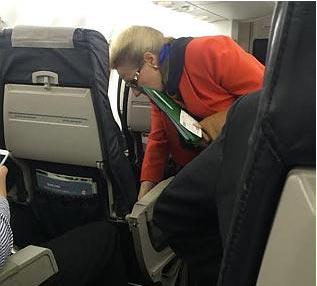
Bronwyn Bishop in economy. Is she wiping the seat? Photo: SMH

Bronwyn Bishop in economy. Is she wiping the seat? Photo: SMH

It appears Bronwyn Bishop is now one of the commoners after being snapped slumming it in economy on a Qantas flight from Canberra to Sydney on Thursday.

It’s a far cry from the $5227 chopper charter flight that ultimately brought an end to Ms Bishop’s reign as Speaker of the House in July.But at least she got an aisle seat – a cherished luxury in cattle class.

A fellow passenger appears to have taken the photograph of the Federal member for McKellar as she bent over an economy seat, wearing a red blazer that could be mistaken for a Qantas cabin crew uniform.

The flight comes after a pretty lousy week for the speaker.

Ms Bishop, who lost $150,000 from her annual pay packet after vacating the Speaker’s chair, watched from the backbench as Tony Smith took up the post on Monday.

Then a flicker of good luck was snuffed out Monday night when the Avalon Beach RSL Club in Ms Bishop’s electorate announced she had won the weekly members’ badge draw.

She had won a $2,500 cash prize, or she would have it she had been there to collect it.

The prize money could have bought roughly eight evening flights from Canberra to Sydney.

Or half a helicopter charter flight from Melbourne to Geelong.

Source: Sydney Morning Herald – 14/08/2015

Double Standards?

Posted by George Brown on 13/08/2015
Posted in: Uncategorized. Leave a comment
Double Standards

Double Standards?

A Different View of Choppergate?

Posted by George Brown on 11/08/2015
Posted in: Democracy, expenses, Finance, Government, Parliament. Tagged: bronwyn bishop, cartoons, expenses, parliament, politics, public purse, Speaker, Tony Abbott, trough. Leave a comment
Cartoon by Warren (Sunday Telegraph)

Cartoon by Warren (Sunday Telegraph 9/08/2015)

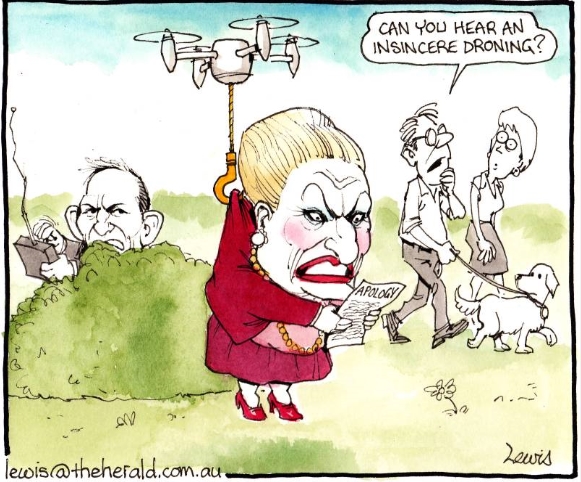
In the wake of the “entitlements” scandal now involving more coalition MPs than just the Speaker, this is how some of Australia’s best cartoonists recorded the proceedings.

What MPs have to realise is that they are not “entitled” to anything.  Their job is to serve their constituents.  Remember them? They are the ones that elected you!  Most seem to have forgotten this, until re-election time. There should be no automatic entitlement.  Family holidays at the taxpayer’s expense? I’d would like to see if I can get onto that sort of junket?  I think not!  Politicians should pay their expenses out of their own pocket and then claim reimbursement.  If they don’t pass the community expectation test, they don’t get reimbursed.  There should also be limits on expenses commensurate with the politician’s position in the parliament.

In real terms politicians will only review this issue in a half-hearted manner, as they all stand to lose as a result of any review carried out.  They just want this matter to go away so they can get their snouts back into the public purse.

The Trough - Cartoon by Golding SMH 9/08/2015

The Trough – Cartoon by Golding SMH 9/08/2015

Now we have an action before the High Court, with a number of retired politicians wanting to increase their entitlements!  Even when they are separated from public office or politics, their snouts are still in the trough! Heaven forbid!

United - Cartoon by Alan Moir

United – Cartoon by Alan Moir

Both sides of parliament are likely to be affected by any change in entitlements.  This is one of the only things that both sides of the House would be “united” on.

Cartoon by Andrew Fyfe

Cartoon by Andrew Fyfe

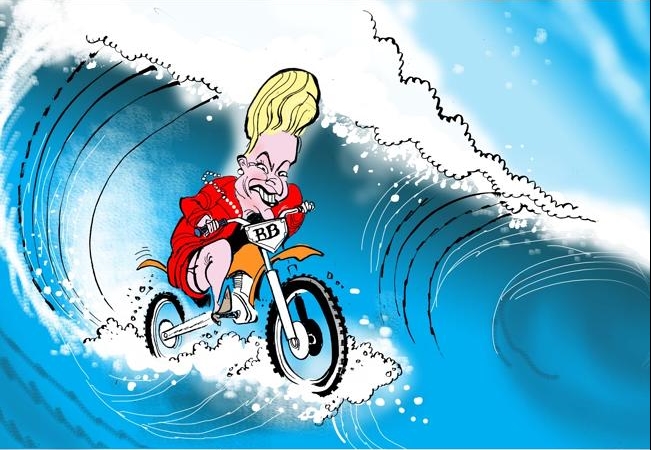
Just when you thought Bronwyn had finished with outrageous travel.  Cartoon by Warren

Just when you thought Bronwyn had finished with outrageous travel. Cartoon by Warren

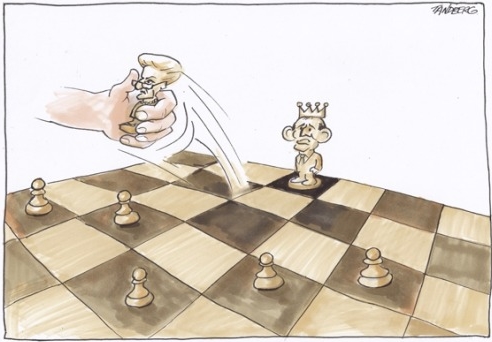
Chess by Ron Tandberg

Chess by Ron Tandberg

Insincere Droning. Cartoon by Peter Lewis

Insincere Droning. Cartoon by Peter Lewis

Speaker

Hard Act to Follow. Cartoon by Peter Lewis

The Speaker’s Gone, But Not Forgotten

Posted by George Brown on 03/08/2015
Posted in: Democracy, economy, Finance, Government, Parliament. Tagged: bronwyn bishop, Choppergate, entitlements, parliamentary expenses, Tony Abbott. Leave a comment

My friend and colleague Fr. Andrew Doohan had this to say regarding the resignation of the Speaker of the House of Representatives today.  I fully support his comments.

So today the Prime Minister of the Commonwealth of Australia has announced the resignation of the Speaker of the House of Representatives from her Office.

Good, I say.

Such a shame, however, that it took weeks for the question to be resolved and, realistically, the revelation of the serial nature of the Speaker’s profligate spending of public monies for the Speaker to do ‘the right thing’.

It leaves unresolved, however, the next step which, if the current Federal Government was consistent on these matters, would see an investigation by the Australian Federal Police, the potential launching of criminal proceedings for any potential charges of defrauding the Commonwealth through her actions, and the associated public hounding that seems to be nature of the behaviour of the current Federal Government towards Speakers who get it wrong.

What is also interesting is that in announcing the resignation of the Speaker, the Prime Minister doesn’t appear to have conceded that she had done anything wrong, blaming instead the system by saying:

What has become apparent is the problem is not any one particular person, the problem is the rules. So the problem is not with the people that make excessive expenses claims; the problem is that expenses claims can be made.

and:

Clearly we have a situation where spending is arguably inside the rules but plainly outside of community expectations.

It is the system of parliamentary entitlements that will now be reviewed rather than the behaviour of the now former Speaker of the House of Representatives.

I disagree Mr Prime Minister.

What we have here is someone who, despite knowing better, was focussed on using the entitlements system in such a way as to benefit herself. Not only was the behaviour outside community expectations it also appears to have been playing fast and loose with those rules for personal benefit. While it is arguable that the parliamentary entitlements should be reviewed, the behaviour of the Member of Mackellar can not be allowed to go unreviewed regardless of what might happen as a result.

After all, if a recipient of welfare benefits via Centrelink were caught in similar situations the outcome would result in investigation and potential prosecution.

Repayment of the expenses claimed is not the end of the matter.  That’s like saying if I return the money I stole from a bank, there is no crime.  Defrauding the Commonwealth is a crime and the matter should be referred to the AFP and dealt with accordingly. For as long as the Member for McKellar remains cosy with Prime Minister, this is not likely to happen.  He states that the Speaker’s action are arguably within the rules, but in my opinion that means that the actions are also arguably outside the rules. Nothing will happen from the PM unless public and media pressure make the issue too hot to ignore.  He has a demonstrated track record in this regard.  But then again, the PM can’t see that she has done anything wrong. This is just another example of the PM demonstrating that he is out of touch with realistic community expectations.  A full review of parliamentary entitlements is long overdue, starting with the Life Gold Pass issued to long serving politicians who continue to dip into the public purse long after leaving political life!

All that is needed now is for her to resign as the Member for McKellar.

Pick the tosser!

Posted by George Brown on 03/08/2015
Posted in: Crime, Education, Emergency Services, Police, Road Safety. Tagged: cycle cam, Cyclist, Perth, road rage. Leave a comment

Consider the above Youtube video.  A car passes a cyclist, the cyclist thinks he is too close and decides to pursue the car driver!

I think the cyclist is the road rager here! He actively pursed the car driver through numerous streets through town before catching up with him. The cyclist nearly collides with pedestrians during the pursuit! He deserves being verballed. How much room did the cyclist think he needed and how much room was actually available? Camera wearing cyclists, contrary to their belief, do not own the roads! I know who the Old Bill would be charging. It wont be the car driver!

What do you think?

And it’s not the first time that this camera toting cyclist has had “incidents” with car drivers!

Bronwyn Bishop resigns as Speaker of the House

Posted by George Brown on 03/08/2015
Posted in: Democracy, economy, expenses, Finance, Government, Politics. Tagged: abbott, bronwyn bishop, politics, salaries, Speaker of the house. Leave a comment

BRONWYN Bishop today quit as Speaker as her mate Tony Abbott blamed the MPs’ expenses system and not her big-spending for close to a month of embarrassing revelations about travel costs.

The Prime Minister maintained the obstinate defence of Mrs Bishop’s documented and free-wheeling use of taxpayer funds.

And while voters will welcome the spending review he announced today, Mr Abbott appeared to be saying that if Mrs Bishop was going down, everyone was going to suffer.

The Prime Minister said Mrs Bishop had “by and large” obeyed the rules when she chartered aircraft to attend Liberal Party functions, or hired limos for $1000 a trip when the ComCar Transport service was available to her in Sydney.

He said similar expenses had been claimed by MPs “on both sides of the fence”.

“What has become apparent, particularly over the past few days, is that the problem is not any particular individual. The problem is the entitlement system more generally,” said Mr Abbott.

He argued Mrs Bishop’s notorious spending had been within guidelines but outside “community expectations”.

 *** Embargo Until After Midnight*** The Prime Minister Elect, Tony Abbott, with his nominated person for the Speakers role-B...

The Prime Minister and the Speaker during happier days for the government. Source: News Corp Australia

The Prime Minister announced a wide-ranging review and promised “fundamental reform” of when and how members of Parliament could spend taxpayer money on travel.

It could mean members of Parliament will no longer fly at the pointy end of then plane but back in economy.

The inquiry will be conducted by businessman and president of the MPs’ Remuneration Tribunal John Conde, and David Tune, who resigned as head of the Finance Department in 2014.

“This will not be a quickie review, because there have been quickie reviews in the past,” said Mr Abbott.

He said: “So it’s very important we have a system which is independent, which is accountable, which is transparent and which is workable.”

Opposition Leader Bill Shorten backed the inquiry but wasn’t as kind towards Mrs Bishop.

“The resignation of Mrs Bishop from the position of Speaker, like her apology, was overdue and unrepentant,” Mr Shorten said in a statement.

“Unfortunately Tony Abbott still won’t accept that Bronwyn Bishop has done anything wrong. Mr Abbott has blamed the system, but it was Mrs Bishop’s addiction to privilege that was the real culprit.”

The Prime Minister’s move effectively absolves Mrs Bishop of accusations she abused the expenses system while Speaker, and when she was a back bencher who charged the taxpayer for trips to friends’ weddings.

Prime Minister Tony Abbott delivered the news in Sydney on Sunday. Picture: Adam Taylor

Prime Minister Tony Abbott delivered the news in Sydney on Sunday. Picture: Adam Taylor Source: News Corp Australia

And it depicts her as being unfairly made the target of voter outrage over expense claims other MPs had also made.

But it also ended weeks of voter uproar over Mrs Bishop’s use of public money for private travel which was rattling the Government and angering ministers who were pressing for her removal as Speaker because the controversy was smothering their efforts.

The row also was damaging Mr Abbott personally which charges his defence of Mrs Bishop showed he was out of touch.

They are electoral neighbours and old friends and the Prime Minister appeared to be putting that friendship ahead of what was best for the Government, voters and the Parliament.

He had effectively chosen her as Speaker and refused to criticise her after reports of spending excesses. Mrs Bishop called Mr Abbott today to report she had given her resignation to Governor-general Peter Cosgrove.

The Coalition now will have to find a replacement as Speaker. Deputy Speaker is Bruce Scott but as he is a National, a Liberal is likely to be chosen.

But there is a precedent with former Nationals MP Ian Sinclair serving as Speaker in the Howard Government.

Mrs Bishop has indicated she will stay in Parliament as member for Mackellar.

“It has been a very difficult day for Bronwyn Bishop and I think we should respect the fact that it has been a very difficult day for her,” said Mr Abbott.

The table below indicates the salaries of various senior politicians, with the Speaker receiving $341,477 (as of 1/07/2013), which does not include other travel and electoral entitlements. Australia has one of the highest rates of pay for politicians in the world.

Source www.news.com.au

Office Additional salary (%) Salary as of July 1
Prime Minister 160 $507,338
Deputy Prime Minister 105 $400,016
Treasurer 87.5 $365,868
Leader of the Opposition 85.0 $360,990
House of Reps Speaker 75.0 $341,477
Leader of the House 75.0 $341,477
Minister in Cabinet 72.5 $336,599
Other ministers 57.5 $307,329
Parliamentary secretary 25.0 $243,912
Shadow minister 25.0 $243,912

Newcastle City Council misleads ratepayers

Posted by George Brown on 26/07/2015
Posted in: businees, Democracy, Finance. Tagged: Newcastle City Council, Rates. Leave a comment

Newcastle City Council has just issued its 2015-2016 rate notices. Contained therein was a brochure explaining “Your rates”. It states:

In May the Independent Pricing and Regulatory Tribunal (IPART) approved Council’s application to increase its total rate rate income by 8% for a period of 5 years ie 2015/2016 to 2019/2020. This increase includes a rate cap increase of 2.4% for 2015/2016.

This means trhe everage residential rate will increase by approximately $86 in the 2015/2016 year.

The brochure goes on to state that the additional revenue will be used to accelerate trhe completion of projects  and substantial reductions in infrastructure. It further cites that facilities, roads, footpaths, sportsgrounds, parks and playgrounds will be in better condition.

What the brochure does not exactly say is that there will be an increase in rates of 8% every year until 2019/2020 meaning that the total rate rise over the next five years will be 46.9%.  This is done for obvious reasons. No council wants to state to their ratepayers that they are raising rates by nearly 50%.  This of course could be construed as being misleading by not clearly setting out exactly what the rate rises actually are.

Council needs to put in place or improve efficiences in all aspects of its operations to ensure reductions in expenditure. They cannot just expect the ratepayers to continue to fund councils which continue to operate with inefficient, outdated and expensive work practices.

Posts navigation

← Older Entries
Newer Entries →
  • Calender

    January 2026
    S M T W T F S
     123
    45678910
    11121314151617
    18192021222324
    25262728293031
    « Nov    
  • Visitors

    • 29,719 hits
  • Enter your email address to follow this blog and receive notifications of new posts by email.

    Join 167 other subscribers
  • Currently Reading

  • My Flickr

    VH-JQG
    More Photos
  • George’s Tweets

    Tweets by georgebrown99
  • Blogs I Follow

    • Ambulance Visibility Blog
    • ryanbreeding's Blog
    • As My Camera Sees It
    • Writings of a Mrs
    • Australian Emergency Law
    • Emerging
    • World Of Alexander The Great
    • Psyche's Circuitry
    • European Scientist
    • Macedonian Orthodox Church Property Trust Bill 2010
    • philosoffer
    • Permalife: an FPS
    • Fortyteen Candles
    • Jeyna Grace
    • About Film
    • onethousandsingledays.wordpress.com/
    • SimplePolitiks
    • retireediary
    • Semper Quaerens
  • This Is Me

    George Brown is a decorated soldier and health professional and 40 year veteran in the field of emergency nursing and paramedical practice, both military and civilian areas. He has senior management positions in the delivery of paramedical services. Opinions expressed in these columns are solely those of the author and should not be construed as being those of any organization to which he may be connected.

    He was born in the UK of Scottish ancestry from Aberdeen and a member of the Clan MacDougall. He is a member of the Macedonian community in Newcastle, and speaks fluent Macedonian. While this may seem a contradiction, it is his wife who is Macedonian, and as a result he embraced the Macedonian language and the Orthodox faith.

    His interests include aviation and digital photography, and he always enjoys the opportunity to combine the two. Navigate to his Flickr site to see recent additions to his photo library.

    Me

    Џорџ Браун е украсени војник и професионално здравствено лице и 40 годишен ветеран во областа на за итни случаи старечки и парамедицински пракса, двете воени и цивилни области. Тој има високи менаџерски позиции во испораката на парамедицински услуги. Мислењата изразени во овие колумни се исклучиво на авторот и не треба да се толкува како оние на било која организација тој може да биде поврзан.

    Тој е роден во Велика Британија на шкотскиот потекло од Абердин и член на Kланот MacDougall. Тој е член на македонската заедница во Њукасл, и зборува течно македонски. Иако ова можеби изгледа контрадикција, тоа е неговата сопруга кој е македонски, и како резултат научил македонскиот јазик и ја примија православната вера.

    Неговите интереси вклучуваат авијација и дигитална фотографија, и тој секогаш ужива во можност да се комбинираат двете. Отиди до неговиот Фликр сајт да видите последните дополнувања на неговата слика библиотека.

  • My Community

    • Unknown's avatar
    • Arnold's avatar
    • Unknown's avatar
    • Unknown's avatar
    • Port Canaveral Transportation's avatar
    • Unknown's avatar
    • spillingtheteaa's avatar
    • Unknown's avatar
    • Unknown's avatar
    • Harley's avatar
    • Gerard's avatar
    • theearthofbrain's avatar
    • Unknown's avatar
    • Unknown's avatar
    • Emma's avatar
    • Shuttle to Port Canaveral Transportation's avatar
    • elenalevon's avatar
    • fitrichbitch's avatar
    • Chris Nicholas's avatar
    • Cait's avatar
    • sandraleehr's avatar
    • five experts's avatar
    • Unknown's avatar
    • throughopenlens's avatar
    • Unknown's avatar
    • Unknown's avatar
    • Unknown's avatar
    • Unknown's avatar
    • Unknown's avatar
    • Unknown's avatar
    • amateurairplanes's avatar
    • Unknown's avatar
    • Unknown's avatar
    • Unknown's avatar
    • Anna Powaska's avatar
    • Life in Japan and Beyond's avatar
    • Unknown's avatar
    • Unknown's avatar
    • PHOTO KING's avatar
    • Unknown's avatar
    • Unknown's avatar
    • Unknown's avatar
    • Unknown's avatar
    • A Wealth's avatar
    • Unknown's avatar
    • Unknown's avatar
    • Unknown's avatar
    • Unknown's avatar
    • Angelina's avatar
    • MaitoMike's avatar
Create a free website or blog at WordPress.com.
Ambulance Visibility Blog

Emergency vehicle visibility and conspicuity research & comments for the Police, Fire, EMS and Ambulance: The AV Blog is written by John Killeen

ryanbreeding's Blog

Smile! You’re at the best WordPress.com site ever

As My Camera Sees It

Focus, Fun, and Creativity

Writings of a Mrs

I write, blog, vlog and poet...I wander, I ponder and I recollect ...DIGITAL NOMAD & PHILOSOPHER

Australian Emergency Law

Discussion on the law that applies to or affects Australia's emergency services and emergency management, by Michael Eburn, PhD, Australian Lawyer. Email: meburn@australianemergencylaw.com

Emerging

The Butterfly counts not months but moments, and has time enough.

World Of Alexander The Great

"Everything is possible to him who will try"

Psyche's Circuitry

Thoughts on growing up and growing old in the digital age

European Scientist

Blog with Journalistic and Historical articles

Macedonian Orthodox Church Property Trust Bill 2010

Macedonian Orthodox communities in Australia

philosoffer

EVERYTHING AND ANYTHING

Permalife: an FPS

a Feminist Phenomenology (or something)

Fortyteen Candles

Oh, let's see...distinguished Gen-X'er, frustrated writer and mom living in the confines of a small town that thinks it's a big deal. And have I mentioned Walmart yet?

Jeyna Grace

A Story Begins

About Film

Film, Life and Culture

onethousandsingledays.wordpress.com/

SimplePolitiks

retireediary

The Diary of a Retiree

Semper Quaerens

Words, By George!
Blog at WordPress.com.
Privacy & Cookies: This site uses cookies. By continuing to use this website, you agree to their use.
To find out more, including how to control cookies, see here: Cookie Policy
  • Subscribe Subscribed
    • Words, By George!
    • Join 167 other subscribers
    • Already have a WordPress.com account? Log in now.
    • Words, By George!
    • Subscribe Subscribed
    • Sign up
    • Log in
    • Report this content
    • View site in Reader
    • Manage subscriptions
    • Collapse this bar
 

Loading Comments...