To piously impose a pay freeze on the men and women who keep the state running, paramedics, nurses, firefighters and teachers, while simultaneously helping themselves to tens of thousands of dollars – often for doing absolutely nothing – is an absolute farce.
It is a damning indictment on Premier Mike Baird and Gladys Berejiklian when they declare the state is broke when it comes to improving the modest salaries of public sector workers, but they can easily find a lazy two million to shovel at their mates.
New South Wales is a state being run for the one per cent, and the first members of the elite to get their gravy train top ups are the members of the Baird Government.
It seems Mr Baird is never short of a quid when it comes to bonuses for his MPs and funding for his social media advisers. But when it comes to paying public sector workers with dignity suddenly there’s not a cent.
The State’s public services have been cut to the bone. If there is money to spent it should be on these emergency service personnel and teachers, and not on wholly unnecessary bonuses to government MPs.
Like their Federal Liberal counterparts, the NSW politicians too have their snout in the pay and allowance trough!
Norton explores the secret world of bulletproof hosting that’s hidden deep in underground bunkers. You make your own decision/conclusion on this interesting subject
Daily Telegraph Uncovers Academic ‘Invasion’ Plot… 20 Years Too Late
Settlement or Invasion?
Australia’s least trusted newspaper may have just broken the record for ‘world’s oldest scoop’.
Yesterday’s (30/03/2016) Daily Telegraph’s scoop – that the University of NSW is “controversially” instructing teachers to refer to the “settlement” of Australia as an “invasion” – is based on a teaching resource produced two decades ago which was published under the auspices of the Howard government.
Entitled, Teaching the Teachers: Indigenous Australian Studies for Primary Pre-Service Teacher Education, the teaching guide was the culmination of more than two years consultation and research, and produced by UNSW in cooperation with the federally-funded Council for Aboriginal Reconciliation.
It was released in 1996 by UNSW and CAR as a guide to appropriate terminology when discussing First Nations issues. Ironically, the Prime Minister at the time, John Howard – went on to spark the ‘history wars’, after abolishing the CAR.
The guide was inspired by Aboriginal poet and activist Oodgeroo Noonucal (Kath Walker) and distributed widely throughout schools and universities around the country, in particular NSW primary schools.
Since then, it has been used widely as the basis for university guides on appropriate terminology when teaching about issues affecting Aboriginal and Torres Strait Islander Australians.
Australian universities, including Flinders in South Australia, UNSW and Queensland University of Technology have all produced guides based on the document.
An entire section of the teaching guide – page 13 – is devoted to dealing with the issue of invasion. After noting the term ‘settlement’ is “less appropriate”, and the term ‘invasion’ “more appropriate”, the guide notes:
“Australia was not settled peacefully, it was invaded. Describing the arrival of the Europeans as a ‘settlement’ attempts to view Australian history from the shores of England rather than the shores of Australia.
“The use of the word ‘settlement’ ignores the reality of Indigenous Australian peoples’ lands being stolen from them….
“The fact that most settlers did not see themselves as invading the country, and that convicts were transported against their will is beside the point. The effects were the same for Indigenous peoples.”
New Matilda reader Serena O’Meley – a community and union activist – located the original resource at the State of Library of Victoria early this morning.
She told New Matilda: “This particular curriculum resource is highly auspiced, and it’s been around for 20 years. It was a seminal text involving substantial consultation,” Ms O’Meley said.
“It’s just sensationalist reporting by the Daily Telegraph, and it has to stop.
“Invasion is a fact, it’s not a political position. Once again they’re playing into the hands of racists and people who want to change history to suit themselves.”
Notwithstanding the motivations of the Telegraph, Ms O’Meley said some good would likely come from the debate.
“I think it’s been useful in the sense that it’s opened up a discussion, because younger people born during the history wars haven’t been properly educated about these issues,” she said.
“I’m personally a product of poor history teaching, and I know many of my peers have been as well. It’s taken me many years to understand the real basis of Australia’s true history.
“I cannot imagine what young people know and understand about these issues, so a curriculum resource like this is immensely valuable.”
New Matilda has sought to interview the Daily Telegraph reporter responsible for the story, Clarissa Bye, but at the time of press no reply was forthcoming.
A spokesperson for the University of NSW told New Matilda that the teaching resource at the centre of the Telegraph’s coverage had actually been in place since 2012. The spokesperson also noted that the resource does not mandate language from teacher’s rather it suggests ‘less and more appropriate’ terminology.
According to dictionary.com, one definition of the term ‘invasion’ is “entrance as if to take possession or overrun”.
It’s use to describe the gradual arrival of people, against the will of an existing population – as opposed to an immediate military force – is uncontroversial. The Daily Telegraph has used the term itself to describe the gradual arrival over time of asylum seekers to Australian shores.
Source: Chris Grahamon March 31, 2016
Comment/Thoughts
In the mindset of the initial European arrivals to Australia’s eastern shores, the British government of the time would have seen this as settlement rather than invasion given information supplied by James Cook. It is not possible, nearly 250 years later, to reassess the mindset of that time, when acting under the official instruction of the government of the day.
At the time Australia was considered to be ‘Terra Nullius‘. However, this is clearly clearly incorrect as instead of admitting that it was “possessing” land that belonged to Aboriginal people, Britain always acted as it were settling an empty land.
If James Cook said that Australia was “Terra Nullius“, who in England was a position to dispute this assertion?
It could be argued that the original settlers were in fact, not settlers at all! As convicts coming to a penal colony, they were hardly coming of their own free will. Once their sentence had been completed, they were hardly in a position to take themselves home! They became settlers, rather than invaders, by no choice of their own.
Academia and academics often have outspoken and controversial views which are not held by the mainstream population and government.
This story does remain an example of poor reporting on the part of the Daily Telegraph.
To Australian Prime Minister Malcolm Turnbull and those other Australian politicians; Orthodox Christianity and Easter does not belong to Greece! Politicising it by calling it Greek is simply wrong and an insult to all the ‘other’ 250 million Orthodox Christians of the world. It also show a certain level of ignorance on the behalf of the Prime Minister.
Orthodox Christianity spans, Russia, Ukraine, Romania, Belarus, Serbia, Bulgaria, Moldova, Georgia, Macedonia, Cyprus, Montenegro and Greece with minorities in Bosnia & Herzegovina, Latvia, Estonia, Kazakhstan, Kyrgyzstan, Lebanon, Albania and Syria.
So, please refrain from referring to the Orthodox Easter as being Greek. There is no need to mention Greece in reference to Orthodox Easter as they make up only a small group of a very broad group of people who practice the religion.The table below indicates that the number of followers in Russia is up to 100 million; the Ukraine up to 35 million; and Ethiopia 45 million. Even the USA has 5 million Orthodox followers! While Greece numbers only 10 million out of a worldwide total of 260 million (3.8%).
All our Prime Minister and the rest of our politicians need to do is make a simple adjustment and just refer to it as ‘Orthodox Easter’. Interestingly, Mr. Turnbull’s reference to Orthodox Easter at this time is peculiar, as Orthodox Easter is not celebrated until 28th April to 3rd May 2016. (reference: Macedonian Pravoslaven Kalendar 2016, pp 13-15)
As a devoted and proud Orthodox Christian follower, I am extremely hurt by the narrow view taken by Mr Turnbull’s Easter address this weekend and I know many other Orthodox Christians were too. To be referred to as ‘other‘ and to have the Greeks singled out it makes me feel that they are perhaps more important than any other Orthodox ethnic group in this wonderful and tolerant country of ours.
To all who celebrate the crucifixion and Ascension of Christ at this time – have a Happy and Holy Easter.
Makedonski
На австралискиот премиер Малком Турнбул и оние други австралиски политичари; Православното христијанство и Велигден не припаѓа на Грција! тоа политизирање со повик што на грчки е едноставно погрешно и навреда за сите “други” 250 милиони православни христијани на светот. Таа, исто така покажуваат одреден степен на неинформираност на име на премиерот.
Православното христијанство спојува, Русија, Украина, Романија, Белорусија, Србија, Бугарија, Молдавија, Грузија, Македонија, Кипар, Црна Гора и Грција со малцинствата во Босна и Херцеговина, Летонија, Естонија, Казахстан, Киргистан, Либан, Албанија и Сирија.
Значи, ве молиме да се воздржат од кои се однесуваат на Велигден како грчки. Нема потреба да се спомене и Грција во врска со Велигден, како тие сочинуваат само една мала група на многу широка група на луѓе кои практикуваат религијата. Табелата подолу покажува дека бројот на следбеници во Русија е до 100 милиони евра; Украина до 35 милиони; и Етиопија 45 милиони евра. Дури и во САД има 5 милиони православни следбеници!Додека само 10 милиони од целиот свет вкупно 260 милиони денари (3.8%)Грција броеви.
Сите наши премиер и остатокот од нашите политичари треба да направите е да се направи едноставна прилагодување и само се однесува на тоа како “Велигден”. Интересно, повикување г-дин Турнбул за Велигден во ова време е чудно, како православен Велигден не се слави до 28 Април – 3 Mај2016 година (повикување на: Македонски Православни Календар 2016 година, стр 13-15)
Како посветени и горди православен христијанин следбеник, јас сум исклучително повредени од страна на тесен поглед преземени од страна на Велигден обрати г-дин Турнбул овој викенд и знам многу други православни христијани биле премногу. Да бидат наведени како “другите” и да имаат Грците издвои тоа ме прави да се чувствуваат дека тие се можеби поважно од било која друга Православна етничка група во оваа прекрасна и толерантна земја на нашата.
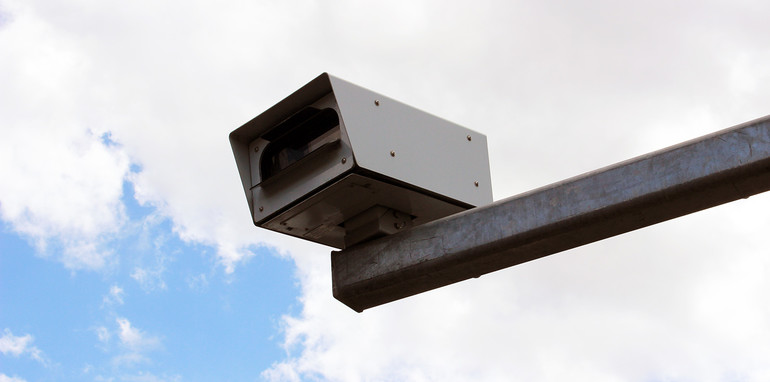
Speed kills. Speed cameras save lives. We have heard it all before. But, two-hundred and forty-nine people people died in fatal traffic accidents on Victoria’s roads last year — a 2.5 per cent increase from 2013’s figure.
This is despite a record number of fixed and mobile speed cameras deployed on roads in Victoria, and around Australia.
For years, the governments have been claiming that speed cameras save lives and that speed is the greatest common factor in fatal car accidents.
But with road deaths on the rise, could it be that speed cameras actually don’t save lives and in fact are contributing to our road toll by breeding poor driving practises?
Since Saab introduced seat belts as standard in 1958, occupant safety has been improving every year, and the sedans, wagons, utilities and SUVs we drive today are safer than ever. And safer cars will undoubtedly go further in reducing the road toll than speed cameras.
Speed cameras certainly have their place in society, but not with the draconian enforcement of low-level speeding and covert tactics, such as hiding in bushes and unmarked mobile speed cameras, as occurs in Victoria, at least, more needs to be done.
The proof is in the numbers. People are still crashing, they are just safer doing so.
The figures show that revenue from speed cameras alone — on the spot police fines are not included in this figure — in 2010 was around $236 million. Fast forward to 2013 and that figures jumps a whopping $57 million to $293 million. Imagine ripping almost $300 million from government coffers; speed cameras have become like a drug addiction that governments can’t help but feed off.
Included below is a graph (click here to see larger version) that shows the relationship between hospital stays shorter than 14 days, longer than 14 days, fatalities and revenue from speed cameras. The graph shows that the increase in revenue from speed cameras isn’t commensurate with a reduction in hospital stays. Hospital stays of fewer than 14 days and more than 14 days during this period trended steady.
When asked about speed cameras and levels of enforcement, a spokesperson for the Department of Justice and Regulation told CarAdvice:
“Broadly speaking the rate of people being fined by cameras is not changing, but as the population grows, so too does the number of fines issued.
“The overall number of infringements issued annually is increasing as Victoria’s population grows and there are more cars on the road.
“Over 99 per cent of vehicles passing fixed cameras and over 98 per cent of vehicles passing mobile cameras comply with the speed limit.
That’s because people know that they are there. Drivers slow down for the cameras, and then once past them, they resume their normal driving habits – Ed.
“Fixed and mobile road safety cameras reduce speeds and cut road trauma because they are placed in high-risk or high-speed areas, areas with history of road trauma, or areas that will provide a road safety benefit.
This is not always so! In 2011 a NSW review of the placement of speed cameras was carried out by the Auditor-Generals Department, and a large number of cameras, 38 in fact, were identified as being placed to interrogate the speed of a large number of passing vehicles, or where the speed limit had been reduced from a higher limit; e.g. passing from a 90kmh zone into a 70kmh zone, with no identified high risk factors or adverse trauma history – Ed.
“100 per cent of the money from camera fines is allocated to the Better Roads Victoria Trust Account. The funds from this account are used to improve road safety for all road users.”
With an enforcement focus skewed on speed, ask yourself this question: how many speed cameras did you travel through (whether it be a fixed or mobile one) in the past month? Now, ask yourself how many times were you stopped to be tested for drugs or alcohol over the same period?
Similarly, in the past 10 years, how many times did you undertake driver training to improve your skills?
The unfortunate reality of speed camera-biased enforcement can be demonstrated with the tragic death of pedestrian Anthony Parsons and husband and wife Savva and Ismini Menelaou, who were passengers in a Ford Falcon struck at the intersection of Warrigal and Dandenong roads in Oakleigh, Victoria last year.
Brazilian national Nei Lima DaCosta was high on ice and drove through one fixed speed camera at 30km/h over the speed limit minutes before careering through the intersection of Warrigal and Dandenong roads at 120km/h (40km/h over the speed limit) through another speed and red light camera. He killed three innocent people. These two cameras did nothing to help save the lives of three innocent people.
This particular example illustrates why so much more needs to be done on enforcing and dealing with poor driving, whether it be due to drugs, lack of skills or visible policing.
There seems to be a reluctance, at least in Australia for police to perform in a pro-active role. Whenever police are seen on highways, it is always in the role of enforcement, speed checking, number plate recognition activities and the like, revenue raising activities – Ed.
Speed cameras alone will never be a useful immediate enforcement or protection tool against drivers excessively speeding, or people who don’t know how to drive to start with.
Those people that use the idiom “don’t speed and you won’t get caught” simply don’t understand the reality of driving safely. If I had the preference of watching the road or my speedometer, I know which one I would choose.
What is needed is an overhaul of driver training, the proper blitzing of drink and drug driving testing, along with the removal of low level speed enforcement. Who would have an issue with being stopped twice a day for drug or alcohol testing if it meant impaired drivers were taken off the road more promptly?
We also need more transparency on where the money generated from speed cameras goes and where it should be spent.
With all the roads around NSW in such poor condition, serious doubt has to raised as just where income from fines is actually spent on – Ed.
Primarily, the Russian people have only been driving for a short time. Prior to the fall of communism in 1989, private ownership of motor vehicles was severely restricted by cost, but more importantly, to restrict the free movement of the population within the former Soviet Union. Access to motor vehicle ownership in the last 27 years has increased exponentially! What has not increased however is the skill, ability, psyche and consideration that goes with the operation of a motor vehicle. Accompanied by this, is a distinct lack of experience, discipline and courtesy needed when driving on a public road.
There also appears to be no concept of consequence in Russia. This results from a lack of lateral thinking which is not nurtured in Russian society as well as their education. So they drive like aggressively without regard for road rules believing they’re not causing any harm. Russians believe the bigger the car they drive, the safer they are. Hence why drivers of 4x4s tend to be even more aggressive then drivers of a Fiat Punto.
Russia: The only place where you can be rear-ended whilst overtaking, driving the wrong way up a one way street!
Corruption
Corruption is rife in Russian which means that money can buy anything, including a driver’s licence. Russian get drivers licences with no knowledge of road rules or even the ability to drive a car! As a result there is little reason to learn the highway code. Thus everyone has their own view as to what the laws of the road really are. Continuing with corruption, if you drive like a idiot and get stopped, you can generally bribe your way our of being punished. Thus there is basically no fear of punishment which reinforces the belief that Russian drivers can behave at the wheel as they wish with impunity. Police are generally nowhere to be seen. They might occasionally pull you over nearer the centre of a city by being flagged down but a police car pulling someone over? Never! There are no cameras, except around the city centre but even if you are sent a fine, there is no system in place to actually guarantee payment of that fine. Many Russians who have been sent a fine have never paid it. So again, you can act without fear of punishment,
“There are only two types of Russians – those who give bribes and those who take them.”
So all in all, this theme finds its way into the Russian psyche. The Russians are not stupid because, if you are stupid, you still know the difference between right and wrong. 80 years of communism has lead Russians to be disillusioned and somewhat primitive. There is a big difference.
Driving in Russia is hazardous: Last year, 200,000 traffic accidents killed 27.025 people in Russia in 2013. Addressing those high levels, President Dmitry Medvedev blamed the “undisciplined, criminally careless behaviour of our drivers,” along with poor road conditions. However, Medvedev made no mention of the totally dysfunctional Russian traffic police!
Russians consistently ignore red lights, overtake on the inside, overtake on the outside when unsafe or blind, speed and couple this with little or no technical expertise or driving ability, this is a recipe for disaster!
While accepting that drivers certainly play a role, Medvedev did not mention Russia’s traffic police, which, “is known throughout their land for brutality, corruption, extortion and making an income on bribes.”
According to information published by New Times(2009), one day’s corrupt income for a traffic policeman is $1000. Everyone regards the law enforcement agencies, chiefly the police, as extortioners in uniform and it is generally recognised that a policeman’s official salary is only part of his income. Medvedev’s police reform, carried out by the police establishment itself, has failed. The overwhelming majority of Russians have no more faith in the police than they did in the Soviet past.
Russia ranks 133rd among the world’s nations in corruption (where number one is the least corrupt), according to Transparency International. So going to the police with a legitimate complaint is far from sure to produce a good result.
In addition to authorities they deem untrustworthy, Russian drivers must contend with the possibility of being attacked by another driver. The below video compiles fights between drivers that feature crowbars, slapping, punching, and worse.
Then there are pedestrians who get themselves hit by cars on purpose, for a payoff. A video compilation (below) of failed scams offers a few examples.
Overall, in a country where traffic conditions are horrible, insurance scams and roadside fights are always a possibility, and the police are widely viewed as corrupt, video evidence of one’s innocence can be a very valuable thing.
There are are number of things which also contribute to this situation:
Harsh climate. It means foggy mornings in the summer, rainy autumns, snowy winters notorious of its blizzards and ice, springs with huge lots of wet dirt.
Poor road conditions. Yes, that is no secret, that the bigger part of roads in Russia are not good. Perestroika, the crisis of 90’s and other economic problems including theft and corruption inside the Road construction department resulted in poor roads conditions
Large distances. It is much more easy and convenient to build and service roads in a small country, neither in Russia where distances between settlements sometimes can be counted in hundreds of km. Living in Siberia, one can take a ride from one city to another and not see civilisation for hours with only taiga forest around. In Australia, large distances are also an issue, but Australians do not have the poor driver behaviour as exhibited in Russia!
The Russian government did not expect people to have so many cars. The number rose dramatically over the last 25 years. In the west, the culture of proper driving was formed over a longer period, while in Russia it just boomed. The problem is much worse for big cities of 1 million citizens or more. Here we see too many cars on tiny roads and a lack of parking spaces. It makes people nervous while driving.
The other factor is culture. Russian people today haven’t learned to respect each other. And they won’t until the economic situation improves.
Vehicles and Vodka
Russia has a long history of alcohol consumption. The average Russian drinks 20 litres of pure alcohol per annum, nearly twice as much as their nearest rival. This of course carries onto the streets of Russia.
According to data, the number of drunk drivers has been steadily increasing in the past few years. In the last eight months of 2012, the number of accidents caused by drunk drivers rose by 3.5%. In that time, there were 152 alcohol related accidents in Moscow, which caused 15 deaths. And Moscow is far from being the worst city in Russia: in the Krasnoyarsk region there were 433 drunk driving accidents over the same period.
Some worry that stricter laws will mean serious punishment even for drivers who don’t drink, since Russia’s laws don’t specify a blood alcohol level at which one is considered drunk. United Russia lawmakers think that establishing specific criteria for drunk drivers is essential to the success of a stricter law. A threshold is important because human blood will always contain some alcohol, which could be detected in blood tests. Russia had an alcohol limit until 2010, but then-President Medvedev thought drivers interpreted the law to mean they could drink up to that point, and changed the law to zero-tolerance.
On the other hand, people who knowingly drink and drive might not be deterred by the new law at all. The police say people who regularly drive under the influence and accumulate suspended licenses for years simply ignore the sanctions (such as the driver in the recent accident in Moscow, whose license had been suspended in 2010 for drunk driving).
In the past two years, more than 18,000 drivers have had their license suspended for drunk driving. Among those drivers, some had been punished for drunk driving 100 times or put in administrative arrest 16 times for driving without a license. The law has no effect on this type of person, so a completely different approach is needed with them. It has been suggested that if they can’t stop themselves from drinking and driving, they need to be under the strict control of the courts and medical staff.”
The Russian Dash-Cam
In Russia, everyone should (and does) have a camera on their dashboard. It’s better than keeping a lead pipe under your seat for protection (but you might still want that lead pipe).
The conditions of Russian roads are perilous, with an insane gridlock in the city and gigantic ditches, endless swamps and severe wintry emptiness of the back roads and highways. Then there are large, lawless areas you don’t just ride into, the police with a penchant for extortion and deeply frustrated drivers who want to smash your face.
Psychopaths are abundant on Russian roads. You best not cut anyone off or undertake some other type of maneuver that might inconvenience the 200-pound, six-foot-five brawling children you see on YouTube hopping out of their SUVs with their dukes up. They will go ballistic in a snap, drive in front of you, brake suddenly, block you off, jump out and run towards your vehicle. Next thing you start getting punches in your face because your didn’t roll up your windows, or getting pulled out of the car and beaten because you didn’t lock the doors. These fights happen all the time and you can’t really press charges. Point to your broken nose or smashed windows all you want. The Russian courts don’t like verbal claims. They do, however, like to send people to jail for battery and property destruction if there’s definite video proof. That is why there’s a new, growing crop of dash-cam videos featuring would-be face-beaters backing away to the shouts of “You’re on camera, fucker! I’m calling the cops!”
Dash-cam footage is the only real way to substantiate your claims in the court of law. Forget witnesses. Hit and runs are very common and insurance companies notoriously specialize in denying claims. Two-way insurance coverage is very expensive and almost completely unavailable for vehicles over ten years old–the drivers can only get basic liability. Get into a minor or major accident and expect the other party to lie to the police or better yet, flee after rear-ending you. Since your insurance won’t pay unless the offender is found and sued, you’ll see dash-cam videos of post hit and run pursuits for plate numbers.
And sometimes drivers back up or bump their pre-dented car into yours. It used to be a mob thing, with the accident-staging specialists working in groups. After the “accident,” the offending driver–often an elderly lady–is confronted by a crowd of “witnesses,” psychologically pressured and intimidated to pay up cash on the spot. Since the Age of the Dash-cam, hustle has withered from a flourishing enterprise to a dying trade, mainly thriving in the provinces where dash-cams are less prevalent.
And then, sometimes, someone will jump under your car at a crossing, laying on the asphalt, simulating a badly hurt pedestrian waiting for that cop conveniently parked nearby. This dramatic extortion scheme was common, until the Age of the Dash-cam. Oh, and there are such juicy, triumphant tales about of would-be extortion victims turning the scheme around and telling the cast members to pay them money or they’re going to jail for this little performance! Don’t try it.
While those lucky enough to traverse the Russian roads with an American or other Western passport are hassled less, the Russian Highway Patrol is notorious throughout their land for brutality, corruption, extortion and making an income on bribes.
Russian websites go for the uncut, the horrible accidents–trucks flipping over, people being smashed into pieces and sedans flying up in the air and exploding. Given that television programing is mostly vacuous and heavily censored, dash-cam videos are very popular in Russia. It’s uncensored–drama, comedy, tragedy, horror, thriller and educational genres fused into one super-genre of “dash-cam.” Who needs Klitschko when you can watch to tough guys box in the street?
To better understand and navigate this “community service”, here’s a Russian Dash-cam Video Thesaurus for the blog tag cloud. It is comprised of purposely misspelled hick and thug slang and phrases used sarcastically…while people die. Ah, Russian humour.
поциент – “Patient.” The poor bastard, the dumb idiot in the video getting pulverized, run over or smashed into. A wordplay of “potz,” the Russian translation of the Yiddish “schmuck.”
летчик – “Pilot.” The idiot who zooms by and crashes in the grand finale of a video.
слабоумие и отвага – “Courage and dementia.”
последние секунды жизни – “Last seconds of life.” Videos featuring persons before and after fatal accidents.
кетай как всегда пиздец – “China is always fucked.” Clips from China that feature severe crashes and frequently feature passersby ignoring the bodies and car debris.
кирпичи – “Bricks” (as in “shitting bricks.”) The audio track often features the driver panting or shouting the entire Russian vocabulary of swears at the top of their lungs. Used for videos with near misses or close shaves.
железобетонное очко – “Anus of Concrete.” Honorific given to drivers who, faced with sudden danger like a huge truck coming head-on, remain calm, only saying “shoot” or “darn” quietly in the background, and efficiently steer away from danger, displaying some seriously fucking great driving skills.
наварра – The infamous video featuring a black Nissan Navarra SUV swerving to the oncoming freight liner and being smashed into a cloud of small pieces. It is the metaphor for a gruesome, intense, fatal accident.
But there are moments of humanity among the Russian people,. At a city accident scene, you could see as many as twenty cars pulling over, drivers running out to the scene. This comes from the recognition of the fact that on a 300-mile stretch of uninhabited territory, help can only come from passing vehicles and not emergency services. Most Russian long-distance routes East of the Ural Mountains are that way. There is really only one highway like that in North America: the Western Canadian to Alaskan Stretch of the Pan-American Highway. The camaraderie between strangers, shoveling the snow and hailing a freight truck or tractor to pull the car out. The kudos. The cheers. The knowledge that you could be very well be next.
And don’t you forget it. Aside from the kindness of strangers, it’s just you and that little gadget versus the hell that is the Russian people on the road.
Republican presidential candidate Donald Trump is crushing it in the race to represent his party at the polls, and, as bizarre as it sounds, it’s time to start seriously thinking about an existence with the eccentric billionaire as the most powerful man in the world.
The former reality TV star and failed steak entrepreneur’s resounding overnight win in the key state of Nevada has all but cemented his spot in this year’s presidential election, putting him in a strong position ahead of next week’s “Super Tuesday” contests, where voters in a dozen states will cast ballots in presidential primaries.
But US politics experts are warning a Trump win in that race could lead to global disaster.
With mentions of economic unrest, hurling aggressive insults at global leaders, and handing over control of the world’s most sophisticated military force, news.com.au was left feeling largely unenthused about Trump’s America following an interview with senior lecturer at the University of Sydney’s United States Studies Centre, David Smith.
“It’s not a subject anyone wants to think about, but the reality is now we have to,” he said.
“It’s very likely that Trump is going to get the Republican nomination at this stage. His likely opposition would be Hillary Clinton, and instinctively most feel that Hillary Clinton would beat him fairly easily. But then again everyone felt he wasn’t going to get far in the nomination race either.”
CAN HE REALLY PULL IT OFF?
From bursting onto the scene as a novelty, celebrity candidate to working his way to a runaway lead in the Republican primaries, the polarising figure has shocked both his supporters and critics.
He’s harnessed his public persona, and kept rolling with the aggressive attitude and firing out the no-holds-barred insults he’s become known for, but Dr Smith says, there’s no way of knowing whether Trump would adjust his behaviour once he’d moved into the White House.
“We don’t know whether he would recognise that he doesn’t know a lot about the areas of the presidency and delegate those areas to experts. I think that’s what a lot of people would be hoping, that the work would largely be done by expert advisers,” he said.
“On the other hand, it’s Donald Trump. He has a massive estimation of his own abilities, and if he gets a massive endorsement there’s every possibility he will go ahead and do those things he’s been talking about, like engage in trade wars and tighten borders with Mexico.”
Trump has been running on a very thin platform. On his campaign website he offers his position on only five issues: reforming immigration, trade, tax, care for veterans, and protecting gun rights.
On the road, campaigning in front of Republican voters and those he’s trying to turn, the veteran businessman has been more outspoken about his presidential plans.
From building a “great wall” to block unauthorised migration to the US via Mexico, to his plans to swiftly taking down China in the global manufacturing wars, Trump has been talking a big game. But what he is able to enforce is another issue.
“There’s no way he’ll be able to get Mexico to build the wall, he’s not just suddenly going to be able to displace China from the top of the world’s manufacturing economy. He wants single payer health care which is something a lot of Democrats would like but Hillary Clinton is currently running on a campaign saying you’ll never get that through congress and it’s unlikely he’ll be able to either,” Dr Smith said.
But Trump is not one to be deterred by the prospect of failure. His business record shows he’s had about as many massive failures as major successes, showing a “try anything and see what sticks” attitude to business, and now potentially politics.
“It’s very worrying to people who in the presidency are fundamentally looking for a safe pair of hands, but to supporters of Trump, what they feel is that president after president has betrayed them, so they’re happy to have someone who’s completely different to any other president before him,” Dr Smith said.
‘GLOBAL DISASTER’ WAITING TO HAPPEN
Dr Smith says the potential disaster of a Trump presidency could be felt globally.
“There’s a limited amount that the president can do directly to influence the economy, but things they do and say can have major effects on certain markets. Stock markets can react violently to certain announcements, and it’s quite possible that Trump could spook markets in a way that could have negative effects for the economy overall,” he said.
“If he’s going to get involved in the trade war with China, really, nobody is going to win that war, that is like courting global disaster. The two economic giants of the world being involved in a trade war would be disastrous. That’s not what the rest of the world and the majority of the US wants. He’s suggested he’s not going to get involved in as many actual military wars as his predecessors did, but given his generally aggressive demeanours, other countries might interpret a Trump presidency in hostile terms.”
So economic chaos and military action could very well be on the cards, but that’s not even the worst of it.
“The thought of him having access to the nuclear codes, given that at a rally recently he said that he wanted to punch a protester in the face, plus his total intolerance of the sect — it’s not a combination we really want to explore,” Dr Smith said.
There’s no guarantees, of course, that Trump will romp it in and claim the White House, but the prospect is becoming more real. Last month, the man himself claimed he could “stand in the middle of Fifth Ave and shoot somebody” and he wouldn’t lose votes.
HOPING FOR THE BEST
No one knows exactly what a Trump-led White House would mean. He’s well known for backflipping on his bold claims, but the best hope is that if Trump does take the top job he sticks to one statement he made last month: “When I’m president I’m a different person”.
“If he was president and everything he said had consequences, that would be serious, because now he’s dealing with leaders of other countries, global markets, and things that presidents do and say really affect markets,” Dr Smith says.
“Maybe he is such a talented actor and performer, that he knows his audience exactly, but I don’t have a huge amount of confidence that that would actually happen. His statement shows he understand people’s concerns, but the problem is why should we believe that claim. All that really shows is that he understands the criticism, it doesn’t show he’s going to change.”
The first time I listened to Tim Minchin’s new song “Come Home (Cardinal Pell)” I cackled. Brilliant rhyming. Religion and prison. Bell with a Pellian knell. Minchin writes poetry with a pungent point.
The second time I listened to it I was just double checking that Minchin never used the word “fuck.” He often does. He didn’t this time. He didn’t have to – the grotesque nature of the circumstances doesn’t need to be punctuated by obscenity.
The third time I listened to it I cried. I was driving in my car. I cried big fat tears that caused me to pull over to the side of the road.
I’m not a victim of sexual abuse. No one in my family is. I do know people who are. I am a Catholic and a public critic of Cardinal Pell and the Catholic church on its handling of cases of child sexual abuse. I’ve expressed frustration at the church’s unwillingness to reform in response to this abject, catastrophic failure of its mission.
Tim Minchin asks George Pell to ‘come home’ in expletive-filled new song
Read more
Crying at Tim Minchin’s little ditty calling on Cardinal Pell to come home and face the music is the last reaction I expected to have.
Listening to victim’s testimony is harrowing. That makes me cry. Sometimes it makes me furious. And sometimes, I admit, I have to turn it off or stop reading because it’s too much to take in.
But a whimsical, acerbic and mocking take down of Cardinal Pell? What’s there to cry about?
For starters, it provoked sorrow at my loss of faith in the church, an organisation that has done much good but nonetheless values its rules, assets, and male privilege above all else.
I cried because there was little else I could do with my deep fury that neither Pell nor his mates at the Vatican appear to take seriously the need to respond fully and openly, and to reform the church, in the face of the child sexual abuse crisis.
Jesus said there is no greater love than to lay down your life for another. Cardinal Pell says there’s no way I could risk my health by flying business class to Australia.
I know Jesus says “judge not lest you be judged” but I reckon it’s a fair question to ask, Cardinal Pell: what would Jesus do?
Jesus said “let the little children come to me” and “you must be like a child to enter the kingdom of heaven.” Jesus valued children in their innocence and goodness. The church allowed priests to destroy that goodness and then valued the institution above the victims.
But if I’m honest, it’s not just a loss of faith in a human institution. It’s a challenge to my faith in a loving and gracious God.
I long ago stopped buying the idea of intercessory prayer – the kind where you ask God or some saint or Mary to intercede on your behalf or someone else to cure an illness or relieve a burden. I don’t believe God interferes in human lives in that way.
But I do – well on most days anyway – still believe in a source of love, grace and goodness that motivates our human existence.
Watching Cardinal Pell flounce about in his regal gear and flout the royal commission, watching the institution supposedly founded by Jesus grotesquely morph into something so removed from the teachings of Christ: it shakes me to the core. It shakes the very foundations of belief. It gives me no hope.
When Minchin sings “And if Lord God omnipotent reigneth, he will take one look at you and say, go home Cardinal Pell … I think the lord is calling you home Georgie”, I wonder: where the hell God is in all of this?
I feel hesitant honestly expressing my reactions. How much more significantly, terribly, horribly wronged must victims of child sexual abuse feel? How much courage must it take to testify to a royal commission about something so foul that’s happened to you? How deep must their feelings of betrayal, sorrow, loss, and anger be?
Here’s fresh insight into Pell’s response to the child sex abuse crisis. It’s not encouraging.
How can we as a society not pay attention? How can the church, and one of its supposed “princes”, Cardinal Pell fail to face this great wrong and move heaven and earth to make it right?
No less a legal mind than Frank Brennan outlines the significant charges and questions that Cardinal Pell has to answer under oath and cross-examination. Or as Minchin simply sings: we have a right to know what you knew.
Cardinal Pell should, as Minchin sings, come home. But if he won’t, some victims of child sexual abuse want to go to sit in front of him when he testifies via video link. The proceeds of Minchin’s song are going to fund their travels.
If you want to support them, buy the song. Just be forewarned: Minchin is a genius who provokes hilarity and horror in just four minutes of melody. If you are Catholic, I recommend not listening while you are driving.
George Brown is a decorated soldier and health professional and 40 year veteran in the field of emergency nursing and paramedical practice, both military and civilian areas. He has senior management positions in the delivery of paramedical services. Opinions expressed in these columns are solely those of the author and should not be construed as being those of any organization to which he may be connected.
He was born in the UK of Scottish ancestry from Aberdeen and a member of the Clan MacDougall. He is a member of the Macedonian community in Newcastle, and speaks fluent Macedonian. While this may seem a contradiction, it is his wife who is Macedonian, and as a result he embraced the Macedonian language and the Orthodox faith.
His interests include aviation and digital photography, and he always enjoys the opportunity to combine the two. Navigate to his Flickr site to see recent additions to his photo library.
Џорџ Браун е украсени војник и професионално здравствено лице и 40 годишен ветеран во областа на за итни случаи старечки и парамедицински пракса, двете воени и цивилни области. Тој има високи менаџерски позиции во испораката на парамедицински услуги. Мислењата изразени во овие колумни се исклучиво на авторот и не треба да се толкува како оние на било која организација тој може да биде поврзан.
Тој е роден во Велика Британија на шкотскиот потекло од Абердин и член на Kланот MacDougall. Тој е член на македонската заедница во Њукасл, и зборува течно македонски. Иако ова можеби изгледа контрадикција, тоа е неговата сопруга кој е македонски, и како резултат научил македонскиот јазик и ја примија православната вера.
Неговите интереси вклучуваат авијација и дигитална фотографија, и тој секогаш ужива во можност да се комбинираат двете. Отиди до неговиот Фликр сајт да видите последните дополнувања на неговата слика библиотека.
Discussion on the law that applies to or affects Australia's emergency services and emergency management, by Michael Eburn, PhD, Australian Lawyer. Email: meburn@australianemergencylaw.com
Oh, let's see...distinguished Gen-X'er, frustrated writer and mom living in the confines of a small town that thinks it's a big deal. And have I mentioned Walmart yet?




 Words, By George!