While considering the recent insurgent action in the northern Macedonian city of Kumanovo which resulted in the deaths of eight police officers, I found myself thinking that this was not an action for the Macedonian police (PM), but rather an action which falls under the purview of the Army of the Republic of Macedonia (ARM).
Army of the Republic of Macedonia (ARM)
The role or charter of the ARM is
To protect the lives and the personal safety of the people;
To guarantee the independence and the territorial integrity of the state;
To guarantee the material wellbeing and the prosperity of the people.
Deterring aggression;
Defending the country in case of an aggression;
Uniformity and conformity in the international co-operation in the area of defence.
The Republic of Macedonia maintains a defensive potential and combat readiness of its Armed Forces which function as a deterring factor in case of a potential aggression in accordance with our capabilities
The written role or charter of PM is a little harder to identify. In part their role is to obey and enforce the laws of RoM for the people. It also manages entry, exit and visa activities at international borders point, and international airports, provides security for foreign embassies and consular buildings, and manages and issues passport and passport renewals. It provides policing on the lakes of Macedonia which form international boundaries with Greece and Albania. Again, this is seen as an army role, as they manage the country’s borders generally. Some of these roles are not policing in nature, and can (or should) be managed by other agencies. The Police of the Republic of Macedonia also works closely with the NATO peacekeepers in patrolling areas with high numbers of ethnic Albanians along its borders with Kosovo and Serbia.
It has been stated in the media that the rebel uprising was led by five Kosovars supported by ethnic Albanians from the Kosovo region. As it would appear that this threat arose in a foreign or neighbouring country, repelling it would be a matter for ARM rather that PM.
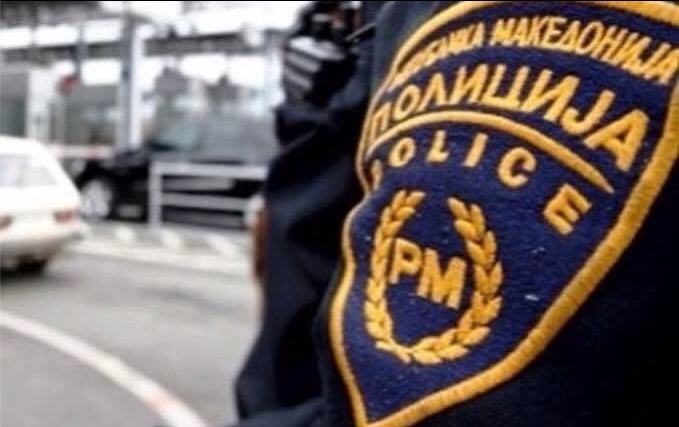
Policija
However, PM sees itself as the superior or premier law enforcement organisation in RoM, with the ARM playing a very clear and distinctly minor secondary role in defence of the country. In the case of this rebel uprising from Kosovo it is clear the police saw this as their role to manage rather than that of the ARM. PM is largely an inefficient, inflexible, authoritarian organisation, political in nature, with many ideas and functions relating to its socialist past. However its role is purely domestic in nature, protecting the citizens of the Republic.
Eight police officers and 14 alleged members of an armed group were killed in fighting in a northern Macedonian town of Kumanovo authorities have said, amid increased concern about the political stability in the Balkan nation that has a history of minor ethnic hostilities.
Interior ministry spokesman Ivo Kotevski said another 37 police officers were wounded in the clashes that started on Saturday. By Sunday Kotevski stated that the police operation was now over and that “one of the most dangerous terrorists groups in the Balkans has been neutralised”.
He said police stated the 14 individuals were believed to be members of the armed group. Some of the killed wore uniforms with insignia of the disbanded Kosovo Liberation Army. No identification documents were found on the deceased.
Macedonia has announced two days of official mourning for the eight PM officers killed in action.
Macedonia says five Kosovars led the armed group which was involved in deadly clashes with security forces in the northern town of Kumanovo.
Northern Macedonia
Eight officers and 14 gunmen were killed in the fighting, Interior ministry spokesman Ivo Kotevski said.
Those named were members of the now dismantled Kosovo Liberation Army.
Mr Kotevski said the operation near the Serbian-Kosovan border was now over and the armed group had been “neutralised”, with a large amount of weapons seized.
Last month, about 40 ethnic Albanians from Kosovo briefly took over a Macedonian police station in the village of Gosince near the border, demanding the creation of an Albanian state within Macedonia.
In 2001, rebels demanding greater rights for the ethnic Albanian minority launched an uprising against the government, and tensions have continued despite a peace deal.
About a quarter of Macedonia’s two million population are ethnic Albanians.
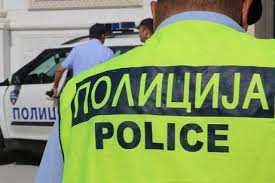
Macedonian police officer on duty.
Sami Ukshini, Beg Rizaj, Dem Shehu, Muhamet Krasniqi and Mirsad Ndrecaj were the leaders of the armed group that clashed with police in a suburb of Kumanovo, some 40km (25 miles) north of the capital, Skopje on Saturday, the interior ministry spokesman said. Only one of the 14 uniformed bodies had been identified – that of another Kosovo national, named Xhafer Zymberi, said the spokesman.
“More than 30 terrorists, mainly Macedonian nationals and one from Albania, surrendered yesterday [Saturday] to the police forces,” Mr Kotevski added. He said 37 police officers were also wounded in the clashes.
Residents returning to the city are finding many of their homes damaged as a result of the fighting, one Reuters reporter at the scene says. “It’s total destruction. Thank God we’re safe,” Haki Ukshini said after finding his home largely destroyed.
The men who surrendered would face Macedonian justice, Prime Minister Nikola Gruevski said.
Macedonian Translation
Македонија вели декапет Косоварипредводешевооружена групакојабеше вклучена восмртоноснитесудирисо безбедносните силивосеверниот градКуманово.
Northern Macedonia
Осумполицајции 14вооружени лица беаубиениво борбите, изјави портпаролот на Министерството за внатрешни работи, Иво Котевски.
Оние што се именуванисечленови на сега веќераспуштенатаОслободителна војска на Косово.
Г-динКотевскирече дека операцијатаво близина насрпско-косовската граница есега повеќеивооружена групабиле “неутрализира”, соголемо количество оружјезапленето.
Минатиот месец, околу 40 етнички Албанци одКосовократкоја презедемакедонскиполициската станицаво селотоГошинцево близина на границата, барајќи создавање на албанскадржава воМакедонија.
Во 2001 година,бунтовницитекои бараа поголеми праваза етничкото албанскомалцинствозапочнавостание против владата, а тензиите продолжијаи покрајмировниот договор.
Околу една четвртинаод двамилиони жителина Македонијасе етнички Албанци.
Macedonian police officer on duty.
СамиUkshini, БегРизај, DemШеху, Мухамет Красниќи иМирсадNdrecajбиле водачи навооружената групакојасе судрија со полицијатаво предградието наКуманово, некои 40 километри (25 милји) северно од главниот град, Скопје, во саботата, портпаролот наМинистерството за внатрешни работирече. Самобиле идентификуваниеден од 14-униформирани тела –на другаКосовонационална,именуванXhaferZymberi, изјави портпаролот.
Жителитесе враќаат воградотсе најдатмногу однивните домовиоштетени како резултатна борбите, еденновинарна Ројтерсна местото на настанот, вели. “Тоа ецелосно уништување.Фала му на Боганиесме безбедни“, рече ХакиUkshiniпо наоѓање нанеговиот домво голема мера уништен.
Мажитекоисе предадоаќе се соочи сомакедонското правосудство, рече премиерот НиколаГруевски.
Today, the 256th of April 2015, is the 100th anniversary of ANZAC here in Australia and New Zealand.
Today we remember the sacrifices given by our servicemen in many and varied conflicts, many who made the supreme sacrifice and laid down their lives so that who are left can enjoy the freedom and liberty so hard-won.
We especially remember those gallant men who stormed the beaches of Anzac Cove at Gallipoli in 1915, and gave their all against a formidable Turkish foe. We remember their endurance and their perseverance to get the job done. And ultimately, we remember the tragic failure of the whole Gallipoli campaign.
It was a turning point as a nation for both Australia and New Zealand, a baptism of fire, a loss of innocence for a young country. Many heroes arose out of this battle, many names becoming those of legend.
ANZAC is synonymous with bravery, stoicism, dogged determination and a drive to succeed. This became a characteristic of all servicemen to follow and is the measure of every “Digger.”
We bow our heads and reflect on their service and their sacrifice.
Who Are These Men
Who are these men that march so proud,
Who quietly weep, eyes closed, head bowed?
These are the men who once were boys,
Who missed out on youth and all of its joys.
Who are these men with aged faces,
Who silently count the empty spaces?
There are the men who gave their all,
Who fought for their country for freedom for all.
Who are these men with sorrowful look
Who can still remember the lives that were took?
These are the men that saw young men die,
The price of peace is always high.
Who are these men who in the midst of pain,
Whispered comfort to those they would not see again?
These are the men whose hands held tomorrow,
Who brought back our future with blood tears and sorrow.
Who are these men who promise to keep
Alive in their hearts the ones God holds asleep?
These are the men to whom I promise again:
“Veterens”, my friends – I will remember them!
Jodie Johnson
This poem was written in 1966 by Jodie Johnson who was 11 years old at the time. The depth of her feeling and understanding for the thoughts of the veterans is unusual for someone so young. I know when I see this sort of understanding by young people, that our future is in good hands.
In Flanders Fields
In Flanders fields the poppies blow
Between the crosses, row on row,
That mark our place; and in the sky
The larks, still bravely singing, fly
Scarce heard amid the guns below.
We are the Dead. Short days ago
We lived, felt dawn, saw sunset glow,
Loved and were loved, and now we lie,
In Flanders fields.
Take up our quarrel with the foe:
To you from failing hands we throw
The torch; be yours to hold it high.
If ye break faith with us who die
We shall not sleep, though poppies grow
In Flanders fields.
Lest We Forget
Lest We Forget
They went with songs to the battle, they were young.
Straight of limb, true of eye, steady and aglow.
They were staunch to the end against odds uncounted,
They fell with their faces to the foe.
They shall grow not old, as we that are left grow old:
Age shall not weary them, nor the years condemn.
At the going down of the sun, and in the morning,
We will remember them.
What’s the best way to counter an unwelcome drone: a bigger, faster drone, laser guns, sky-high netting or devices that block remote controls?
Scientists, governments and companies are now scrambling to find out.
Concerned about a recent spate of mystery drones flying over its nuclear plants, military installations and even the presidential palace, France has asked scientists to help devise ways to counteract the small — and so far harmless — motorized menaces overhead.
World powers such as China and the United States are also gearing up against the potential threat. Here’s a look at the situation — and possible high-tech solutions.
WHAT’S THE PROBLEM?
Civilian drones have become a 21st-century hobby and a hot seller for many, from high-tech aficionados to curious kids. Companies like Amazon even want to use drones for deliveries. But their increasing presence in the skies gives headaches to national security chiefs.
A small drone crashed on the White House lawn last week. This event exposes the complexities and concerns that may need to be considered as the FAA proceeds in attempting to create legislation on remote or autonomous aerial vehicle use. It also serves as a reminder of just how difficult it can be to secure a building like the White House. The timing of the crash is unfortunate, coming just a week after various representatives from small-drone businesses convened in Washington DC to appeal to lawmakers for FAA requirements that won’t stifle the nascent industry.
It also comes only days after a hexacopter carrying a load of crystal meth crashed into a Tijuana parking lot near the US-Mexico border.
For months, France has faced dozens of drone over flights over sensitive sites — mostly nuclear facilities, a worrisome development in a country that gets the highest percentage of its energy in the world from atomic power.
French authorities say the drones currently present no threat. But some fear the drones could be spying on French technology or could one day be equipped with bombs or other weapons. Authorities have stepped up security at French nuclear sites and are investigating who might be behind the drone flights.
The possible and very real risks of rogue drones include terrorism, the invasion of privacy, the theft of industry secrets, and “damage to the credibility of public authorities, institutions or companies,” said France’s National Research Agency.
HARMLESS, FOR NOW
Up to now, the intrusions have been innocuous: These are not rocket-blasting military drones the size of planes like those used by the United States against al-Qaida. But authorities are trying to head off the moment when advanced drones get into the hands of militants.
It could be very difficult to identify a drone. Most flights would of short duration, unlikely to be picked up by radar, leaving any sort of response to be problematic. And most of these flights would be carried out by hobbyists who have flown RC aircraft for years. Are authorities over-reacting in these times of heightened security awareness?
There is a increasing move for the legitimate use of drones by various public service organisations to enhance their regulatory function, and certain private users:
Police forces see a benefit to assist them in law enforcement, searching for missing persons, traffic management and searching premises or locations for offenders.
Fire departments using then for aerial views of fires in structures and the extent of bush/forest/wildfires.
National parks rangers using them to check on wildlife habitats, animal numbers and identify poachers.
Industrial users checking on elevated structures to check integrity of those structures.
News services seeking aerial views of news stories. CNN has already been cleared by the FAA to test the use drones in news gathering.
A CALL FOR CREATIVITY
On Tuesday, a French national security and defence agency under the prime minister closed the books on a call for bids to fund a drone interception system. It hopes to have at least some drone defences operational in the next 18 months. The agency’s classified list of 200 to 300 national companies considered “vital” — in sectors like energy, transportation and finance — would be among the likely early beneficiaries.
“We have made a proposal to the scientific community to see what best emerges,” said Karine Delmouly, a project manager at the National Research Agency, or ANR, which is vetting the proposals. She declined to discuss specifics or say how many companies made bids.
The French security official said the call for proposals drew a substantial response.
WHAT’S THE GOAL?
France wants to monitor and detect intruding drones and their remote-control pilots; analyse and track their flight paths; and ultimately neutralize the drones — either temporarily or permanently — with the least collateral damage possible, the ANR said in its call for bids.
For developers, a winning bid could offer an entrée into a huge potential market in the coming years.
HIGH TECH OPTIONS
As for the options, the sky may be the limit. Anti-drone devices could include pinpoint radar systems to track drones the size of a breadbasket or even smaller (and distinguish them from birds); high-tech lasers to destroy the unwanted intruders or telecommunications-scrambling systems to block the remote controls that direct them. Interception drones could be sent up into the sky to fight back and low-tech solutions such as sky-high netting or fences could also work, officials say.
ALREADY WORKING ON IT
Some countries are already working to counter unwanted drones. State media in China say Chinese scientists have developed a laser weapon that can detect and shoot down small, low-flying and slow-moving aircraft inside a 2-kilometer (1.2-mile) radius.
Private-sector companies are also tackling the problem. China’s DJI Technology Co. said Wednesday it will send a software update this week for its drones’ navigation system that will block them from flying over Washington, accelerating the release after the White House incident involving its 50-centimeter-long (two-foot-long) Phantom quad copter. Company spokesman Michael Perry said the DJI drones use a GPS-linked navigation system that already blocks them from “no-fly” zones around 700 airports worldwide.
LET’S SEE ONE IN ACTION
French media in recent days picked up a promotional video from Malou Tech, a small start-up linked to telecommunications company Groupe Assmann, that showed a six-bladed black drone carrying a net which intercepts and catches a smaller red drone. The company chief, Philippe Dubus, said the firm was not taking part in the French bid, calling instead to encourage the responsible use of civilian drones.
“This is a technology phenomenon, not an aeronautical phenomenon,” said Dubus, adding “within 18 months, whatever they come up with will be obsolete already.”
Still, his company carried out tests Wednesday in which a DJI F550, a relatively old-model drone, successfully dropped a half-litre (16-ounce) bottle of water by remote control.
“In other words, everything is possible,” he said.
Late last year a United States law framed in the name of world peace quietly reached its long arm into a small Melbourne tribunal, persuading it to let a large armaments manufacturer override Australian human rights legislation.
In a decision that went largely unremarked upon, the Victorian Civil and Administrative Tribunal (VCAT) agreed to let Thales Australia Ltd and its subsidiary ADI Munitions discriminate racially against their employees, job applicants and contract workers.
The companies won a five-year exemption from six sections of the Equal Opportunity Act so they could comply with stringent US export laws that describe who can and who cannot have access to American military technology and know-how.
Simon Rice, an Australian National University law professor, could only sigh. He is an almost lone voice against the Americans’ capacity for such strongarm tactics in Australian courts.
“It’s legal imperialism,” says Rice, who chairs the ACT Law Reform Advisory Council. “It’s the US saying to everybody in the world: You will deal with us on the terms we will dictate to you.”
There have been scores of such decisions in small courts across the nation since at least 2003, when the Queensland Anti-Discrimination Tribunal granted Boeing Australia Holdings some of the first such exemptions.
Because the Australian government relies heavily on US military technology, the big defence manufacturers operating here have, for more than a decade, made a practice of applying for exemptions from our equal opportunity laws so they can stay sweet with the US State Department. All applications, except one in Queensland, have been granted, allowing the companies to bar access to certain employees and contractors to positions where they would have access to sensitive US military goods and services.
This means the workforce is segregated, so that the “wrong” people are not given certain positions, as spelt out by the US International Traffic in Arms Regulations (ITAR), according to Rice, who advises our federal parliamentary human rights committee.
Because the ITAR, which governs the terms with which an importing country can use American defence technology, requires companies to discriminate on the basis of birth or nationality, it conflicts directly with Australian state and territory human rights legislation. Companies either persuade our legal authorities to let them off the hook or they don’t get US State Department clearance to access exported US defence technology.
“It is easier for the companies to get a local exemption than to get this clearance,” explains Rice.
Some people are outright denied access to sensitive American defence exports because their country of birth or dual nationality is on an ITAR list of “proscribed” nations.
The list changes from time to time and barred nations currently include Afghanistan, China, Cuba, Cyprus, Fiji, Iran, Iraq, Lebanon, Sri Lanka, Syria and Vietnam – the ancestral homes of many Australian migrants.
Competitive advantage
There was a salient reminder this week of the reasons for US nervousness over technology security. Whistleblower Edward Snowden revealed via German magazine Der Spiegel that Chinese spies had stolen design plans for the Joint Strike Fighter, the aircraft meant to reinforce US aerial dominance. Australia is spending billions of dollars on the same planes.
American lawyers specialising in export laws have described the ITAR as unparalleled in scope, as it reaches across the entire globe. It’s not just about arms, but a whole gamut of hardware and software used for military purposes or space research. It includes ships, planes, lasers and satellite technology, and “export” can simply mean transferring information – even, possibly, according to one analyst, sending an email.
Australia’s foremost specialist in space law, Professor Steven Freeland of the University of Western Sydney, sees extra benefits beyond national security for the US as it enforces the ITAR to regulate who can use American satellite technology.
“In the area of space technology, the US are still the superpower and they want to stay there, despite developments in China and Russia, so they’re very sensitive about their weapons technology going to other countries,” he tells The Saturday Paper. “In its simplest terms, space technology is regarded as akin to missile technology.”
While the ITAR has a benevolent motive in wanting to stop sensitive technology falling into the wrong hands, it also has the effect of enabling the US to retain a competitive advantage, he says.
“You won’t find that motivation explicitly in the official documents,” Freeland says.
However, he is less worried than Rice about ITAR’s reach.
“It’s quite common where people are dealing with national security issues to say: Sorry, but we get to choose the sort of people who work there because we don’t want them to have access,” he says.
Rice argues that the state department is dictating the private behaviour of individuals and companies outside the US, causing them to act unlawfully in their own countries.
Fines and jail terms
The state department can fine offending individuals and businesses up to $US1 million per violation for breaching ITAR requirements. It can ban companies from using American military exports and jail offenders for up to 10 years.
In a case that sent a message to universities, John Reece Roth, a former Tennessee professor of electrical engineering, was jailed for four years in 2009 for breaching the ITAR by providing information on drone technology to students from Iran and China.
Boeing was fined $US3.8 million in 2001, $US15 million in 2006 and $US3 million in 2008 for ITAR breaches and other companies have also been hit hard.
By comparison, breaches here of Australian anti-discrimination and equal opportunity law may lead to an apology or “small value financial compensation”, Australian defence industry lawyer Jane Elise Bates pointed out in the journal Security Challenges in 2012.
“From an economic perspective the balance is certainly in favour of continuing the status quo and seeking exemptions as required to permit the conduct of racial discrimination,” Bates wrote.
In the latest decision granting Thales Australia exemptions in November, VCAT member Anna Dea said the company’s work for the Australian Defence Force, including ship, aircraft, vehicle and munitions manufacture, generates more than $861 million in annual sales. It employs 871 people in Victoria, with an estimated $2 billion worth of projects lined up over the next eight to 10 years.
Dea listed the same reasons that have persuaded nearly every Australian decision-maker in her position for the past decade or so to grant exemptions, faced with the brutal reality of the US ITAR. The company’s work is important to Australia’s defence capability, the state economy and jobs that could otherwise go elsewhere, she said. She noted that no employees or union representatives made any submissions to the tribunal.
But it was not always so.
When Thales and ADI sought similar exemptions in the State Administrative Tribunal of Western Australia in 2005, the commissioner for equal opportunity, the WA Trades and Labour Council, the state’s Ethnic Communities Council and Western Australians for Racial Equality all objected.
The companies won a five-year exemption anyway.
As Australia negotiated a new defence treaty with the US in 2008, judges and decision-makers for a while bridled at having to bow to American law, after a parliamentary committee recommended the federal government seek exemptions from the ITAR.
In 2007, the then VCAT president, Justice Stuart Morris, voiced his concern about being asked by Boeing Australia Holdings to depart from local legislation to provide jobs.
“Such a departure is only sought because important aerospace technology is subject to an American law which places American security ahead of this human rights standard. One might ask: why should not the Americans give way?” he said.
“One suspects that the ITAR is misconceived … But then, I rather doubt that the United States government will back down from ITAR in the face of a decision of the Victorian Civil and Administrative Tribunal.”
VCAT deputy president Cate McKenzie described the nationality-based prohibitions in the ITAR as a “blunt instrument” when she granted a partial exemption to BAE Systems Australia Limited in 2008.
“Assessment of individuals on a non-stereotyped basis, or training and education about the importance of the obligation of secrecy, would seem to me to be a better approach,” she said.
Little choice for legal bodies
At the end of 2008, the president of the Queensland Anti-Discrimination Tribunal, Douglas Savage, refused exemptions sought by the Boeing group. The companies’ opportunities should not be at the expense of employees or potential employees, said Savage, whose decision still stands.
He doubted that refugees who had risked their lives to flee nations whose regimes they opposed were a security concern. Any concern could equally apply to US or Australian citizens, he said.
Rice sees such opposition as having faded. In particular, although they have appeared in past hearings, he is disappointed at unions’ failure to take this on as a cause.
“They haven’t been very effective or strategic in their arguments,” he says.
Four years ago, Rice argued in The Canberra Law Review that courts and tribunals in reality “have had little real choice, in the face of employers’ (poorly substantiated) claims that without the exemption the defence contracts will be breached with serious consequences, including the loss of jobs.”
There have been at least 25 more decisions allowing exemptions since he wrote that. Thirteen were in New South Wales, where there are no public hearings and exemptions are gazetted by the attorney-general. Two were in the ACT, two in Victoria, six in South Australia and one in Western Australia.
“I’ve been waiting for one tribunal to break ranks,” says Rice. “It seems to me they’re spooked. They’re between a rock and a hard place. You have to have sympathy. This is a political issue. The tribunals are being asked to decide it and they shouldn’t be.”
However, tribunals should be more rigorous in making these self-interested businesses spell out the exact consequences if they complied with local human rights laws, Rice says.
Canadian example
The tough US laws are unpopular around the world, particularly with close allies such as Canada, and the Obama administration recently tweaked them. But as VCAT’s Anna Dea explained in her most recent Thales decision, “it remains the case that information about a workforce member’s nationality and national origin is still required”.
Freeland acknowledges the role of US domestic politics. “Americans are very good at protecting US interests. It’s what you pay your politicians for, in one sense,” he says.
“We may not like it, but if the American administration were not seen to protect US interests, it wouldn’t last long in government. Americans have a particularly patriotic or provincial view that the US is the centre of the universe.”
Canada, accustomed to its gigantic pushy neighbour, has over the past few years negotiated changes with the US State Department that allow companies to comply with the ITAR as well as Canadian privacy and human rights legislation.
The Canadian government acted following public controversies, including a ruckus when General Motors Canada sent immigrant workers home with pay after the company was fined $US20 million for breaching the ITAR when it manufactured certain military vehicles.
There is no such outcry here. Instead, Freeland says, Australian governments continue to tolerate the ITAR’s workings because of the trade-off of lucrative business investment.
A private Australian company that believes it may have found the wreckage of MH370 has slammed official investigators for not taking its claims seriously. See post MH370 – Found In the Bay of Bengal.
Adelaide-based GeoResonance, a marine exploration company, says it has detected possible aircraft wreckage in the Bay of Bengal, 5000km from the current search area in the southern Indian Ocean.
The technology the company uses was originally created to search for nuclear, biological and chemical weaponry under the ocean or beneath the earth in bunkers, said David Pope, the company’s director.
A graphic from GeoResonance shows images depicting underwater “anomalies” suggesting deposits of various metals in the approximate formation of a passenger airliner on the floor of the Bay of Bengal.
“We’re a large group of scientists, and we were being ignored, and we thought we had a moral obligation to get our findings to the authorities,” the company’s director, David Pope, told CNN.
GeoResonance’s technology works by analysing electromagnetic fields captured by airborne multispectral images.
The technology was created to search for nuclear, biological and chemical weaponry under the ocean or beneath the earth in bunkers, Mr Pope said.
GeoResonance began its search four days after the plane went missing and sent officials initial findings on March 31, before following up with a full report on April 15.
Mr Pope said he did not want to go public with the information at first but his information was disregarded.
“The company is not declaring this is MH370, however it should be investigated,” GeoResonance said in a statement.
The company reportedly has accredited representatives from the US National Transportation Safety Board, Britain’s Air Accidents Investigation Branch and China’s Aircraft Accident Investigation Department, among other agencies.
But the Joint Agency Coordination Centre, which is coordinating the multinational search for the missing Malaysia Airlines plane, has dismissed GeoResonance’s claims.
“The Australian-led search is relying on information from satellite and other data to determine the missing aircraft’s location,” the JACC said in a statement.
Malaysia-Airlines Search/findings Map CBS
“The location specified by the GeoResonance report is not within the search arc derived from this data. The joint international team is satisfied that the final resting place of the missing aircraft is in the southerly portion of the search arc.”
I find that this is a very narrow-minded view, considering that no physical sign or evidence that MH370’s final resting place is actually in the search area as designated by the JACC.
No peice of information, no shred of evidence, however small or unlikely should be ignored in the search for the truth with respect of the outcome of Flight MH370. This decision demonstrates a very narrow view on the part of the JACC and malaysian authoriies!
As part of the remembrance of the ANZAC campaign, I became aware of the service to ANZAC of Private James (Jim) Martin. Jim made the sumpreme sacrifice while serving at Gallipoli. He was 14 years old.
James Charles (Jim) Martin (3 January 1901 – 25 October 1915) was the youngest Australian known to have died in World War I. He was only 14 years and nine months old when he succumbed to typhoid during the Gallipoli campaign. He was one of 20 Australian soldiers under the age of 18 known to have died in World War I.
Pte James Martin; Photo: Wikipedia
Early life
James Martin was born to Amelia and Charles Martin on 3 January 1901. His father was born Charles Marks, in Auckland, New Zealand; however, after emigrating to Australia and settling in Tocumwal, New South Wales, he changed his name to Martin to avoid discrimination for being Jewish. Charles worked as a grocer, handyman and (horse-drawn) cab driver. His mother, Amelia, was born in Bendigo in 1876 to Thomas and Frances Park. Her parents had emigrated to Australia during the gold rush in the 1850s. The youngest of twelve children, she married Charles just before her 18th birthday.
Martin’s family moved to many different suburbs in and around Melbourne before finally settling in Hawthorn in 1910. Born in Hawthorn, he was the third of six children, and the only son. He attended Manningtree Road State School from 1910 to 1915, during which time he also received basic military training as a junior cadet under the compulsory training scheme.
World War I
At the outbreak of World War I Martin enlisted in the Australian Imperial Force on 12 April 1915, against the wishes of his family. His parents finally agreed however when he made it clear that he would sign on under an assumed name and never write to them if they did not consent. He gave a false date of birth to the recruiting officer, claiming to be 18, when he was actually 14 years and three months.
Martin joined the 1st Reinforcements of the 21st Battalion as a private and trained in Broadmeadows and Seymour (later Puckapunyal) camps in Victoria before boarding HMAT Berrima in June 1915 to deploy to Egypt. In late August, he was sent to Gallipoli on the steamer HMT Southland, to take part in the fighting against the Turks. En route, his ship was torpedoed by a German submarine off the island of Lemnos and he was rescued after spending four hours in the water. After being picked up, Martin rejoined his battalion at Mudros Island where they were transferred to the transport ship Abassieh on 7 September.
The following morning, just before 2:00 am, Martin’s platoon, 4 Platoon, landed at Watson’s Pier in Anzac Cove. He then served in trenches around Courtney’s Post, which was positioned on the ridge overlooking Monash Valley. During this time he wrote to his family telling them that “the Turks are still about 70 yards (64 m) away from us” and asked them not to worry about him as “I am doing splendid over here”. Throughout his time in Gallipoli, although his family were writing to him, Martin did not receive any letters from home due to a breakdown in the mail system.
Following a period of cold temperatures and heavy rain Martin contracted enteric fever (typhoid) in the trenches. After suffering mild symptoms for about a fortnight during which time he refused treatment, he was subsequently evacuated to the hospital ship Glenart Castle on 25 October 1915 after he developed diarrhoea. He died of heart failure that night, at the age of 14 and nine months, and was buried at sea the next day. At the time of his death only Martin’s parents and his best friend, Cec Hogan—who was himself only 16—knew Martin’s real age. Nevertheless, on 18 December 1915, Melbourne’s Herald newspaper reported Martin’s death in an article titled “Youngest Soldier Dies”.
Honours and awards
Martin was awarded the 1914–15 Star, the British War Medal, and the Victory Medal. His name is recorded on the Australian memorial at Lone Pine and on the Australian War Memorial roll of honour in Canberra.
At 17:45Z or 03:45 AEST (L) 23/04/2014, I was looking for the whereabouts of QF21 on FlightRadar24. It should have been enroute to Narita in Japan but I did not locate it. I did however find this strange, unidentified aircraft flying on a bearing of 158 degrees at FL450 NNE of Papua-New Guinea.
See for yourself!
Blocked, Courtesy: FlightRadar24.com
At an altitude of 45,000ft, this aircraft travelling in stealth mode, is flying higher than most commercial aircraft would fly. No point of origin (although tracking commenced in the vicinity of Guam) or destination was specified and at 03:45 at night.
Its identity remains a mystery! Then just as quickly it disappeared from the screen! Curious.
As a student of history, I have often noted that in times of warfare, the actions of the military are too often influenced by the politicians of the time. Often, those politicians have little or limited military knowledge, limited local intelligence or an understanding of how the situation actually is on the battle field, but always believe that they know better.
So it was in 1941 when General Archibald Wavell, the C-in-C Middle East, was overly influenced by Winston Churchill in London, to commit to dubious military actions, as part of the North Africa campaign against Rommel’s Afrika Korps.
In February, Wavell was ordered to halt his advance into Libya and to send troops to Greece where the Germans and Italians were attacking. He disagreed with this decision and told Churchill so, but still followed his orders. The result was an unmitigated disaster. The Germans were given the opportunity to reinforce the Italians in North Africa with the Afrika Korpsresulting in the weakened Western Desert Force being pushed all the way back to the border of Libya and Egypt, and leaving Tobruk under siege. In Greece, General Wilson’s Force W could not set up an adequate defence on the Greek mainland and was forced to withdraw to Crete, suffering 15,000 casualties and leaving behind their heavy equipment and artillery. Crete was subsequently attacked by German airborne forces on 20th May 1941 and as in Greece, the British and Commonwealth troops were forced once more to evacuate.
Events in Greece led an Axis faction to take over the government of Iraq. Wavell, hard pressed on other fronts, was unwilling to commit precious resources to Iraq and so General Claude Auchinleck’s India Command sent troops to Basra. Winston Churchill, the British Prime Minister, saw Iraq as vital to Britain’s strategic interests and in early May, under heavy pressure from London, Wavell agreed to send a division-sized force across the desert from Palestine to relieve the besieged British air base at Habbaniya and to assume overall control of troops in Iraq. By the end of May, Quinan’s forces in Iraq had captured Baghdad and the Anglo-Iraqi War had ended with troops in Iraq once more reverting to the overall control of GHQ in Delhi. However, Churchill had been unimpressed by Wavell’s reluctance to act.
Wavell sent a force to invade Syria and the Lebanon but hopes of a quick victory faded as the Vichy French put up a resolute defence. However, Churchill was determined to relieve Wavell and after the failure in mid June of Operation Battleaxe which was intended to relieve Tobruk, Churchill told General Wavell on 20 June that he was to be replaced by General Auchinleck, whose performance during the Iraq crisis had impressed Churchill. General Erwin Rommel had high regard for Wavell, despite Wavell being beaten at Tobruk. It is said that Rommel carried a copy of Wavell’s book “Generals and Generalship” throughout the North Africa campaign.
By the end of the war, Wavell had been promoted to the rank of Field Marshal, he had led British forces to victory over the Italians in western Egypt and eastern Libya during Operation Compass in December 1940, then to be defeated by the German army in the Western Desert in April 1941. He was made Earl Wavell in 1947. Wavell died in 1950 following complications of abdominal surgery, and is buried in Winchester.
Churchill did not attend his state funeral.
I have never understood why politicians think they know more than professional career soldiers when it comes to prosecuting a military action. This is not the first time that decisions made by Churchill resulted in delayed and costly military outcomes.
However, it not just Churchill who failed to heed the advice of their military General staff. History is littered by politicians who chose to ignore the prudent advice of their military leaders.
While looking through news stories on the crsis in the Crimea, I can came accross this alternate and completely sensible and balanced view on the crisis:
Contraversial though it is to say so, Russia’s military incursion into Ukraine’s Crimean peninsula does not represent a second Cold War. Instead, it is a rational reaction of a great power into the affairs of an unruly state in its own neighbourhood.
That may sound insensitive, but hyperventilating pundits and politicians ignore an old truth about international relations: great powers are determined to protect what they deem as vital interests in their ”near abroad.” Indeed, a sphere of influence is a key characteristic of any great power, authoritarian or democratic.
Many Americans, guided by a sense of exceptionalism, think they are immune to the historic tendencies of power politics. But when liberals and neo-conservatives slam Russia’s behaviour, they should recall the many US military interventions in the Caribbean and Central America since the Monroe Doctrine in the 19th century. The US sees itself as the global policeman and often exercises that belief. None of this is extraordinary; it is the way the world works, always has and always will.
Since the end of the Cold War, however, a new orthodoxy has emerged: a belief that power politics no longer works in an era of globalisation. We had arrived at the End of Days: the universalisation of market democracy, the triumph of national self-determination and perpetual peace.
That is why President Obama insists that Russia is ”on the wrong side of history.” But one can agree Vladimir Putin is a thug, you have often heard me refer to him as the “former KGB polkovnik“, and still believe he merely wants to restore Russia’s traditional zone of protection on its borders. After all, he presides over a great power still humiliated by the collapse of the Soviet Union and deeply resentful of the prospect of US missiles in its backyard.
For Moscow, there has long been a geopolitical interest in Ukraine, even under the Tsars. Remember the Crimean War of 1853-56? More recently, Ukraine is a conduit for gas exports to Western markets. Russia’s naval base in Sevastopol hosts the Black Sea fleet. And ethnic Russians comprise nearly 60 per cent of Crimea’s citizens.
Meanwhile, a democratically elected, pro-Russian government has been overthrown. And a Western-backed interim government with no democratic legitimacy includes hard-line nationalists with links to terrorists.
Of course, Putin may overreach by toppling other former Soviet satellites. But if he is as calculating as many Russian experts suggest, he is likely to encourage Kiev to allow the de facto partition of areas largely populated by ethnic Russians – from the Crimea in the south to the industrial heartland in the east.
For the West to ignore Russian susceptibilities and to impose sanctions on and isolate Moscow would, as Putin warns, backfire. It could whet the appetite of hard-line Ukrainian nationalists, including anti-Semites. It could also provoke more chauvinistic elements in Russia to exploit wounded national pride in ways that could be dangerous. We are dealing with a regime whose nuclear arsenal poses a threat to the US and NATO allies.
At a time when Americans are suffering from foreign policy fatigue, and the Europeans have no stomach for a stoush, it would not seem prudent to pick a fight with Russia over a region where no US army has ever even fought before, and is of little political interest to the US. Even those cold warriors, Dwight Eisenhower and Lyndon Johnson, backed away from confrontation with the Soviets when it meddled in Hungary and Czechoslovakia in 1956 and 1968. And when Communists crushed Polish Solidarity in an Ukraine-like emergency in 1981, it was (of all people) Ronald Reagan who showed restraint and caution.
Why then would Barack Obama isolate resource-rich Russia nearly a quarter a century after the fall of the Berlin Wall? And why should Putin believe the West’s warnings are any more than a bluff, something done in the hope that the warning itself would be a deterrent with no intention of honouring it?
Source: Tom Switzer, research associate at the University of Sydney’s United States Studies Centre.
George Brown is a decorated soldier and health professional and 40 year veteran in the field of emergency nursing and paramedical practice, both military and civilian areas. He has senior management positions in the delivery of paramedical services. Opinions expressed in these columns are solely those of the author and should not be construed as being those of any organization to which he may be connected.
He was born in the UK of Scottish ancestry from Aberdeen and a member of the Clan MacDougall. He is a member of the Macedonian community in Newcastle, and speaks fluent Macedonian. While this may seem a contradiction, it is his wife who is Macedonian, and as a result he embraced the Macedonian language and the Orthodox faith.
His interests include aviation and digital photography, and he always enjoys the opportunity to combine the two. Navigate to his Flickr site to see recent additions to his photo library.
Џорџ Браун е украсени војник и професионално здравствено лице и 40 годишен ветеран во областа на за итни случаи старечки и парамедицински пракса, двете воени и цивилни области. Тој има високи менаџерски позиции во испораката на парамедицински услуги. Мислењата изразени во овие колумни се исклучиво на авторот и не треба да се толкува како оние на било која организација тој може да биде поврзан.
Тој е роден во Велика Британија на шкотскиот потекло од Абердин и член на Kланот MacDougall. Тој е член на македонската заедница во Њукасл, и зборува течно македонски. Иако ова можеби изгледа контрадикција, тоа е неговата сопруга кој е македонски, и како резултат научил македонскиот јазик и ја примија православната вера.
Неговите интереси вклучуваат авијација и дигитална фотографија, и тој секогаш ужива во можност да се комбинираат двете. Отиди до неговиот Фликр сајт да видите последните дополнувања на неговата слика библиотека.
Discussion on the law that applies to or affects Australia's emergency services and emergency management, by Michael Eburn, PhD, Australian Lawyer. Email: meburn@australianemergencylaw.com
Oh, let's see...distinguished Gen-X'er, frustrated writer and mom living in the confines of a small town that thinks it's a big deal. And have I mentioned Walmart yet?







 Words, By George!