With a flagged $4 billion to be recovered over four years, Centrelink’s demand letters over alleged debts could be just the start.
The Turnbull government’s mass invoices – constructed from data matching to claim discrepancies exist with Centrelink’s casual, disabled and vulnerable income earners – are expected to be used across the entire pensioner and social security sector. New discrepancies can be created over a recipient’s claimed asset values to substantiate invoices for ‘over-payments’.
The ‘debt’ letters are distressing many recipients, as the public outcry shows. Photo: AAP
Data matching and garnishee was originally implemented by Labor in government, but it was the Turnbull government that devised the more aggressive, presumptive and system-wide invoicing strategy.
While a responsible government has every right on behalf of taxpayers to eliminate fraud and ensure financial control in a country under deficit distress, the anecdotal hypocrisy of MPs who are extended travel allowance indulgences under lax rules adds fuel to what is becoming an explosive backlash across Australian postcodes.
A crowd funded court challenge to the legality of the alleged debt invoices is now expected.
Often stereotyped by tabloid media as dole bludgers exploiting a sense of entitlement, this time many articulate Centrelink recipients are fighting back.
Using the Not My Debtwebsite they are sharing their stories of having been coerced by the Department of Human Services to agree to fortnightly repayments even though many dispute any debt exists.
They have taken their income statements and their Centrelink letters to A Current Affair, other TV shows and Facebook to give public evidence of unfairness.
Distressed and agitated when they have received what appears to be a letter of demand, they have hit the phones to (when they can get through) dispute the claimed amount of Centrelink ‘overpayment’.
The automated matching of their Centrelink-declared casual or irregular incomes, when averaged over 12 months with the amount declared on their Australian Tax Office income tax returns, has created what appears to be a discrepancy or ‘overpayment’.
The onus of proof is immediately placed on the recipient, many of whom have to scramble to find pay slips from employers from five or more years ago, or pay their banks to recover archived bank statements showing the date and amount of income received.
Off to Dun and Bradstreet you go!
A series of Centrelink letters have initiated what looks like a ‘Catch-22’: a bureaucratic entrapment made famous by Joseph Heller’s wartime novel where a paradoxical situation is created from which an individual cannot escape because of contradictory rules.
The recipients of the Centrelink letters seem to be damned no matter what they do – much like the fictional World War II pilots in Catch-22 who were deemed to be sane if they voiced any concern for their own sanity. Photo: AAP
The first letter logged on a recipient’s MyGov account politely asks recipients to check online that their income details are correct.
Many recipients do not regularly access their MyGov accounts. If or when no response is logged a second Centrelink/ATO data matching letter quantifying the ‘overpayment’ is dispatched. Distress quickly ensues, as the quantum of the ‘debt’, in many cases thousands of dollars, is boldly displayed in what looks like an invoice, with credit card and Biller payments options listed at the bottom.
But instead of resolving the factual accuracy of the data matched quantum, the Centrelink call centre staffer says that unless the recipient immediately agrees to at least a minimum repayment (say $15 a fortnight for three months) of the disputed amount, under DHS policy the staffer has no alternative but to send the ‘debt’ for collection to outsourced collectors Dun and Bradstreet or Probe Group. Hence, ‘Catch-22’.
These debt collectors are on multi-million-dollar contracts with DHS. It remains commercial-in-confidence whether or not these companies receive a percentage of the money successfully collected. Opposition spokesperson Linda Burney has asked for the outsourcers’ incentive details to be released.
The strategy has enabled DHS’s Hank Jongen to claim, in an ABC interview, that debt recovery is working and had “identified” up to $300 million in overpayments since 169,000 letters were dispatched.
Mr Jongen claimed eight out of 10 “customers” had thus acknowledged the “overpayment”.
This official claim from DHS will be tested in coming weeks and months. The Australian National Audit Office, which coincidentally is due to report next month on DHS, has been asked to conduct a performance audit of Centrelink’s methodology.
‘This is cruelty’
In the current clawback, Centrelink has repeated its customer risk protocol by referring any distressed recipients to Lifeline for psychological support. More petrol on the fire.
Centrelink’s response to one of the widespread complaints from distressed welfare recipients. Photo: Twitter
One Centrelink senior staffer, who asked not to be named, told The New Daily the anger and rage generated by the data matching strategy had placed counter staff under confronting pressure.
“They just want to spit on us,” he said.
He asked why DHS had not quarantined vulnerable recipients, many of whom were intellectually disabled, from the more able casual income earners.
If DHS had a genuine “customer focus” the entire casual income reporting process would be “bulletproof” for recipients so they could neither calculatedly defraud nor inadvertently fall into error. A department wanting to engender trust with Australians striving to earn sustaining incomes in a now highly casualised economy would act protectively towards them.
“One intellectually disabled bloke screamed, ‘I’ve had a go mate … I did some work’.”
Our informant said the Centrelink data matching strategy would soon be exposed as counter-productive, with recipients now likely to desist in seeking any paid work for fear of losing any of their welfare payments.
With a Newstart allowance at $34 a day and city rents now at extortionate levels, many vulnerable people had little money left with which to clothe and feed themselves.
“We are dealing with the most impoverished and vulnerable sectors of the community. This is cruelty.”
Source: Quentin Dempster is a Walkley Award-winning journalist, author and broadcaster with decades of experience. He is a veteran of the ABC newsroom and has worked with a number of print titles including the Sydney Morning Herald. He was awarded an Order of Australia in 1992 for services to journalism.
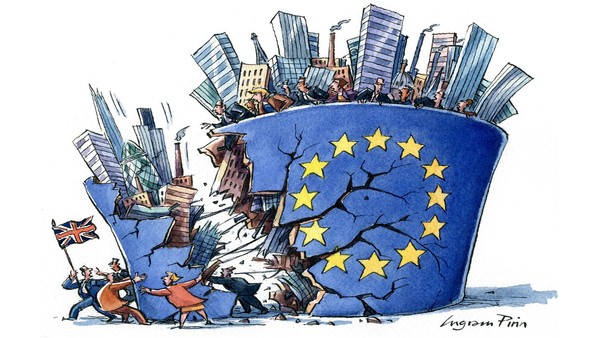
Post Brexit, the world waited to see if more European Union member countries will bid adieu to the EU. Several European leaders did call for referendums similar to the June 22 one held in the United Kingdom in their countries, but two weeks after the U.K. voted to leave the EU, it looks like the 28-member bloc is more united than ever. Predictions went awry as establishment parties are reported to have gained a significant lead over the naysayers’ in several EU countries.
Netherlands’ far-right politician Geert Wilders was one of the first European leaders to call for a EU referendum following Brexit. “We want be in charge of our own country, our own money, our own borders, and our own immigration policy,” Wilders said in a statement. “If I become prime minister, there will be a referendum in the Netherlands on leaving the European Union as well. Let the Dutch people decide.”
He reportedly pledged to make a U.K.-style referendum one of the key issues in the Dutch general election campaign next March. But recent polls show that support for the Freedom party candidate has fallen to its lowest level since last fall.
Another poll by peil.nl found that a majority were in favor of staying in the EU (46 percent to 43 percent). Voters with the lowest educational profile were more in favor of holding a referendum (69 percent) with most voting to leave (64 percent).
“If a referendum is held we would expect that, just as in Britain, the turnout among lower educated voters will be relatively high,” poll organizer Maurice de Hond said.
However, apart from the Freedom party, no other political group is enthusiastic about an EU referendum, reports said. Prime Minister Mark Rutte dismissed the idea as “utterly irresponsible.”
Meanwhile, in Germany, Chancellor Angela Merkel’s popularity rating is at a 10-month high. Merkel’s party has reportedly gained two percentage points, according to an Infratest Dimap poll. “The Brexit debate has fostered a more pro-European climate among the German population,” Infratest Dimap’s managing director Michael Kunert told the Guardian. “The government is profiting from this trend while populist, eurosceptic parties are suffering.”
Austria’s far-right presidential candidate Norbert Hofer said Friday that conducting a U.K.-style EU referendum in the country would be a “mistake.” A Gallup poll of 600 Austrians indicated that 60 percent opposed any referendum and only 30 percent favored an Austrian Exit or “Oexit.” A survey conducted by the Austrian Society for European Politics indicated that 23 percent wanted to leave the EU.
“I’m not in favor of an Austrian exit from the European Union. I’ve been annoyed for days that people have assumed I am,” Hofer reportedly said.
Denmark is overwhelmingly in favor of staying put in the EU post Brexit, polls show. The number of people wanting a similar referendum has dropped from 41 percent to 32 percent. A Voxmeter poll indicated that 69 per cent of Danish people are in favor of remaining in the EU, a ten percent rise compared to the week leading up to the Brexit.
Danish Prime Minister Lars Løkke Rasmussen reportedly said, “We belong to the EU and I am not operating on [the belief] that we should have a referendum on that basic question.”
Italian Prime Minister Matteo Renzi had reassured the EU of Italy’s commitment post Brexit. “Europe is our home, it’s our future,” he said and added that the organization needed change “to make it more humane and more just.”
Italy’s most popular party at the moment, Five Star Movement, is in favor of remaining in the EU but is seeking a non-binding referendum on the euro. A poll carried out after Brexit found that 66 percent of Italians would vote to remain in the EU and 26 percent would vote to leave.
France’s far-right presidential hopeful Marine Le Pen’s Front National has reportedly remained fairly stable with its leader expected to get through the final round of the presidential race in 2017.
Tony Abbott supporters are agitating to get him back into cabinet?
Malcolm Turnbull’s flimsy election win has caused calls for his predecessor’s return.
Internal Coalition pressure could see Mr Abbott back to cabinet. Photo: AAP
With elements of the Liberal Party agitated by the government’s loss of its 21-seat buffer in the House of Representatives, Prime Minister Malcolm Turnbull now faces a Shakespearean dilemma.
Tony Abbott: “To be or not to be … that is the question”.
Had Mr Turnbull won the election by half a dozen seats and not just two, the Prime Minister would be in a stronger position.
But with Eric Abetz and Kevin Andrews, among others, pointing their angry fingers at him over the Liberal MPs who lost their seats, Mr Turnbull is under pressure internally as never before.
On Thursday, Mr Andrews publicly advocated for fallen PM Abbott’s rehabilitation to the Turnbull cabinet.
From Tasmania, Senator Abetz joined the chorus lamenting the leadership change last September which, according to some analysts, provoked one million voters to change their vote to the minor parties, including Pauline Hanson’s One Nation and The Nick Xenophon Team.
In Hamlet, Shakespeare has the king contemplating suicide at what his ambition has wrought.
“Whether ‘tis nobler in the mind to suffer The slings and arrows of outrageous fortune, Or to take arms against a sea of troubles And by opposing, end them …”
In 2016 Australia, Mr Turnbull is living this nightmare dilemma.
Have no sympathy. He happily knifed Mr Abbott in yet another coup australis. He must now consider his future as leader of what is left of his government.
Over the next three days he must consider the appointment of a front bench after already having endured a spiteful negotiation with Barnaby Joyce, leader of the National Party, upon whom the survival of his government and his prime ministership now depend.
The Nationals will earn two extra cabinet spots because of the proportionate rule convention of the confidential Coalition agreement.
Mr Turnbull has some Liberal vacancies to fill and it is in this context that Mr Abbott’s return to the cabinet is on the agenda.
Team Tony
In the months preceding the election campaign, Mr Abbott conspicuously became a “team player”, earning credit points with the Canberra press gallery for his discipline.
During the campaign Mr Turnbull indicated the two had reconciled during a private meeting.
He even suggested he would kayak from his Point Piper jetty to Manly to join Mr Abbott’s Warringah campaign.
That photo opportunity did not eventuate, but even through the 10 days it took to determine the election count and the government, Mr Abbott has held his tongue.
There is speculation that he has reached some sort of agreement with Mr Turnbull for his return to the Liberal front bench, either now or at some future time in the life of the government.
If Mr Abbott were to return to cabinet now, it would send an immediate signal confirming, if confirmation was really needed, that Mr Turnbull is not his own man.
He will be seen as a creature of the Liberal Party – bound by its factional influences.
Mr Turnbull, who possess thespian skills, undoubtedly will be able to sell Mr Abbott’s return as a government of renewed unity and concord.
But if he takes the risk of letting Mr Abbott back in to the seats of power, he may sew the seeds of his own destruction. He knows this, but will he do it for short-term party stability?
“To die, to sleep – to sleep, perchance to dream. Aye, there’s the rub”
Brussels has simply gone too far. They have crossed the line moving from an economic union to the political subordination of Europe. Now five more countries seek to hold referenda to exit the EU – France, the Netherlands, Italy, Austria, Finland and Hungary all could leave. With Hollande approval rating at about 11%, Merkel is lucky that she is not tarred & feathered, the Front National leader Marine Le Pen has pledged to hold a French referendum. If she emerges victorious in next year’s presidential elections, that means the next major player in the EU after Germany is out and there goes the EU.
This entire civil uprising in Europe is underway ever since two months ago when Dutch voters overwhelmingly rejected a Ukraine-European Union treaty. Angela Merkel’s Germany now faces having to pay an extra 3 billion euros a year to the annual EU budget once Britain leaves. This alone is prompting German government officials to propose that Britain is offered “constructive exit negotiations” to keep their dues coming in. Some are now talking about a quasi-membership for the UK calling it an “associated partner country” to keep the money flowing.
Yet the French government of Hollande just does not understand. The governor of the French central bank will exert pressure on UK banks. They are taking the view that it would be paradoxical if Britain could retain privileges after the withdrawal from the EU. First Banks are preparing apparently preparing to shift part of its employees in London to the continent. They obviously fail to grasp that it is European continental banks that are on the brink of collapse – not British.
Italian ministers warned on Saturday that the European Union MUST change course or risk total collapse after Britain’s vote to leave the bloc. The Italian Finance Minister Pier Carlo Padoan said. “A double reaction to Brexit is under way, one financial, one political. The financial one, at least until now, is limited. I am more worried about the political one.” Indeed, the unthinkable is happening. And they worry the pound might crash? Pay attention to the euro.
Meanwhile, another critic of the EU has been the leader of Poland’s ruling party. Poland’s Foreign Minister Witold Waszczykowski also now responded and said that the UK referendum result shows the need for reform of the EU. “This is bad news for Europe, for Poland. This is a great dilemma for the eurocrats, we all want to keep the EU, the question is in what shape.” He continued: “We will be trying to use this situation to make the European politicians aware why this happened. And it happened because this concept, which was created some time ago, is no longer popular in Europe.” Then again, the Hungarian Prime Minister Viktor Orbán intends to campaign in the British press for the UK to remain in the EU, according to a Hungarian government spokesman. Orbán is clearly one of those who is out of touch with the people and fails to understand that a federalized Europe is not going down very well with the people. He is extremely arrogant to think that he has any right to intervene or suggest that the vote be ignored.
To add insult to injury, Turkey proclaims the “Crusader union falls apart” demonstrating that memories in Europe go back centuries, and yet they might be fast-tracked into the Union. Americans did not want to enter World War II. Roosevelt even traveled to Boston promising that American boys would never defend Europe. Boston was a very Irish community and they were upset at being asked to defend Britain after their migration to the USA because of Britain. Old wounds never quite die.
President Vladimir Putin has said Russia must boost its combat readiness in response to NATO’s “aggressive actions” near its borders.
Addressing the Russian parliament Putin also criticised the West for its reluctance to build a collective security system with Russia.
‘‘NATO is strengthening its aggressive rhetoric and its aggressive actions near our borders. In these conditions, we are duty-bound to pay special attention to solving the task of strengthening the combat defences of our country,” he declared.
Last month, Moscow announced plans to create three new divisions to meet what it described as a dangerous military build-up on its borders.
NATO chief, Jens Stoltenberg urged dialogue.
“The important thing is that we need the NATO/Russia Council to have a chance of political dialogue open with Russia and especially when tensions are high. It is important that we talk, that we meet and that we do whatever we can to prevent misunderstandings, miscalculations, and try to reduce tensions,” Stoltenberg said.
NATO is also set to send four battalions to Poland and the Baltic states of Estonia, Latvia and Lithuania in an attempt to prevent a repeat of Russian actions, such as the annexation of Crimea in 2014.
Russia has openly stated that it wishes to regain those states or territories lost after the break-up of the former Soviet Union. The simple solution to this problem is for Russia not to covet those now independent states and to clearly and unequivocally denounce any intention to attempt to annex them.
In a matter of days, the UK electorate faces its biggest choice in more than a generation — whether to remain in the EU.
While the campaign to exit the bloc says a decision to remain would be the bigger risk, its opponents contend that breaking up with Brussels would be a leap in the dark.
Here is a selection of Financial Times news and analysis of the steps after Brexit.
The promise: the UK would seek to leave the EU by 2019 and would be prepared to defy Brussels over immigration laws, according to a leading pro-Brexit minister.
The risk: George Osborne, the chancellor of the exchequer, has warned of a £30bn black hole in public finances if Britain should vote to leave on June 23.
The immediate aftermath: David Cameron would probably face the end of his career as prime minister as EU membership was put aside.
The politics: the political and constitutional questions caused by a vote to leave could open up a period of profound uncertainty for the UK and the EU.
The legal analysis: the referendum is advisory rather than mandatory; what happens next is a matter of politics, not law.
The mechanics: the UK would have two years to negotiate a deal after triggering the exit clause of the EU treaties; extending talks beyond that would require unanimity.
The economics: the professional consensus is clear – leaving the EU would hit growth. The size of that impact would depend on factors such as trade, productivity and foreign direct investment. But champions of Brexit argue that the economy would prosper outside the EU.
Immigration: the record influx of EU nationals has proved a powerful rallying call for the Leave campaign. Some three-quarters of EU citizens working in the UK would not meet current visa requirements for non-EU overseas workers if Britain left the bloc. But such restrictions are likely to apply to new entrants rather than to EU migrants already in the UK.
Trade options: leading Leave campaigners say they would not seek to join the EU’s single market — which requires free movement of labour. Instead they would seek a trade deal with the bloc. Treatment of the service sector, which accounts for 80 per cent of UK gross domestic product, would be a huge issue.
The European response: European leaders have stepped up secret discussions for an EU without Britain, drawing up a plan B focused on closer security and defence co-operation.
Post traumatic stress disorder affects many who have served this country but little is being done to meet their needs.
As a kid during school holidays, I would be sent off to a country town to stay with elderly friends of the family, who I called Nan and Pop. There, I would roam the streets unsupervised from morning to dusk, saying hi to neighbours and patting their dogs.
There was one particular man I was scared of, however, who would sit on his front porch all day, several doors down from Nan’s. He had only one leg and would stare blankly for hours on end. He looked so sad, it seemed as if he was perpetually crying.
Off to war: It’s time our nation’s government provided better services to our veterans, many of whom suffer ongoing conditions such as depression and PTSD upon their return.
Photo: ABC Publicity
Generally there was a respected truce between us. He would see me and I him but neither would acknowledge the other. One day I asked Nan what had happened to the man’s leg and why he was so sad.
“He lost his leg in the war,” she answered. “Don’t be scared of him. Reg is a lovely, gentle man. I’ve known him since he was a kid. He’s just not been right since he came home from the war. A lot of the boys who went from here aren’t.”
I took this on board as well as a seven or eight-year-old can, and the next day I decided to wave to Reg. To my delight, he waved back.
That afternoon I took the 20 cents I had earned cleaning out Nan’s chook pen and bought two Paddle Pops, one for me and one for Reg. I was tenuous climbing those stairs to his porch but Reg’s reaction was worth my tiny terror. The soldier’s face lit up and a tear trickled down his bristly cheek.
Reg didn’t say much but I visited him every day during that stay, telling him how Nan’s chooks kept escaping and how she swore as she tried to catch them. Sometimes Reg would have a Mintie or a biscuit for me. I believe we became firm friends.
It was a year before I returned to the town and the first thing I noticed was Reg wasn’t at his porch, so I ran to ask Nan why. She looked distressed and put me on her knee and told me Reg was “gone”.
“He just couldn’t take it anymore,” she said. “We can only hope he is in a happier place.”
I couldn’t comprehend suicide at the time, but hell – I do now. I’ve had several friends and many more acquaintances take their own lives over the years, and today I have one dear friend I worry about daily, who I fear may do the same.
It’s because my friend today has the same blank look as Reg, half here and half somewhere else he doesn’t want to be. My friend was a policeman and now suffers acute post traumatic stress disorder (PTSD).
If it wasn’t for his loving family and their constant care, I have no idea how he would survive. The fact that the very force he suffered for has all but abandoned him to deal with an aggressive and cruel insurance company for compensation is beyond me. It disgusts and angers me to my marrow. And the police force is only the tip of an insidious iceberg of neglect in this country.
Tomorrow I will be attending a rally in Melbourne, on the steps of Parliament House, joining veterans, families and supporters calling for a royal commission into the Department of Veteran Affairs.
From 1999 to the start of February 2016, some 249 soldiers returned from wars in the Middle East have committed suicide, more than 30 in 2015 alone. This is only a roughly accrued estimate – the actual number is probably far more. Compare this to how many soldiers died in war in Afghanistan – 41 dead and 261 injured – and it becomes clear the real battle these soldiers face is not at war but home, in the country they fought for.
Since 1975 Australia has deployed 120,000 troops on overseas operations. The numbers suffering mental illness is estimated to be between 20,000 and 30,000.
Yet these men may have been better off staying in battle, where at least they would have received attention, because little is happening here.
As the number of post-1975 veterans has been growing, the DVA has been reducing staffing numbers and cutting back entitlements. There are different processing elements, depending where you are in Australia, with most still operating a single file, paper-based system. Veterans have no way of telling where claims are up to or in which state they are being handled, and files are often lost.
Veterans are required to attend up to five appeals to gain their proper compensation because of this poor administration, and the use of adversarial work cover assessors under-evaluating veteran incapacities to lower compensation amounts.
From lodgement of claim to payment – if the claims go through the appeal process – can take up to five years.
This is too long! These people are suffering now – good men like Reg, haunted by what they have seen and done protecting our freedom. It is a national disgrace and one every citizen should get on board to protest.
And while we’re at it, let’s look at the police force leadership and demand they treat their own with respect, dignity, care and compensation too. Because I will be damned if my friend decides there is “happier place”. That place should be his home, and it is up to all of us to ensure it is.
Source: Saturday Age columnist Wendy Squires is a journalist, editor and author.
To piously impose a pay freeze on the men and women who keep the state running, paramedics, nurses, firefighters and teachers, while simultaneously helping themselves to tens of thousands of dollars – often for doing absolutely nothing – is an absolute farce.
It is a damning indictment on Premier Mike Baird and Gladys Berejiklian when they declare the state is broke when it comes to improving the modest salaries of public sector workers, but they can easily find a lazy two million to shovel at their mates.
New South Wales is a state being run for the one per cent, and the first members of the elite to get their gravy train top ups are the members of the Baird Government.
It seems Mr Baird is never short of a quid when it comes to bonuses for his MPs and funding for his social media advisers. But when it comes to paying public sector workers with dignity suddenly there’s not a cent.
The State’s public services have been cut to the bone. If there is money to spent it should be on these emergency service personnel and teachers, and not on wholly unnecessary bonuses to government MPs.
Like their Federal Liberal counterparts, the NSW politicians too have their snout in the pay and allowance trough!
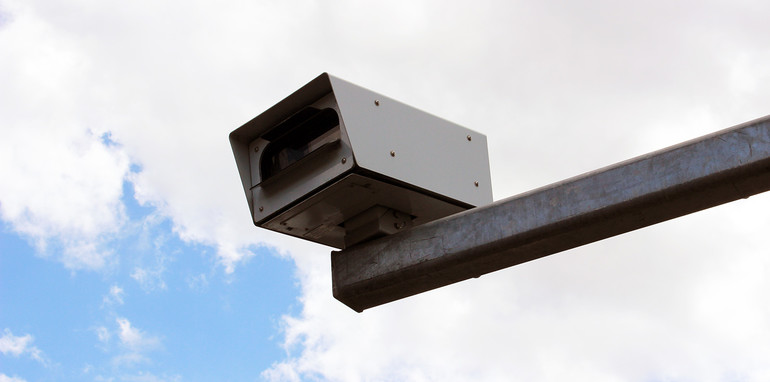
Speed kills. Speed cameras save lives. We have heard it all before. But, two-hundred and forty-nine people people died in fatal traffic accidents on Victoria’s roads last year — a 2.5 per cent increase from 2013’s figure.
This is despite a record number of fixed and mobile speed cameras deployed on roads in Victoria, and around Australia.
For years, the governments have been claiming that speed cameras save lives and that speed is the greatest common factor in fatal car accidents.
But with road deaths on the rise, could it be that speed cameras actually don’t save lives and in fact are contributing to our road toll by breeding poor driving practises?
Since Saab introduced seat belts as standard in 1958, occupant safety has been improving every year, and the sedans, wagons, utilities and SUVs we drive today are safer than ever. And safer cars will undoubtedly go further in reducing the road toll than speed cameras.
Speed cameras certainly have their place in society, but not with the draconian enforcement of low-level speeding and covert tactics, such as hiding in bushes and unmarked mobile speed cameras, as occurs in Victoria, at least, more needs to be done.
The proof is in the numbers. People are still crashing, they are just safer doing so.
The figures show that revenue from speed cameras alone — on the spot police fines are not included in this figure — in 2010 was around $236 million. Fast forward to 2013 and that figures jumps a whopping $57 million to $293 million. Imagine ripping almost $300 million from government coffers; speed cameras have become like a drug addiction that governments can’t help but feed off.
Included below is a graph (click here to see larger version) that shows the relationship between hospital stays shorter than 14 days, longer than 14 days, fatalities and revenue from speed cameras. The graph shows that the increase in revenue from speed cameras isn’t commensurate with a reduction in hospital stays. Hospital stays of fewer than 14 days and more than 14 days during this period trended steady.
When asked about speed cameras and levels of enforcement, a spokesperson for the Department of Justice and Regulation told CarAdvice:
“Broadly speaking the rate of people being fined by cameras is not changing, but as the population grows, so too does the number of fines issued.
“The overall number of infringements issued annually is increasing as Victoria’s population grows and there are more cars on the road.
“Over 99 per cent of vehicles passing fixed cameras and over 98 per cent of vehicles passing mobile cameras comply with the speed limit.
That’s because people know that they are there. Drivers slow down for the cameras, and then once past them, they resume their normal driving habits – Ed.
“Fixed and mobile road safety cameras reduce speeds and cut road trauma because they are placed in high-risk or high-speed areas, areas with history of road trauma, or areas that will provide a road safety benefit.
This is not always so! In 2011 a NSW review of the placement of speed cameras was carried out by the Auditor-Generals Department, and a large number of cameras, 38 in fact, were identified as being placed to interrogate the speed of a large number of passing vehicles, or where the speed limit had been reduced from a higher limit; e.g. passing from a 90kmh zone into a 70kmh zone, with no identified high risk factors or adverse trauma history – Ed.
“100 per cent of the money from camera fines is allocated to the Better Roads Victoria Trust Account. The funds from this account are used to improve road safety for all road users.”
With an enforcement focus skewed on speed, ask yourself this question: how many speed cameras did you travel through (whether it be a fixed or mobile one) in the past month? Now, ask yourself how many times were you stopped to be tested for drugs or alcohol over the same period?
Similarly, in the past 10 years, how many times did you undertake driver training to improve your skills?
The unfortunate reality of speed camera-biased enforcement can be demonstrated with the tragic death of pedestrian Anthony Parsons and husband and wife Savva and Ismini Menelaou, who were passengers in a Ford Falcon struck at the intersection of Warrigal and Dandenong roads in Oakleigh, Victoria last year.
Brazilian national Nei Lima DaCosta was high on ice and drove through one fixed speed camera at 30km/h over the speed limit minutes before careering through the intersection of Warrigal and Dandenong roads at 120km/h (40km/h over the speed limit) through another speed and red light camera. He killed three innocent people. These two cameras did nothing to help save the lives of three innocent people.
This particular example illustrates why so much more needs to be done on enforcing and dealing with poor driving, whether it be due to drugs, lack of skills or visible policing.
There seems to be a reluctance, at least in Australia for police to perform in a pro-active role. Whenever police are seen on highways, it is always in the role of enforcement, speed checking, number plate recognition activities and the like, revenue raising activities – Ed.
Speed cameras alone will never be a useful immediate enforcement or protection tool against drivers excessively speeding, or people who don’t know how to drive to start with.
Those people that use the idiom “don’t speed and you won’t get caught” simply don’t understand the reality of driving safely. If I had the preference of watching the road or my speedometer, I know which one I would choose.
What is needed is an overhaul of driver training, the proper blitzing of drink and drug driving testing, along with the removal of low level speed enforcement. Who would have an issue with being stopped twice a day for drug or alcohol testing if it meant impaired drivers were taken off the road more promptly?
We also need more transparency on where the money generated from speed cameras goes and where it should be spent.
With all the roads around NSW in such poor condition, serious doubt has to raised as just where income from fines is actually spent on – Ed.
Primarily, the Russian people have only been driving for a short time. Prior to the fall of communism in 1989, private ownership of motor vehicles was severely restricted by cost, but more importantly, to restrict the free movement of the population within the former Soviet Union. Access to motor vehicle ownership in the last 27 years has increased exponentially! What has not increased however is the skill, ability, psyche and consideration that goes with the operation of a motor vehicle. Accompanied by this, is a distinct lack of experience, discipline and courtesy needed when driving on a public road.
There also appears to be no concept of consequence in Russia. This results from a lack of lateral thinking which is not nurtured in Russian society as well as their education. So they drive like aggressively without regard for road rules believing they’re not causing any harm. Russians believe the bigger the car they drive, the safer they are. Hence why drivers of 4x4s tend to be even more aggressive then drivers of a Fiat Punto.
Russia: The only place where you can be rear-ended whilst overtaking, driving the wrong way up a one way street!
Corruption
Corruption is rife in Russian which means that money can buy anything, including a driver’s licence. Russian get drivers licences with no knowledge of road rules or even the ability to drive a car! As a result there is little reason to learn the highway code. Thus everyone has their own view as to what the laws of the road really are. Continuing with corruption, if you drive like a idiot and get stopped, you can generally bribe your way our of being punished. Thus there is basically no fear of punishment which reinforces the belief that Russian drivers can behave at the wheel as they wish with impunity. Police are generally nowhere to be seen. They might occasionally pull you over nearer the centre of a city by being flagged down but a police car pulling someone over? Never! There are no cameras, except around the city centre but even if you are sent a fine, there is no system in place to actually guarantee payment of that fine. Many Russians who have been sent a fine have never paid it. So again, you can act without fear of punishment,
“There are only two types of Russians – those who give bribes and those who take them.”
So all in all, this theme finds its way into the Russian psyche. The Russians are not stupid because, if you are stupid, you still know the difference between right and wrong. 80 years of communism has lead Russians to be disillusioned and somewhat primitive. There is a big difference.
Driving in Russia is hazardous: Last year, 200,000 traffic accidents killed 27.025 people in Russia in 2013. Addressing those high levels, President Dmitry Medvedev blamed the “undisciplined, criminally careless behaviour of our drivers,” along with poor road conditions. However, Medvedev made no mention of the totally dysfunctional Russian traffic police!
Russians consistently ignore red lights, overtake on the inside, overtake on the outside when unsafe or blind, speed and couple this with little or no technical expertise or driving ability, this is a recipe for disaster!
While accepting that drivers certainly play a role, Medvedev did not mention Russia’s traffic police, which, “is known throughout their land for brutality, corruption, extortion and making an income on bribes.”
According to information published by New Times(2009), one day’s corrupt income for a traffic policeman is $1000. Everyone regards the law enforcement agencies, chiefly the police, as extortioners in uniform and it is generally recognised that a policeman’s official salary is only part of his income. Medvedev’s police reform, carried out by the police establishment itself, has failed. The overwhelming majority of Russians have no more faith in the police than they did in the Soviet past.
Russia ranks 133rd among the world’s nations in corruption (where number one is the least corrupt), according to Transparency International. So going to the police with a legitimate complaint is far from sure to produce a good result.
In addition to authorities they deem untrustworthy, Russian drivers must contend with the possibility of being attacked by another driver. The below video compiles fights between drivers that feature crowbars, slapping, punching, and worse.
Then there are pedestrians who get themselves hit by cars on purpose, for a payoff. A video compilation (below) of failed scams offers a few examples.
Overall, in a country where traffic conditions are horrible, insurance scams and roadside fights are always a possibility, and the police are widely viewed as corrupt, video evidence of one’s innocence can be a very valuable thing.
There are are number of things which also contribute to this situation:
Harsh climate. It means foggy mornings in the summer, rainy autumns, snowy winters notorious of its blizzards and ice, springs with huge lots of wet dirt.
Poor road conditions. Yes, that is no secret, that the bigger part of roads in Russia are not good. Perestroika, the crisis of 90’s and other economic problems including theft and corruption inside the Road construction department resulted in poor roads conditions
Large distances. It is much more easy and convenient to build and service roads in a small country, neither in Russia where distances between settlements sometimes can be counted in hundreds of km. Living in Siberia, one can take a ride from one city to another and not see civilisation for hours with only taiga forest around. In Australia, large distances are also an issue, but Australians do not have the poor driver behaviour as exhibited in Russia!
The Russian government did not expect people to have so many cars. The number rose dramatically over the last 25 years. In the west, the culture of proper driving was formed over a longer period, while in Russia it just boomed. The problem is much worse for big cities of 1 million citizens or more. Here we see too many cars on tiny roads and a lack of parking spaces. It makes people nervous while driving.
The other factor is culture. Russian people today haven’t learned to respect each other. And they won’t until the economic situation improves.
Vehicles and Vodka
Russia has a long history of alcohol consumption. The average Russian drinks 20 litres of pure alcohol per annum, nearly twice as much as their nearest rival. This of course carries onto the streets of Russia.
According to data, the number of drunk drivers has been steadily increasing in the past few years. In the last eight months of 2012, the number of accidents caused by drunk drivers rose by 3.5%. In that time, there were 152 alcohol related accidents in Moscow, which caused 15 deaths. And Moscow is far from being the worst city in Russia: in the Krasnoyarsk region there were 433 drunk driving accidents over the same period.
Some worry that stricter laws will mean serious punishment even for drivers who don’t drink, since Russia’s laws don’t specify a blood alcohol level at which one is considered drunk. United Russia lawmakers think that establishing specific criteria for drunk drivers is essential to the success of a stricter law. A threshold is important because human blood will always contain some alcohol, which could be detected in blood tests. Russia had an alcohol limit until 2010, but then-President Medvedev thought drivers interpreted the law to mean they could drink up to that point, and changed the law to zero-tolerance.
On the other hand, people who knowingly drink and drive might not be deterred by the new law at all. The police say people who regularly drive under the influence and accumulate suspended licenses for years simply ignore the sanctions (such as the driver in the recent accident in Moscow, whose license had been suspended in 2010 for drunk driving).
In the past two years, more than 18,000 drivers have had their license suspended for drunk driving. Among those drivers, some had been punished for drunk driving 100 times or put in administrative arrest 16 times for driving without a license. The law has no effect on this type of person, so a completely different approach is needed with them. It has been suggested that if they can’t stop themselves from drinking and driving, they need to be under the strict control of the courts and medical staff.”
The Russian Dash-Cam
In Russia, everyone should (and does) have a camera on their dashboard. It’s better than keeping a lead pipe under your seat for protection (but you might still want that lead pipe).
The conditions of Russian roads are perilous, with an insane gridlock in the city and gigantic ditches, endless swamps and severe wintry emptiness of the back roads and highways. Then there are large, lawless areas you don’t just ride into, the police with a penchant for extortion and deeply frustrated drivers who want to smash your face.
Psychopaths are abundant on Russian roads. You best not cut anyone off or undertake some other type of maneuver that might inconvenience the 200-pound, six-foot-five brawling children you see on YouTube hopping out of their SUVs with their dukes up. They will go ballistic in a snap, drive in front of you, brake suddenly, block you off, jump out and run towards your vehicle. Next thing you start getting punches in your face because your didn’t roll up your windows, or getting pulled out of the car and beaten because you didn’t lock the doors. These fights happen all the time and you can’t really press charges. Point to your broken nose or smashed windows all you want. The Russian courts don’t like verbal claims. They do, however, like to send people to jail for battery and property destruction if there’s definite video proof. That is why there’s a new, growing crop of dash-cam videos featuring would-be face-beaters backing away to the shouts of “You’re on camera, fucker! I’m calling the cops!”
Dash-cam footage is the only real way to substantiate your claims in the court of law. Forget witnesses. Hit and runs are very common and insurance companies notoriously specialize in denying claims. Two-way insurance coverage is very expensive and almost completely unavailable for vehicles over ten years old–the drivers can only get basic liability. Get into a minor or major accident and expect the other party to lie to the police or better yet, flee after rear-ending you. Since your insurance won’t pay unless the offender is found and sued, you’ll see dash-cam videos of post hit and run pursuits for plate numbers.
And sometimes drivers back up or bump their pre-dented car into yours. It used to be a mob thing, with the accident-staging specialists working in groups. After the “accident,” the offending driver–often an elderly lady–is confronted by a crowd of “witnesses,” psychologically pressured and intimidated to pay up cash on the spot. Since the Age of the Dash-cam, hustle has withered from a flourishing enterprise to a dying trade, mainly thriving in the provinces where dash-cams are less prevalent.
And then, sometimes, someone will jump under your car at a crossing, laying on the asphalt, simulating a badly hurt pedestrian waiting for that cop conveniently parked nearby. This dramatic extortion scheme was common, until the Age of the Dash-cam. Oh, and there are such juicy, triumphant tales about of would-be extortion victims turning the scheme around and telling the cast members to pay them money or they’re going to jail for this little performance! Don’t try it.
While those lucky enough to traverse the Russian roads with an American or other Western passport are hassled less, the Russian Highway Patrol is notorious throughout their land for brutality, corruption, extortion and making an income on bribes.
Russian websites go for the uncut, the horrible accidents–trucks flipping over, people being smashed into pieces and sedans flying up in the air and exploding. Given that television programing is mostly vacuous and heavily censored, dash-cam videos are very popular in Russia. It’s uncensored–drama, comedy, tragedy, horror, thriller and educational genres fused into one super-genre of “dash-cam.” Who needs Klitschko when you can watch to tough guys box in the street?
To better understand and navigate this “community service”, here’s a Russian Dash-cam Video Thesaurus for the blog tag cloud. It is comprised of purposely misspelled hick and thug slang and phrases used sarcastically…while people die. Ah, Russian humour.
поциент – “Patient.” The poor bastard, the dumb idiot in the video getting pulverized, run over or smashed into. A wordplay of “potz,” the Russian translation of the Yiddish “schmuck.”
летчик – “Pilot.” The idiot who zooms by and crashes in the grand finale of a video.
слабоумие и отвага – “Courage and dementia.”
последние секунды жизни – “Last seconds of life.” Videos featuring persons before and after fatal accidents.
кетай как всегда пиздец – “China is always fucked.” Clips from China that feature severe crashes and frequently feature passersby ignoring the bodies and car debris.
кирпичи – “Bricks” (as in “shitting bricks.”) The audio track often features the driver panting or shouting the entire Russian vocabulary of swears at the top of their lungs. Used for videos with near misses or close shaves.
железобетонное очко – “Anus of Concrete.” Honorific given to drivers who, faced with sudden danger like a huge truck coming head-on, remain calm, only saying “shoot” or “darn” quietly in the background, and efficiently steer away from danger, displaying some seriously fucking great driving skills.
наварра – The infamous video featuring a black Nissan Navarra SUV swerving to the oncoming freight liner and being smashed into a cloud of small pieces. It is the metaphor for a gruesome, intense, fatal accident.
But there are moments of humanity among the Russian people,. At a city accident scene, you could see as many as twenty cars pulling over, drivers running out to the scene. This comes from the recognition of the fact that on a 300-mile stretch of uninhabited territory, help can only come from passing vehicles and not emergency services. Most Russian long-distance routes East of the Ural Mountains are that way. There is really only one highway like that in North America: the Western Canadian to Alaskan Stretch of the Pan-American Highway. The camaraderie between strangers, shoveling the snow and hailing a freight truck or tractor to pull the car out. The kudos. The cheers. The knowledge that you could be very well be next.
And don’t you forget it. Aside from the kindness of strangers, it’s just you and that little gadget versus the hell that is the Russian people on the road.
George Brown is a decorated soldier and health professional and 40 year veteran in the field of emergency nursing and paramedical practice, both military and civilian areas. He has senior management positions in the delivery of paramedical services. Opinions expressed in these columns are solely those of the author and should not be construed as being those of any organization to which he may be connected.
He was born in the UK of Scottish ancestry from Aberdeen and a member of the Clan MacDougall. He is a member of the Macedonian community in Newcastle, and speaks fluent Macedonian. While this may seem a contradiction, it is his wife who is Macedonian, and as a result he embraced the Macedonian language and the Orthodox faith.
His interests include aviation and digital photography, and he always enjoys the opportunity to combine the two. Navigate to his Flickr site to see recent additions to his photo library.
Џорџ Браун е украсени војник и професионално здравствено лице и 40 годишен ветеран во областа на за итни случаи старечки и парамедицински пракса, двете воени и цивилни области. Тој има високи менаџерски позиции во испораката на парамедицински услуги. Мислењата изразени во овие колумни се исклучиво на авторот и не треба да се толкува како оние на било која организација тој може да биде поврзан.
Тој е роден во Велика Британија на шкотскиот потекло од Абердин и член на Kланот MacDougall. Тој е член на македонската заедница во Њукасл, и зборува течно македонски. Иако ова можеби изгледа контрадикција, тоа е неговата сопруга кој е македонски, и како резултат научил македонскиот јазик и ја примија православната вера.
Неговите интереси вклучуваат авијација и дигитална фотографија, и тој секогаш ужива во можност да се комбинираат двете. Отиди до неговиот Фликр сајт да видите последните дополнувања на неговата слика библиотека.
Discussion on the law that applies to or affects Australia's emergency services and emergency management, by Michael Eburn, PhD, Australian Lawyer. Email: meburn@australianemergencylaw.com
Oh, let's see...distinguished Gen-X'er, frustrated writer and mom living in the confines of a small town that thinks it's a big deal. And have I mentioned Walmart yet?






 Words, By George!