Andrew Chan and Myuran Sukumaran. Photo: Anta Kesuma
Australian Catholic University will create two scholarships named after executed drug smugglers Andrew Chan and Myuran Sukumaran for Indonesian students to study in Australia.
The scholarships will provide full tuition fees to the student’s chosen course over four years and be awarded to those who write an essay based on the theme of “the sanctity of human life”.
Vice-chancellor Professor Greg Craven said the scholarships would be a fitting tribute to the “reformation, courage and dignity” of the two Bali 9 ringleaders.
“In a small but symbolic way, the writing by Indonesian students on the sanctity of life would be an ongoing contribution toward the eventual abolition of the death penalty in Indonesia,” he said in a statement.
Before facing the firing squad, Chan and Myuran Sukumaran said they wanted their legacy to be a renewed push across the globe to abolish the death penalty.
However Indonesia has shown no sign of ending the practice, with plans already in place to kill five murderers. Up to 50 drug felons are also slated to be killed this year.
Professor Craven said that hope remained for a reprieve for other prisoners around the world on death row.
“The death penalty is a violent, cruel and immoral punishment that has no place in our society. And yet it persists,” he said.
They’ve got to be kidding, right?
Irrespective of your view on capital punishment, these men are convicted drug couriers and whose actions should not be glorified in this way. They are not martyrs, they knew what they were doing, were aware of the penalties, but took the risk for quick profit and got caught.
The actions of the Australian Catholic University will have NO influence on the Indonesian government, or its view on how it feels it should deal with perpetrators of drug crime.
I don’t see the ACU trying to influence the United States on its capital punishment policies, or naming scholarships after its death row inmates.
THE ad agency which came up with the ‘Fresh in Our Memories’ campaign for Woolworths has gone into hiding.
Carrspacehas deleted its Twitter account and its website is unavailable. Their Facebook page is still live however causing people to post that the agency’s actions are an overreaction to the social media bungle and that they should take responsibility for their ideas.
Meanwhile things have gone from bad to worse for Woolworths.
Now the Federal government has blasted the Australian supermarket giant for “inappropriate” and unauthorised use of ANZAC in its advertising after a disastrous campaign that has backfired badly on social media.
The “Fresh in Our Memories” website — linking ANZAC commemorations to the retailer’s “Fresh Food People” branding tag line — was taken down overnight amid claims that it was in very poor taste.
Veterans’ Affairs Minister Michael Ronaldson weighed in this morning, saying Woolies would not have been given permission for the advertising had it been sought.
“While I acknowledge that Woolworths moved quickly to address the situation, I hope this is a reminder to others that the regulations are in place for good reason and that they will be rigorously enforced,” Senator Ronaldson said in a statement.
The Minister said he had become aware of the advertising late yesterday. Under the Protection of Word ANZAC Act 1920, permission for the use of the word ‘ANZAC’ in any such material must be granted by the Australian Government.
Woolworths is being slammed for incorporating their own branding into a campaign to commemorate ANZAC Day.
“The Australian community quite rightly expects that the word ‘ANZAC’ is not trivialised or used inappropriately and as Minister for Veterans’ Affairs, I am responsible for ensuring that any use of the word ‘Anzac’ does not provide commercial benefit to an organisation,” said Senator Ronaldson.
“In this instance, permission was not sought by the campaign proponents, nor would it have been approved.
“Immediately upon having this campaign brought to my attention, I contacted Woolworths and asked them to end it. I am pleased that the campaign has now been withdrawn.”
Woolworths encouraged members of the public to share stories and profile-style pictures of loved ones affected by or lost to war by uploading images to a website that then branded them with Woolworths logo and the phrase “Lest we Forget 1915-2015. Fresh in our memories.” This was thought to be too close to their “Fresh Food People” jingle
In a statement, Woolworths said: “We regret that our branding on the picture generator has caused offence, this was clearly never our intention.
“Like many heritage Australian companies, we were marking our respect for ANZAC and our veterans.”
The food retailer said the site was developed to give staff and customers a place to put their stories to mark the Centenary of ANZAC.
In an earlier statement, Woolworths denied the commemoration was a marketing ploy and defended its record of raising money for the Returned Services League (RSL).
To be fair to Woolworths however they are not the only company to try and associate their brand with the ANZAC legend, a phenomenon referred to as “Brandzac.”
Carlton & United Breweries has been running the “Raise A Glass” campaign associating VB beer with ANZAC, with none other than General Sir Peter Cosgrove (Rtd) taking a leading role in the campaign.
Penrith Panthers RLFC are offering a limited edition ANZAC jersey for $180. Essendon and Collingwood AFL clubs are offering an ANZAC day jumper for $135.
While CUB is a major contributor to ANZAC and legacy charities, it remains uncertain where monies from other “ANZAC” commercial ventures are going.
Tighter control and scrutiny by government is required in respect of the use and association with all things relating to ANZAC.
D-AIPX, the Airbus A320-200 involved in the accident. Image by Sebastien Mortier via Wiki Creative Commons.
I came across this story today by Christine Negroni which takes a somewhat alternate and plausible view of what may have happened on the flight deck of the Germanwings aircraft. I tend to agree with her, as it is far too early to conclusively say what has occurred. I know when the “murder-suicide” theory was brought to my attention by a colleague, I replied that the thought of this being a deliberate action was too “bizarre” to contemplate, and bordered on conspiracy theory. But French investigators were saying that was so, therefore it must be – right?
So I’m now glad that somebody else sees the possibility of another cause of this disaster!
The news coming from the French prosecutor Brice Robin regarding Monday’s crash of Germanwings Flight 9295 is shocking, but on what facts is the statement based? Surely Mr. Robin knows something he’s not sharing with the rest of us, or how could he possibly come to the conclusion that “the co-pilot wanted to destroy the aircraft”? And yet that is what he is saying based on facts that still could suggest other possibilities.
The evidence so far suggests first officer Andreas Lubitz deliberately flew the plane to a lower altitude. What we do know is that the plane wound up crashing into a mountain. The question Mr. Robin has not answered is how he knows the co-pilot had that end in mind.
We know the plane was commanded down to a lower altitude after reaching 38,000 feet. We do not yet know why.
We know the Captain, identified in as Patrick Sonderheimer, left the cockpit and was unable to get back in. We do not know that he tried to enter using the door passcode or that the door was blocked beyond the normal locking function. All we know is that the cockpit voice recorder shows he tried to enter by knocking. There is a suggestion that an axe was used to try and gain access to the flight deck – ed.
There may be reasons for trying to enter by knocking, including confusion or distraction due to alarm.
We know that the first officer Lubitz failed to heed the knocks on the door. We do not know if this was deliberate. We know Lubitz was breathing. Both his inappropriate action in not heeding the knocking on the door and his breathing is consistent with deliberate action OR incapacitation.
We know the plane descended. We do not know if this was via programming the plane to descend or flight by hand by the first officer. A conscious and lucid pilot does not fly a plane into a mountain unless it is deliberate. An addled or unconscious pilot does not see or recognize the threat of a mountain and does. Either one of those options is possible, but the evidence presented so far does not allow conclusions.
Finally, unlike in the United States and other countries, the French judicial authorities are in charge of cockpit voice recorders and flight data recorders, which then makes them available to the air safety agency the Bureau d’Enquêtes et d’Analyses. There’s a reason for this increased oversight: In the crash of an Airbus A-320 in 1988, BEA was suspected of tampering with FDR data.
As a consequence, air accidents in France are seen through the prism of criminality. In other countries seasoned air safety investigators understand there is a multitude of factors that contribute to a disaster and will wait to have all the evidence before drawing conclusions.
This is the only way I can understand how the Marseilles French prosecutor made the tremendous leap of logic in concluding that the first officer “wanted” to crash the plane killing all 150 onboard.
The evidence so far shows Lubitz deliberately flew the plane to a lower altitude and a crash resulted. The question not answered in anything I’ve heard or seen is whether he intended for that to happen. This is not a subtle quibble. It makes a monumental difference in what really happened to Germanwings Flight 9295.
Source: Christine Negroni is an aviation journalist and safety specialist who is writing a book on aviation mysteries to be published by Penguin in 2016. This story first appeared on her blog.
Andrew Doohan at Semper Quaerens offered these thouights on the Australian governmemt’s proposal to capture metadata from all Australian ISPs and thus every Australian inetrnet user. As I was unable to reblog the post by usual method, I offer it here duly credited.
The most condemning part of the current Federal Government’s proposed new metadata capturing and storage legislation is that they haven’t as yet made a case for why this gross invasion of the privacy of Australian citizens is warranted. If, as Chris Berg suggests, the best they can do is to have the head of the Australian Federal Police say “those with nothing to hide have nothing to fear” then have spectacularly failed to make their case.
The reality is that my privacy is not something the needs defending. Rather, it is an invasion of my privacy that requires defending and justification.
The attitude of the current Federal Government, aided and abetted to a large degree by the current Federal Opposition, is to trample all over the precious liberties and freedoms that they supposedly hold up as being defended. It is wrong. It is misguided. And is most definitely unAustralian.
Oh dear, oh dear! I have heard this rhetoric before. In the UK CCTV is absolutely everywhere, the “logic” used was – if you have nothing to hide, you should’nt be concerned. The result is the absolute proliferation of CCTV cameras in every aspect of UK life, on the streets, in shopping malls, public places, tourist venues, railway stations, bus stops, ferry boats – absolutely everywhere! The thing that has not been adequately explained to the British public is:
The need for such a comprehensive surveillance system,
What is being done with the massive amount of data collected, and
Why scant regard was given to the concerns of invasion of privacy to the British public
I see this Australian proposal as an infringement of my right to privacy, and I see the collection or capturing of metadata as requiring extensive explanation and justification. Rather than capture the metadata of suspected criminals, terrorists et al, let’s collect it from everyone. This just smacks of lazy policing by security services.
I guess I should just encrypt all data sent from my computer and/or use a VPN to disguise my IP address! But hang on a minute, I shouldn’t have to! As a law-abiding citizen my right to privacy should be ensured. No amount of government paranoia can remove my right to privacy, and goverment should not be exempt from their own privacy legislation. Tony Abbott will do as he pleases and be totally dismissive of public objection to this proposal, and lo and behold, he uses the same justification as did the British government when the CCTV network was initiated.
Late last year a United States law framed in the name of world peace quietly reached its long arm into a small Melbourne tribunal, persuading it to let a large armaments manufacturer override Australian human rights legislation.
In a decision that went largely unremarked upon, the Victorian Civil and Administrative Tribunal (VCAT) agreed to let Thales Australia Ltd and its subsidiary ADI Munitions discriminate racially against their employees, job applicants and contract workers.
The companies won a five-year exemption from six sections of the Equal Opportunity Act so they could comply with stringent US export laws that describe who can and who cannot have access to American military technology and know-how.
Simon Rice, an Australian National University law professor, could only sigh. He is an almost lone voice against the Americans’ capacity for such strongarm tactics in Australian courts.
“It’s legal imperialism,” says Rice, who chairs the ACT Law Reform Advisory Council. “It’s the US saying to everybody in the world: You will deal with us on the terms we will dictate to you.”
There have been scores of such decisions in small courts across the nation since at least 2003, when the Queensland Anti-Discrimination Tribunal granted Boeing Australia Holdings some of the first such exemptions.
Because the Australian government relies heavily on US military technology, the big defence manufacturers operating here have, for more than a decade, made a practice of applying for exemptions from our equal opportunity laws so they can stay sweet with the US State Department. All applications, except one in Queensland, have been granted, allowing the companies to bar access to certain employees and contractors to positions where they would have access to sensitive US military goods and services.
This means the workforce is segregated, so that the “wrong” people are not given certain positions, as spelt out by the US International Traffic in Arms Regulations (ITAR), according to Rice, who advises our federal parliamentary human rights committee.
Because the ITAR, which governs the terms with which an importing country can use American defence technology, requires companies to discriminate on the basis of birth or nationality, it conflicts directly with Australian state and territory human rights legislation. Companies either persuade our legal authorities to let them off the hook or they don’t get US State Department clearance to access exported US defence technology.
“It is easier for the companies to get a local exemption than to get this clearance,” explains Rice.
Some people are outright denied access to sensitive American defence exports because their country of birth or dual nationality is on an ITAR list of “proscribed” nations.
The list changes from time to time and barred nations currently include Afghanistan, China, Cuba, Cyprus, Fiji, Iran, Iraq, Lebanon, Sri Lanka, Syria and Vietnam – the ancestral homes of many Australian migrants.
Competitive advantage
There was a salient reminder this week of the reasons for US nervousness over technology security. Whistleblower Edward Snowden revealed via German magazine Der Spiegel that Chinese spies had stolen design plans for the Joint Strike Fighter, the aircraft meant to reinforce US aerial dominance. Australia is spending billions of dollars on the same planes.
American lawyers specialising in export laws have described the ITAR as unparalleled in scope, as it reaches across the entire globe. It’s not just about arms, but a whole gamut of hardware and software used for military purposes or space research. It includes ships, planes, lasers and satellite technology, and “export” can simply mean transferring information – even, possibly, according to one analyst, sending an email.
Australia’s foremost specialist in space law, Professor Steven Freeland of the University of Western Sydney, sees extra benefits beyond national security for the US as it enforces the ITAR to regulate who can use American satellite technology.
“In the area of space technology, the US are still the superpower and they want to stay there, despite developments in China and Russia, so they’re very sensitive about their weapons technology going to other countries,” he tells The Saturday Paper. “In its simplest terms, space technology is regarded as akin to missile technology.”
While the ITAR has a benevolent motive in wanting to stop sensitive technology falling into the wrong hands, it also has the effect of enabling the US to retain a competitive advantage, he says.
“You won’t find that motivation explicitly in the official documents,” Freeland says.
However, he is less worried than Rice about ITAR’s reach.
“It’s quite common where people are dealing with national security issues to say: Sorry, but we get to choose the sort of people who work there because we don’t want them to have access,” he says.
Rice argues that the state department is dictating the private behaviour of individuals and companies outside the US, causing them to act unlawfully in their own countries.
Fines and jail terms
The state department can fine offending individuals and businesses up to $US1 million per violation for breaching ITAR requirements. It can ban companies from using American military exports and jail offenders for up to 10 years.
In a case that sent a message to universities, John Reece Roth, a former Tennessee professor of electrical engineering, was jailed for four years in 2009 for breaching the ITAR by providing information on drone technology to students from Iran and China.
Boeing was fined $US3.8 million in 2001, $US15 million in 2006 and $US3 million in 2008 for ITAR breaches and other companies have also been hit hard.
By comparison, breaches here of Australian anti-discrimination and equal opportunity law may lead to an apology or “small value financial compensation”, Australian defence industry lawyer Jane Elise Bates pointed out in the journal Security Challenges in 2012.
“From an economic perspective the balance is certainly in favour of continuing the status quo and seeking exemptions as required to permit the conduct of racial discrimination,” Bates wrote.
In the latest decision granting Thales Australia exemptions in November, VCAT member Anna Dea said the company’s work for the Australian Defence Force, including ship, aircraft, vehicle and munitions manufacture, generates more than $861 million in annual sales. It employs 871 people in Victoria, with an estimated $2 billion worth of projects lined up over the next eight to 10 years.
Dea listed the same reasons that have persuaded nearly every Australian decision-maker in her position for the past decade or so to grant exemptions, faced with the brutal reality of the US ITAR. The company’s work is important to Australia’s defence capability, the state economy and jobs that could otherwise go elsewhere, she said. She noted that no employees or union representatives made any submissions to the tribunal.
But it was not always so.
When Thales and ADI sought similar exemptions in the State Administrative Tribunal of Western Australia in 2005, the commissioner for equal opportunity, the WA Trades and Labour Council, the state’s Ethnic Communities Council and Western Australians for Racial Equality all objected.
The companies won a five-year exemption anyway.
As Australia negotiated a new defence treaty with the US in 2008, judges and decision-makers for a while bridled at having to bow to American law, after a parliamentary committee recommended the federal government seek exemptions from the ITAR.
In 2007, the then VCAT president, Justice Stuart Morris, voiced his concern about being asked by Boeing Australia Holdings to depart from local legislation to provide jobs.
“Such a departure is only sought because important aerospace technology is subject to an American law which places American security ahead of this human rights standard. One might ask: why should not the Americans give way?” he said.
“One suspects that the ITAR is misconceived … But then, I rather doubt that the United States government will back down from ITAR in the face of a decision of the Victorian Civil and Administrative Tribunal.”
VCAT deputy president Cate McKenzie described the nationality-based prohibitions in the ITAR as a “blunt instrument” when she granted a partial exemption to BAE Systems Australia Limited in 2008.
“Assessment of individuals on a non-stereotyped basis, or training and education about the importance of the obligation of secrecy, would seem to me to be a better approach,” she said.
Little choice for legal bodies
At the end of 2008, the president of the Queensland Anti-Discrimination Tribunal, Douglas Savage, refused exemptions sought by the Boeing group. The companies’ opportunities should not be at the expense of employees or potential employees, said Savage, whose decision still stands.
He doubted that refugees who had risked their lives to flee nations whose regimes they opposed were a security concern. Any concern could equally apply to US or Australian citizens, he said.
Rice sees such opposition as having faded. In particular, although they have appeared in past hearings, he is disappointed at unions’ failure to take this on as a cause.
“They haven’t been very effective or strategic in their arguments,” he says.
Four years ago, Rice argued in The Canberra Law Review that courts and tribunals in reality “have had little real choice, in the face of employers’ (poorly substantiated) claims that without the exemption the defence contracts will be breached with serious consequences, including the loss of jobs.”
There have been at least 25 more decisions allowing exemptions since he wrote that. Thirteen were in New South Wales, where there are no public hearings and exemptions are gazetted by the attorney-general. Two were in the ACT, two in Victoria, six in South Australia and one in Western Australia.
“I’ve been waiting for one tribunal to break ranks,” says Rice. “It seems to me they’re spooked. They’re between a rock and a hard place. You have to have sympathy. This is a political issue. The tribunals are being asked to decide it and they shouldn’t be.”
However, tribunals should be more rigorous in making these self-interested businesses spell out the exact consequences if they complied with local human rights laws, Rice says.
Canadian example
The tough US laws are unpopular around the world, particularly with close allies such as Canada, and the Obama administration recently tweaked them. But as VCAT’s Anna Dea explained in her most recent Thales decision, “it remains the case that information about a workforce member’s nationality and national origin is still required”.
Freeland acknowledges the role of US domestic politics. “Americans are very good at protecting US interests. It’s what you pay your politicians for, in one sense,” he says.
“We may not like it, but if the American administration were not seen to protect US interests, it wouldn’t last long in government. Americans have a particularly patriotic or provincial view that the US is the centre of the universe.”
Canada, accustomed to its gigantic pushy neighbour, has over the past few years negotiated changes with the US State Department that allow companies to comply with the ITAR as well as Canadian privacy and human rights legislation.
The Canadian government acted following public controversies, including a ruckus when General Motors Canada sent immigrant workers home with pay after the company was fined $US20 million for breaching the ITAR when it manufactured certain military vehicles.
There is no such outcry here. Instead, Freeland says, Australian governments continue to tolerate the ITAR’s workings because of the trade-off of lucrative business investment.
Man Haron Monis, the violent criminal involved in the Lindt Café hostage drama in Sydney last Monday and Tuesday was well known to Australian law enforcement and security agencies since 1996, when he arrived from Iran and was granted “political refugee” status.
He had a long history of violence, mental instability, religious extremism. So how was it then that Monis was able to walk our streets and perpetrate the most heinous crime in Australia’s history? And let’s get this right. His actions were not terrorism, but rather those of a deranged criminal who happened to be Muslim. To their credit, Monis’ actions have been soundly denounced by the Australian Islamic community. To answer the above question, let’s take a look at Monis’ background and Australian security agencies failures in respect of that background
FAILED – Granted Bail in Murder Charge – Monis was granted bail in December 2013 after being charged with being an accessory before and after the fact in the murder of his ex-wife.
FAILED – Prevented from Extradition – In 2010, Iran requested the extradition of Monis to face fraud charges in Iran in respect of the travel agency he ran. The request was refused as Australia had no extradition treaty with Iran.
FAILED – Removed from Watch List– Monis dropped of the ASIO watch list in 2010. if he had been on the watch list, bail would not have been granted.
FAILED – Citizenship Granted – Monis was granted Australian citizenship in 2004 despite the Iranians having a warrant out for his arrest. To be granted citizenship the applicant must be of “good character”. Australian authorities seem to have overlooked his criminal history and unanswered charges in Iran and granted citizenship anyway.
FAILED – Allowed to Enter Australia – Granted “political refugee” status in 1996, in full knowledge of his outstanding charges in Iran.
FAILED – Given Legal Aid – He was able to access the High Court to attempt to have a trial aborted. His action was dismissed.
FAILED – Gun Licence – There seems to be some dispute as to whether Monis has held a gun licence in Australia
FAILED – Allowed to Live on Welfare – Monis survived on the Australian welfare system for many years.
FAILED – Multiple Identities – The use of numerous aliases led to some difficulties in tracking his criminal activities.
FAILED – Allowed to Write Hate Mail – Monis wrote deplorable hate mail to families who had lost sons, husbands, brothers in the war in Afghanistan. For this crime he received a minor sentence of “community service”.
FAILED – Information Not Shared between Security Agencies – Decisions about Monis may have been made without having the information that other agencies knew!
FAILED – Was Able to get a Firearm – Where did Monis get the pump-action shot gun that he used to murder two people in the Lindt Café? Did he steal it, or was is supplied by an accomplice to his crimes?
FAILED – Able to Register Extremist Company Names – Monis was able to register Hizbullah Australia and Dar El Fatwa Australia. These names should have alerted security authorities to Monis’ possible criminal intent. Further he had a 1300 service number – 1300 4 JIHAD– which has since been disconnected.
It would appear that those red flags that should have been raised in respect of Monis’ activities were not raised, or if they were, they were indeed ignored. This ultimately led to the horrific events which occurred in Martin Place and to the death of two innocent people.
Lax bail laws need to tightened, inter-agency cooperation and information sharing needs to be improved, and citizenship for those involved in jihadist and other criminal activities need to be annulled and those persons deported back to their country of origin. The Australian attitude of “She’ll be right, mate” is out of place in today’s times. Its time to toughen up against all those who have demonstrated a behaviour of a violent, criminal or extremist nature.
Australia is a peaceful multi-cultural society with people from many countries and many faiths. There is however NO place for religiously motivated extremism and/or violence affecting the innocent members of the community going about their daily lives.
I am not a great watcher of anything Royal, even though I am of English/Scottish ancestry. I would have voted Yes in the recent referrendum on Scottish Independence. I am of the belief that the monarchy is outdated or obsolete. However, my eye fell upon the front page of the Australian Woman’s Day (dated 24/11/2014) with the headline blaring “Royal Breaking News”, “Monarchy Bombshell”; “It’s Queen Kate”.
Monarchy Bombshell – It’s Queen Kate
The womens magazine suggest “a very serious terror threat” during Remembrance Day in London against the Queen has caused her to reconsider her public position. She has since come to the “momentous decision” to crown her grandson Prince William and his wife Duchess Catherine as the next King and Queen.
The story went on to suggest that the Queen was going to announce her abdication at her traditional Christmas Day broadcast – “a message set to shock the world“.
It added that “covert discussions” with the “most senior royal advisors” and the British Prime Minister – as well as her son and heir Prince Charles, a decision has been made to instal the Duke and Duchess of Cambridge as the next King and Queen of England!
The reason for this? The Womans Day suggests that the Queen is “desperate to spend more time with her increasingly frail husband, Prince Philip” citing 93 year old Phillip’s recent bouts of ill health and also stating that the Queen “has chosen love over everything else”.
And what is the source of these revelations? As usual, the source is the obscure:
“most senior royal advisors”,
“well-placed Kensington Palace sources”
“sources”
“insiders”
“our palace insider”
Or equally dubious and unnamed persons inside royal circles.
Whether the Duke and Duchess of Cambridge are equal to the task of assuming the monarchy is not in question, rather the problem is one of law, protocol and precedence. To allow the Duke to ascend to the monarchy would require not only the Queen to abdicate, but Charles would need to abdicate as well. A double abdication? This is unprecedented in the history of the English monarchy.
The magazine suggests that Camilla has “well and truly dashed her chances” to be Queen by citing “drunken gaffes” and a “link” to a “drug scandal” as reasons why she is unsuitable, but gives no further substance to these allegations!
So what’s wrong with this story?
The Queen has repeatedly stated that she is in the job “for life.” Nothing has changed.
The Queen has always been a target for terrorists, domestic and foreign. She has not let this bother her before, and I don’t believe that she would let that bother her now.
I doubt whether a discussion and decision as momentous as this would be “leaked” out by unnamed sources. This matter would be highly confidential.
Prince Charles is 66 years old, he has waited all his life to assume the monarchy. He is quoted as being”supportive and understanding of his mother’s decision.” What has changed? Nothing! He still wants to be King.
Suggestion that Camilla is unsuitable to be Queen by the use of unsupported allegations.
For William to be King, would require a double abdication, the Queen cannot just “install” Prince William as King.
Succession to the British throne is governed both by common law and statute. Under common law the crown was inherited by male-preference cognatic primogeniture. In other words, succession passes first to an individual’s sons, in order of birth, and subsequently to daughters, again in order of birth. However, from 2011, males would no longer take precedence in the order of succession over their older sisters. This change will not apply retrospectively to people born before October 2011.
The monarch of the United Kingdom is also the monarch of 15 other Commonwealth sovereign states. By convention (as iterated in the preamble to the Statute of Westminster, 1931) the line of succession cannot be alteredwithout the agreement of ALL 16 Commonwealth realms. Individual realms will need to enact legislation before the succession changes could take effect. There is no guarantee that this agreement would occur.
This “Royal Breaking News” seems only to have been published by this magazine. An internet search for other sources to support this story proved fruitless.
While Prince Philip at 93 is increasingly frail, he would not want the Queen to give up her position on his behalf. He has spent a lifetime at her side, supporting her at all times. He would continue to support her as much as he is able.
“Love over service?” In the past the Queen has always chosen service. After 63 years on the throne she has clearly demonstrated the importance and value of service.
And it certainly would not be Queen “Kate!”
This story is clearly a ploy to help sell magazines, and has been poorly researched, using unnamed quotes from dubious sources. More a work of fiction than fact?
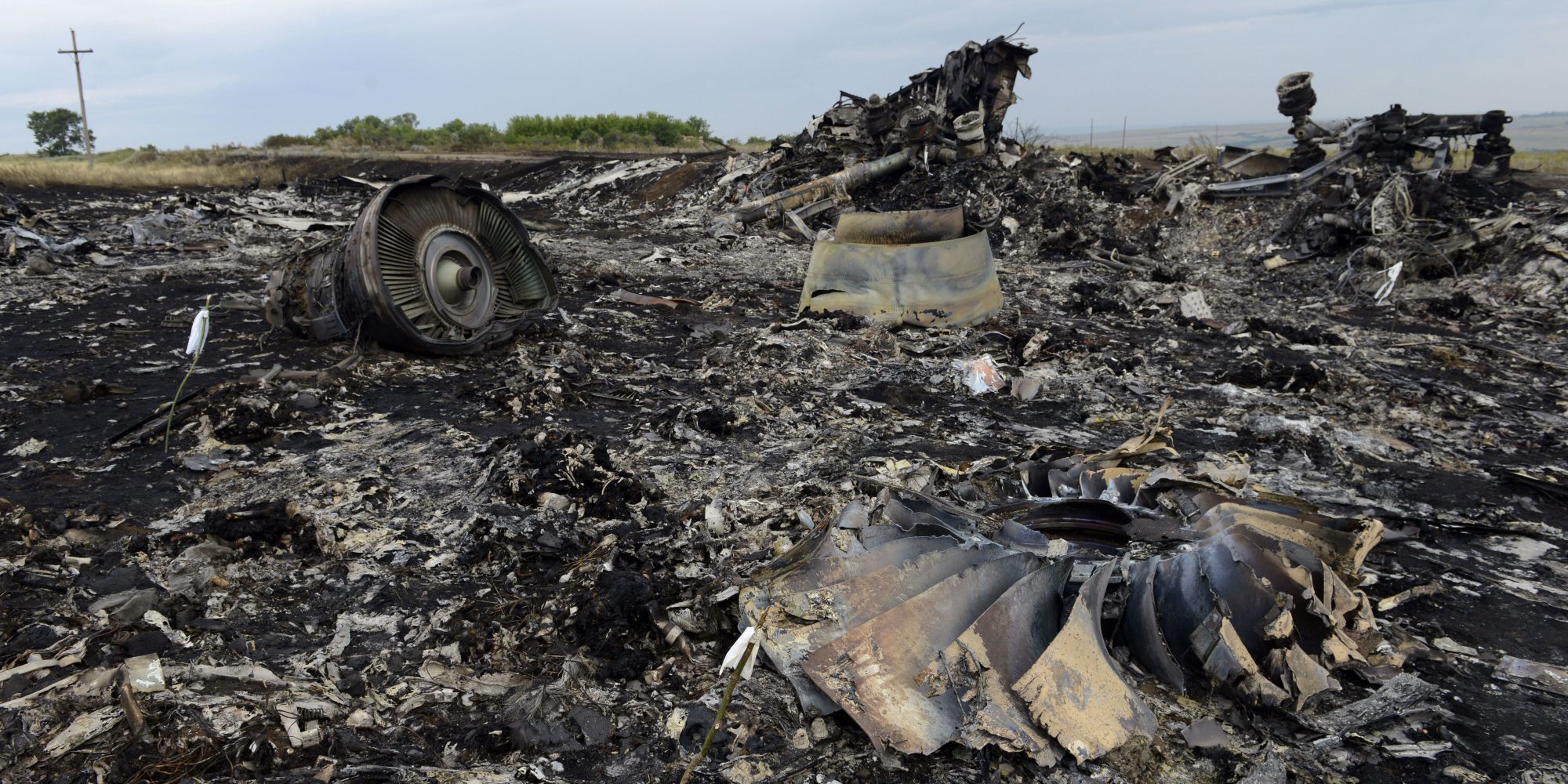
Twenty-seven Australians were aboard Malaysia Airlines Flight MH-17 apparently shot down by a missile fired by Russian-based and Russian-supplied rebels in Ukraine, which killed all 298 on board.
Kiev accused pro-Russian separatists battling Ukrainian forces of the “terrorist act’’ as stunned world leaders called for an international inquiry into the disaster, which could further fan the flames of the worst East-West crisis since the Cold War.
B777-2H6 (ER) 9M-MRD; C/N 28411; Photo: Wikipedia
Ukraine’s government and pro-Russian insurgents traded blame for the disaster, but comments attributed to a rebel chief suggesting his men may have downed Malaysia Airlines Flight MH-17 by mistake, believing it was a Ukrainian army transport plane.
And if this is true and the plane was brought down by Russian supported separatists using Russian know-how and Russian supplied heavy weapons and SAM missiles, then all roads lead back to Russia and stop clearly at the feet of the Russian president, Vladimir Putin. The finger of suspicion in this matter has to point to Russian operatives. Pro-Russian separatists would scarcely have the expertise to operative this type of technical equipment, therefore this indicates that they must have been operated by the Russian Army who have the prerequisite skills and experience. This theory is supported by reports (and video) of mobile SAM batteries crossing back into Russia the day after the attack.
The Russian president has again demonstrated that he has scant regard for human life inasmuch as he has failed to prevent the flow of money and weapons to these terrorists, in the obvious attempt to annexe more Ukraine territory to the Russian state. Putin should resign from the presidency, but of course he will not do so because he so enjoys the power of office. The elixir of power is more addictive than any narcotic! Furthermore, Russia has demonstrated that little has changed in its national outlook and foreign policy from its communist past, and is still not averse to being the “bully” to achieve its national needs and desires. Russia has demonstrated its continued dissatisfaction with the loss of territory since the breakup of the former USSR. Russian democracy resembles no other!
However, in Moscow, Russian President Vladimir Putin has blamed the Ukrainian government for the crash of a Malaysian Airlines jet that was shot down over eastern Ukraine, killing all 295 people on board. The government in Kiev is responsible for the fighting in eastern Ukraine between government troops and pro-Russian rebel forces which caused the downing of the civilian aircraft, Putin said at a cabinet meeting last night, according to a transcript released by the Kremlin.
Putin has repeatedly denied Russian involvement in the fighting in Ukraine. Mr Putin said Ukraine bore responsibility for the downing of a passenger plane, saying it would not have happened if Kiev had not resumed a military campaign against separatists. “I want to point out that this tragedy wouldn’t have happened if there was peace in this land, or at least if fighting hadn’t resumed in the southeast of Ukraine,” Putin said. “And undoubtedly, the state on whose territory this happened is responsible for this awful tragedy.”
The government in Kiev blamed the attack on pro-Russian rebels. The separatists denied the accusation. Ukraine’s state security service said it intercepted phone conversations among militants discussing the missile strike, which knocked Flight 17 from the sky near the eastern town of Torez, about 30 kilometres from the Russian border. The Boeing Co. 777 was en route to Kuala Lumpur from Amsterdam.
The Australian Prime Minister demanded Russia cooperate with any international investigation and took a swipe at Moscow, saying: “The bullying of small countries by big ones, the trampling of justice and decency in the pursuit of national aggrandisement, with reckless indifference to human life should have no place in our world.”
The Boeing 777-200ER, travelling from Amsterdam to Kuala Lumpur but carrying 27 Australian-born passengers, appeared to have broken up before impact and the burning wreckage was scattered over a wide area.
Malaysia said the plane had made no distress call.
Around the World
American intelligence authorities believe a surface-to-air missile took down the passenger jet. US officials said a US intelligence assessment suggests it is more likely pro-Russian separatists or the Russians rather than Ukrainian government forces shot down the aircraft. US Vice President Joe Biden said the incident was “not an accident’’ and described the Malaysia Airlines aircraft as having been “blown out of the sky.’’
Ukraine labelled the crash a “terrorist act” with the Ukraine embassy Charge D’Affaires to Australia, Mr Mykola Dzhydzhora, stating that the Ukraine understood “medium-range surface-to-air missile” was used in an attack on MH-17, which he said were supplied by the “Russian Federation”.
On the plane were 154 Dutch, 27 Auistralians, 23 Malaysians, 11 Indonesians, six from the UK, four each from Belgium and Germany and one from Canada. Other nationalities had yet to be confirmed.
All of the 15 crew were Malaysian nationals.
Dialog of terrorists discussing the shooting down of MH-17 from the Ukraine Security Service.
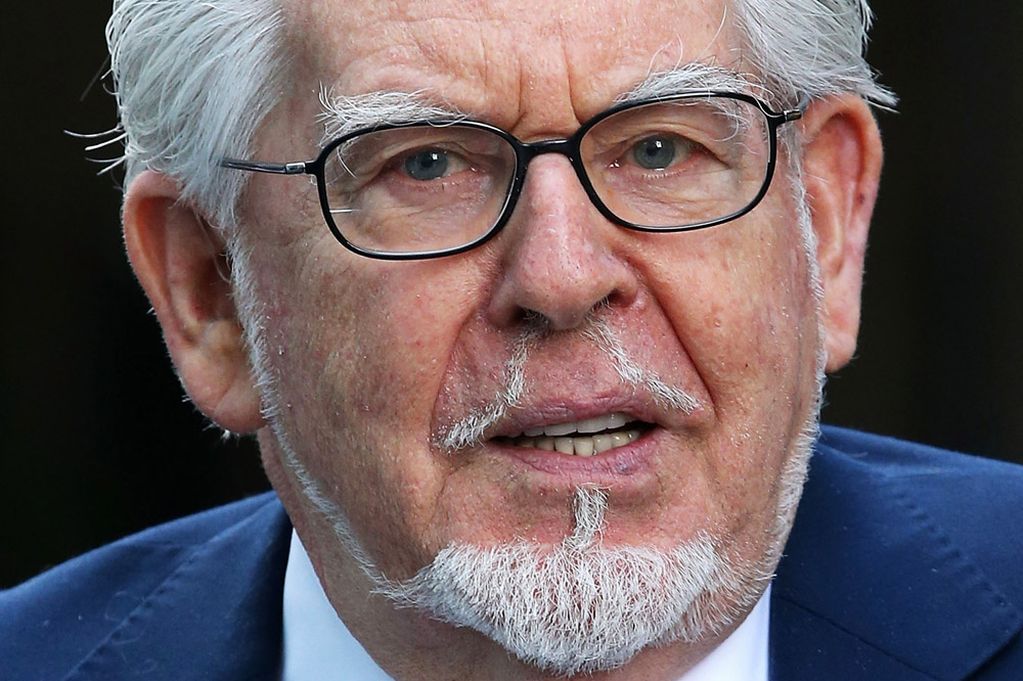
The recent sentence of five years and nine moths handed down to veteran performer Rolf Harris is grossly inadequate. Consider that each of the 12 offences carried at maximum 2 year prison sentence, Harris was looking at a possible 24 years imprisonment.
Legal opinion believed that because of the nature of the crime some of which if committed today could attract a life sentence, that the sentence Harris could expect would be 8 to 10 years, and he could be expected to die in gaol.
Harris’ 12 guilty verdicts of sexual assault against children, committed over decades, which sent some of his victims into a spiral of alcoholism, depression and self-hatred, resulted in the final sentence of five years and nine months. Consider further that Harris brazenly carried out these attacks, often in plain sight of others, and using his position of fame and stardom to protect himself, and that he has shown no remorse whatsoever.
Harris’ sentence of five years and nine months was arrived at after a convoluted formula of consecutive and concurrent sentences for the 12 offences.
Further, UK law allows prisoners who serve 12 months or more to be released on licence half-way through their sentence. This Harris could be released as early as May 2017.
The sentence is set to be reviewed amid criticisms it is unjustly lenient.
84 year old veteran performer Rolf Harris has been found guilty on all 12 counts of sexual assault. As the verdict was read out in the Southwark Crown Court, there was a stunned silence as the performer’s 60 year show business career collapsed around him. However those in court who had been following the case must have expected the verdict. He was pilloried on the front page of every UK daily newspaper, and likewise around the world and especially in Australia.
Gone was the happy, eccentric, talented singer and artist, and all that was left was the convicted paedophile and sexual predator. The judge has stated that a custodial sentence is inevitable, and the public have every right to demand and expect it! Each offence carries a 2 year sentence, although it is unlikely that Harris will serve 24 years for his crimes. He is more likely to serve 8-10 years, which means he could still die in gaol.
Organisations in which he has been involved are scurrying to remove him from their history. He has been stripped of his BAFTA fellowship. His Order of Australia is likely to be removed, and so too his MBE and CBE. Footpath plaques in Perth and Newcastle are likely to be removed. Harris will be made a nobody. Sydney’s Madame Tussauds has already removed his wax figure, doing so last May.
In court Harris lied about his relationships with his victims, and tried to make them out as liars, but in the end with skillful cross-examination by barrister Sasha Wass QC, Harris was undone and made admissions that sealed his fate. As a result of this trial, more victims has come forward to relay their stories to police. Some offences ocurred here in Australia or in other countries so therefore could not be heard as they occurred outside UK jurisdiction.
Harris will be sentenced on Friday, and will then be conveyed to London’s Wandsworth Prison to commence his sentence. From there he is likely to moved to Littlehey Prison in Cambridgeshire which a minimum security facility for those who are at risk in open prison but considered a low escape risk.
After 60 years of lies, deceit and sexual molestation, Rolf Harris will receive the only sentence that is long overdue for him. Life imprisonment. Even so, this is cold comfort for the abuse his victims have had to endure over time.
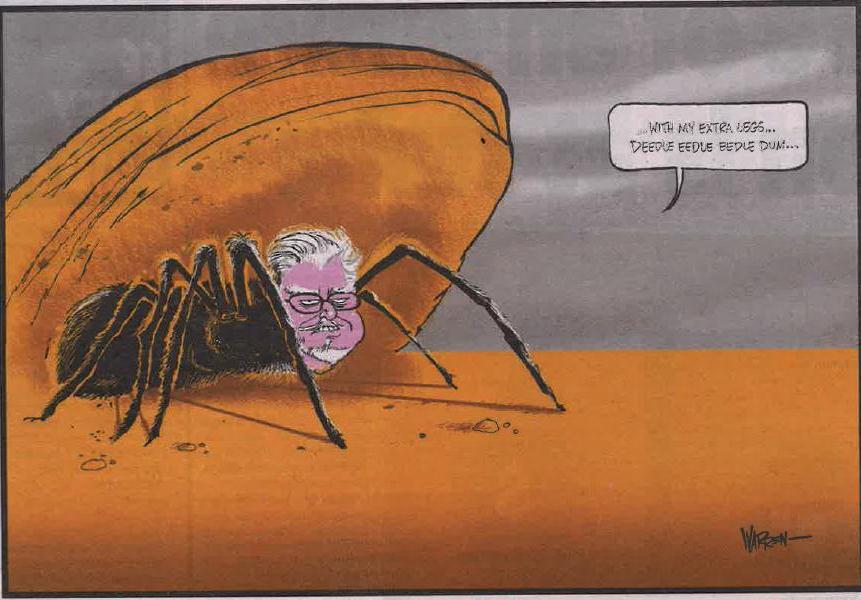
Here’s how Australian cartoonists recorded the conviction.
Cartoon by Lewis – Newcastle Herald 2/07/2014
Cartoon by Warren Brown, Daily Telegraph 2/7/2014
Harris’ $20 million fortune is likely to be eroded significantly to pay for his legal bills and as a result of civil actions from his victims and they seek compensation for his attacks on them.
George Brown is a decorated soldier and health professional and 40 year veteran in the field of emergency nursing and paramedical practice, both military and civilian areas. He has senior management positions in the delivery of paramedical services. Opinions expressed in these columns are solely those of the author and should not be construed as being those of any organization to which he may be connected.
He was born in the UK of Scottish ancestry from Aberdeen and a member of the Clan MacDougall. He is a member of the Macedonian community in Newcastle, and speaks fluent Macedonian. While this may seem a contradiction, it is his wife who is Macedonian, and as a result he embraced the Macedonian language and the Orthodox faith.
His interests include aviation and digital photography, and he always enjoys the opportunity to combine the two. Navigate to his Flickr site to see recent additions to his photo library.
Џорџ Браун е украсени војник и професионално здравствено лице и 40 годишен ветеран во областа на за итни случаи старечки и парамедицински пракса, двете воени и цивилни области. Тој има високи менаџерски позиции во испораката на парамедицински услуги. Мислењата изразени во овие колумни се исклучиво на авторот и не треба да се толкува како оние на било која организација тој може да биде поврзан.
Тој е роден во Велика Британија на шкотскиот потекло од Абердин и член на Kланот MacDougall. Тој е член на македонската заедница во Њукасл, и зборува течно македонски. Иако ова можеби изгледа контрадикција, тоа е неговата сопруга кој е македонски, и како резултат научил македонскиот јазик и ја примија православната вера.
Неговите интереси вклучуваат авијација и дигитална фотографија, и тој секогаш ужива во можност да се комбинираат двете. Отиди до неговиот Фликр сајт да видите последните дополнувања на неговата слика библиотека.
Discussion on the law that applies to or affects Australia's emergency services and emergency management, by Michael Eburn, PhD, Australian Lawyer. Email: meburn@australianemergencylaw.com
Oh, let's see...distinguished Gen-X'er, frustrated writer and mom living in the confines of a small town that thinks it's a big deal. And have I mentioned Walmart yet?









 Words, By George!