Greece will try to bring more to the table in negotiations for a debt deal and Prime Minister Alexis Tsipras will probably speak with European Commission chief Jean-Claude Juncker by phone on Saturday to try to end the deadlock, a Greek minister said.
Time is fast running out for Greece to secure a cash-for-reforms deal with its international creditors to avoid a default at the end of June that could see Greece removed from the euro zone. Depositors are pulling billions out of Greek banks, leading the government to consider the imposition of capital controls to stop the flow of currency out of the country.
It remains uncertain how far Greece’s leftist government, which won a January election vowing to pull its people out of austerity, is willing to bend in order to secure an agreement or what kind of additional offers it could make.
A young woman walks past a graffiti called ‘Death of Euro’ by French street artist Goin, in central Athens on Friday. Photo: Aris Messinis
While Greece has dug its heels over demands for pension cuts and tax rises, its leaders have continued to sound positive ahead of an emergency euro zone summit on Monday.
“We will try to supplement our proposal so that we get closer to a solution,” State Minister Alekos Flabouraris told Greek Mega television in a morning news show.
“We are not going there with the old proposal. Some work is being done to see where we can converge, so that we achieve a mutually beneficial solution.”
The European Central Bank has kept Greek lenders afloat and on Friday raised the ceiling on so-called emergency liquidity assistance, which the banks rely on to keep their doors open, by 1.8 billion euros.
What Greece can bring to the discussions to assist them to meet their fiscal responsibilities remains uncertain. It seems unlikely that Greece will leave the Euro zone, as this may lead to a knock-on effect to other struggling Euro economies.
Found near Pitlochry in Perthshire, Scotland is the smallest distillery in the world. The Edradour distillery is found in a collection of old whitewashed farm buildings set in an idyllic Perthshire glen.
Using the smallest stills allowed by law, the three distillers of Edradour produce only 12 casks of whisky per week. All by hand! Its a cracking malt – ‘smooth and creamy with a nutty, honeyed finish’.
The distillery offers a very interesting tour from 10am-4pm throughout the summer season. Well worth a visit. Check out their website Edradour Distillery found here.
From the car park at Edradour Pitlochry and easily accessible on foot. Great views across the fields to Ben Vrackie from the walk in. Not to be missed on a visit to Edradour.
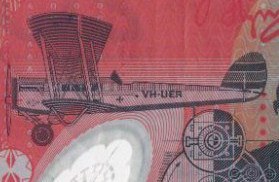
I have often noted the aircraft VH-UER depicted on the Australian $20, and have wondered what it’s history was.
VH-UER on the AU $20 note.
The aircraft was original registered G-AUER was a De Havilland D50A and was used for general aviation until 1928 when it was refurbished for use as the first air ambulance for the Australian Inland Mission (AIM) – as can be seen by the small Maltese Cross under the pilot’s cockpit. Upon starting service under contract for the AIM, The Rev John Flynn, the famous Flying Doctor, renamed it ‘Victory’.
The AIM was the founding organisation of the now Royal Flying Doctor Service, bringing medical services to remote Australian outback communities.
De Havilland D50A VH-UER
This De Havilland could carry a pilot and four passengers at a cruising speed of eighty miles per hour for a range of 500 to 600 miles. In those days, not much territory was charted, and so pilots were forced to navigate by river beds, fences, telegraph lines and other familiar landmarks. Despite these obstacles, in its inaugural year, the Aerial Medical Service (which changed its name to the Flying Doctor Service in 1942 and the Royal Flying Doctor Service in 1955) flew 50 flights to 26 destinations and treated 225 patients. Flynn’s dream had become a reality.
A Malaysia Airlines passenger plane enroute to Kuala Lumpur returned to Melbourne Airport after take-off after reports that an engine fire broke out.
The Airbus A330-323X (9M-MTE S/N1243) as MH 148 was placed in holding pattern over Point Cook airspace for the last 45 minutes to dump fuel before touching down without incident.
Aircraft instruments indicated that there had been a fire in the aircraft’s starboard engine.
The Melbourne Metropolitan Fire Brigade (MFB) said the fire was out and the aircraft had dumped fuel before making the emergency landing.
Emergency crews were called to the airport around 2:20pm.
“The plane landed safely,” an Airservices Australia spokesperson said. “The fire trucks were in attendance but were not needed.”
there was little interuption to other air services, and Melbourne Airport spokesperson stated operations were continuing as normal following the incident.
Malaysian Airlines has issued a statement saying that the plane had 300 passengers on-board, who disembarked safetly.
“Preliminary inspection reveals no physical evidence of fire externally, and further assessment is underway,” the statement said.
The Darjeeling Himalayan Railway once took precious tea from the foothills of the mountains to the teapots of the world. But it’s become a victim of the colossal inefficiency of the state-run system and is facing a slow extinction through neglect, says David Baillie.
The Darjeeling Himalayan Railway
When a man who grows tea that sells for more than $2,000 (£1,300) a kilogram offered me a breakfast cuppa, I expected the golden rules of warming the pot and using boiling water.
But even though Rajah Banerjee owns the exclusive Makaibari tea estate near Darjeeling, golden rules are not for him.
“Good tea is like good wine and needs oxygen to breathe,” he insists. “Boiling suffocates the flavour.” So Banerjee lets the water stand in a pot without a lid for several minutes before he eventually spoons in the tea.
My cup is filled several times from the lidless teapot as he expands on his personal philosophy of tea and life, an eclectic mix of Hinduism, Rudolf Steiner, and the Slow Food movement of distant Tuscany.
But Banerjee’s latest passion is the decaying Darjeeling Himalayan Railway – a narrow-gauge relic of the Raj that once took Makaibari tea from the Himalayan foothills to the Bengal Plains, from where it was shipped to the mainly lidded teapots of the world.
Built in 1879, the 48 mile (88km) line is now a loss-making anachronism that clings to life through the threads of its history and an aversion to the political bother of closure.
Looked down on by portraits of the four generations of his family who have nurtured the Makaibari estate, Banerjee is defiant. “Without investment it will die. But with investment it can strengthen tourism, and the whole community will benefit.” Jabbing the table with his finger he adds, “And I can make that investment.” Then the passion deflates. “But the government will not let me.”
Banerjee’s view is shared by many who know the region. There are a couple of token tourist steam services optimistically called the Joy Trains. The most popular shuttles back and forth along the five mile (7km) litter-strewn urban sprawl between Darjeeling and neighbouring Ghum.
The tatty cramped carriages have smoked plastic windows which have become so scratched as to be almost opaque. You can open them by sliding them back, but this merely adds your layer of scratched plastic to the already diminished view of a fellow passenger behind.
The steam locomotives thankfully have more charm than their carriages, but are now more than 100 years old and in need of expert and tender care rather than the desperate emergency repairs I witnessed involving the use of crowbars and sledge hammers.
A single loop in the Darjeeling Himalayan Railway, India, c 1910
An erratic diesel service, ironically with more tourist friendly windows, continues on a further 16 miles (26km) to the town of Kurseong but only one train a day makes the journey down to the plains and the connection to the main line.
This section had been closed for several years until March this year. The official reason was because of a landslide but everyone from the chief engineer to station masters gave me their own additional theories.
Even the security guard who frisked me as I left from nearby Bogdogra Airport had an explanation. He insisted, somewhat too cheerily, that it was because of the suicide of a fare-dodging passenger. Since the fare for the whole 48 miles is less than 48 pence and hardly worth dodging, let alone dying for, this seemed a little improbable.
The reality is that it is the railway that is committing suicide from a lack of investment. In the engineering workshop, ancient lathes and machine tools lie idle or broken as the skills to use them are lost with retiring workers, few of whom are replaced.
A diesel engine pulls the vintage ‘toy train’ running between the Himalayan hill station of Darjeeling and Siliguri
The most active engineering I witnessed was an earnest young man building a detailed model of one of the locos out of a sheet of tin.
So why is the Government Railway Board in distant Delhi so reluctant to hand the loss-making line to the likes of Rajah Banerjee, who would aim to offer tourists a ride along the whole 7,000ft (2,000m) climb into the mountains with hopefully a reasonable window to look out of?
Almost everyone I spoke to believed that the answer is the political cost of privatising even the tiniest outpost of India’s monolithic state-owned railway. More than a million people work for Indian Railways and their unions fiercely oppose any privatisation.
It’s a fight no-one has the stomach for, preferring instead eventual closure by the attrition of old age and retirement, of both people and locomotives.
Darjeeling Himalayan Mountain Railway steam train taking on water.
Back between Darjeeling and Ghum, tourist taxis wait impatiently as the Joy Train crosses the road they share, almost willing on the day when the railway will be gone, and with it Rajah Banerjee’s dream of a world-class tourist train with new dining cars and reopened station buffets, presumably with lidless teapots.
A South Korean court Friday suspended the prison term of the former Korean Air executive whose onboard “nut rage” tantrum delayed a flight last year, immediately ending her incarceration.
Cho Hyun-ah, who is the daughter of the Korean airline’s chairman, did not violate aviation security law when she ordered the chief flight attendant off a Dec. 5 flight, forcing it to return to the gate at John F. Kennedy Airport in New York, according to the Seoul High Court.
Photo: Associated Press
The upper court sentenced Cho to 10 months in prison and then suspended the sentence for two years. It said she was guilty of assault. A lower court had earlier sentenced Cho to a year in prison. She has been locked up since her December arrest.
She achieved worldwide notoriety after an onboard tantrum triggered when a first class flight attendant served her macadamia nuts in a bag instead of on a dish. Cho, head of the airline’s cabin service at the time, had a heated, physical confrontation with members of the crew.
Swarmed by reporters at the court, she made no comment in front of the TV cameras, bowing her head and burying her face in her hands as the media pressed in and yelled for her to say something.
The incident was a lightning rod for anger in a country where the economy is dominated by family-run conglomerates known as chaebol that often act above the law.
Kim Sang-hwan, head of the three judge upper court panel, said that even though Cho used violence against crew members, she should be given a second chance. The judge also cited her “internal change” since she began serving her prison term as a reason for lessening the sentence.
The upper court also took into consideration that Cho is the mother of 2-year-old twins and had never committed any offence before. She has resigned from her position at the airline.
And it seems that chaebol justice has prevailed yet again! Not only was her sentence reduced to 10 months, and then suspended for teo years, they cite that people using violence against others is OK, and should be given a second chance.
In Korea, as in Japan, the class system is alive and well. This judgement has shown once again that the upper classes, the chaebol, can do whatever they like and skirt around the judicial system with impugnity.
Had a lesser person carried out these acts, I’m sure they would be languishing in a U.S. Federal Prison for an undetermined period.
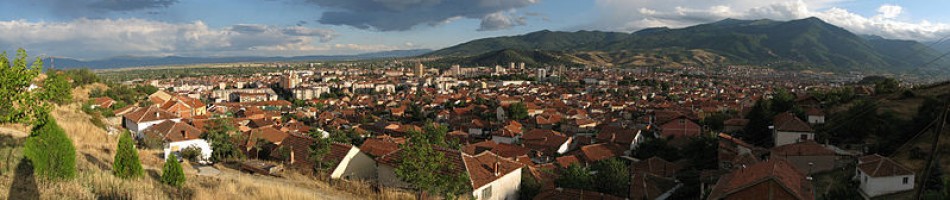
While considering the recent insurgent action in the northern Macedonian city of Kumanovo which resulted in the deaths of eight police officers, I found myself thinking that this was not an action for the Macedonian police (PM), but rather an action which falls under the purview of the Army of the Republic of Macedonia (ARM).
Army of the Republic of Macedonia (ARM)
The role or charter of the ARM is
To protect the lives and the personal safety of the people;
To guarantee the independence and the territorial integrity of the state;
To guarantee the material wellbeing and the prosperity of the people.
Deterring aggression;
Defending the country in case of an aggression;
Uniformity and conformity in the international co-operation in the area of defence.
The Republic of Macedonia maintains a defensive potential and combat readiness of its Armed Forces which function as a deterring factor in case of a potential aggression in accordance with our capabilities
The written role or charter of PM is a little harder to identify. In part their role is to obey and enforce the laws of RoM for the people. It also manages entry, exit and visa activities at international borders point, and international airports, provides security for foreign embassies and consular buildings, and manages and issues passport and passport renewals. It provides policing on the lakes of Macedonia which form international boundaries with Greece and Albania. Again, this is seen as an army role, as they manage the country’s borders generally. Some of these roles are not policing in nature, and can (or should) be managed by other agencies. The Police of the Republic of Macedonia also works closely with the NATO peacekeepers in patrolling areas with high numbers of ethnic Albanians along its borders with Kosovo and Serbia.
It has been stated in the media that the rebel uprising was led by five Kosovars supported by ethnic Albanians from the Kosovo region. As it would appear that this threat arose in a foreign or neighbouring country, repelling it would be a matter for ARM rather that PM.
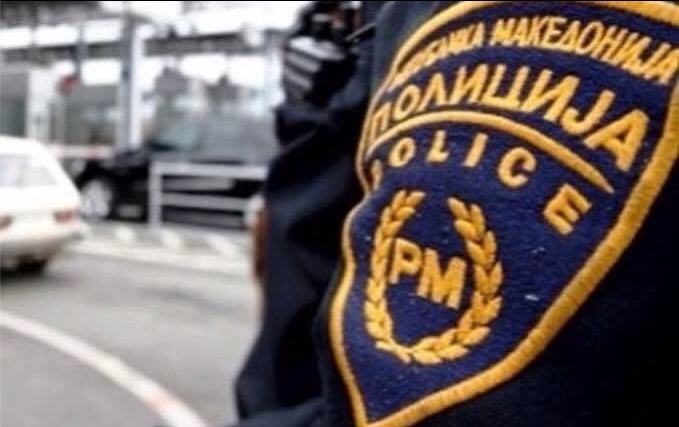
Policija
However, PM sees itself as the superior or premier law enforcement organisation in RoM, with the ARM playing a very clear and distinctly minor secondary role in defence of the country. In the case of this rebel uprising from Kosovo it is clear the police saw this as their role to manage rather than that of the ARM. PM is largely an inefficient, inflexible, authoritarian organisation, political in nature, with many ideas and functions relating to its socialist past. However its role is purely domestic in nature, protecting the citizens of the Republic.
Eight police officers and 14 alleged members of an armed group were killed in fighting in a northern Macedonian town of Kumanovo authorities have said, amid increased concern about the political stability in the Balkan nation that has a history of minor ethnic hostilities.
Interior ministry spokesman Ivo Kotevski said another 37 police officers were wounded in the clashes that started on Saturday. By Sunday Kotevski stated that the police operation was now over and that “one of the most dangerous terrorists groups in the Balkans has been neutralised”.
He said police stated the 14 individuals were believed to be members of the armed group. Some of the killed wore uniforms with insignia of the disbanded Kosovo Liberation Army. No identification documents were found on the deceased.
Macedonia has announced two days of official mourning for the eight PM officers killed in action.
Macedonia says five Kosovars led the armed group which was involved in deadly clashes with security forces in the northern town of Kumanovo.
Northern Macedonia
Eight officers and 14 gunmen were killed in the fighting, Interior ministry spokesman Ivo Kotevski said.
Those named were members of the now dismantled Kosovo Liberation Army.
Mr Kotevski said the operation near the Serbian-Kosovan border was now over and the armed group had been “neutralised”, with a large amount of weapons seized.
Last month, about 40 ethnic Albanians from Kosovo briefly took over a Macedonian police station in the village of Gosince near the border, demanding the creation of an Albanian state within Macedonia.
In 2001, rebels demanding greater rights for the ethnic Albanian minority launched an uprising against the government, and tensions have continued despite a peace deal.
About a quarter of Macedonia’s two million population are ethnic Albanians.
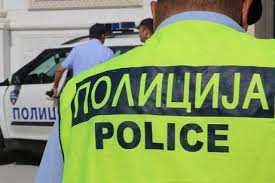
Macedonian police officer on duty.
Sami Ukshini, Beg Rizaj, Dem Shehu, Muhamet Krasniqi and Mirsad Ndrecaj were the leaders of the armed group that clashed with police in a suburb of Kumanovo, some 40km (25 miles) north of the capital, Skopje on Saturday, the interior ministry spokesman said. Only one of the 14 uniformed bodies had been identified – that of another Kosovo national, named Xhafer Zymberi, said the spokesman.
“More than 30 terrorists, mainly Macedonian nationals and one from Albania, surrendered yesterday [Saturday] to the police forces,” Mr Kotevski added. He said 37 police officers were also wounded in the clashes.
Residents returning to the city are finding many of their homes damaged as a result of the fighting, one Reuters reporter at the scene says. “It’s total destruction. Thank God we’re safe,” Haki Ukshini said after finding his home largely destroyed.
The men who surrendered would face Macedonian justice, Prime Minister Nikola Gruevski said.
Macedonian Translation
Македонија вели декапет Косоварипредводешевооружена групакојабеше вклучена восмртоноснитесудирисо безбедносните силивосеверниот градКуманово.
Northern Macedonia
Осумполицајции 14вооружени лица беаубиениво борбите, изјави портпаролот на Министерството за внатрешни работи, Иво Котевски.
Оние што се именуванисечленови на сега веќераспуштенатаОслободителна војска на Косово.
Г-динКотевскирече дека операцијатаво близина насрпско-косовската граница есега повеќеивооружена групабиле “неутрализира”, соголемо количество оружјезапленето.
Минатиот месец, околу 40 етнички Албанци одКосовократкоја презедемакедонскиполициската станицаво селотоГошинцево близина на границата, барајќи создавање на албанскадржава воМакедонија.
Во 2001 година,бунтовницитекои бараа поголеми праваза етничкото албанскомалцинствозапочнавостание против владата, а тензиите продолжијаи покрајмировниот договор.
Околу една четвртинаод двамилиони жителина Македонијасе етнички Албанци.
Macedonian police officer on duty.
СамиUkshini, БегРизај, DemШеху, Мухамет Красниќи иМирсадNdrecajбиле водачи навооружената групакојасе судрија со полицијатаво предградието наКуманово, некои 40 километри (25 милји) северно од главниот град, Скопје, во саботата, портпаролот наМинистерството за внатрешни работирече. Самобиле идентификуваниеден од 14-униформирани тела –на другаКосовонационална,именуванXhaferZymberi, изјави портпаролот.
Жителитесе враќаат воградотсе најдатмногу однивните домовиоштетени како резултатна борбите, еденновинарна Ројтерсна местото на настанот, вели. “Тоа ецелосно уништување.Фала му на Боганиесме безбедни“, рече ХакиUkshiniпо наоѓање нанеговиот домво голема мера уништен.
Мажитекоисе предадоаќе се соочи сомакедонското правосудство, рече премиерот НиколаГруевски.
In a bizarre column in today’s Australian, Mr Newman said climate change was a hoax being led by the United Nations to end democracy and impose authoritarian rule.
There are calls for Mr Newman to resign as business advisor to the Australian Governmentover his misleading comments.
His anti-science, fringe views are indistinguishable from those made by angry trolls on conspiracy theory forums and are not befitting of someone with a position of such influence.
While major financial institutions like the World Bank, HSBC and the IMF are warning about the business risks of climate change and taking clear advice from the world’s best scientists, Australian business’s top representative to government is in another orbit.
He’s not only out of step with the scientific community and the vast majority of Australians who understand the impacts of climate change but he’s also damaging Australia’s credibility by getting his information from the tin foil hat brigade rather than the world’s most respected scientific institutions.
After earlier misleading statements Climate Council members emailed the Business Advisory Council offered Mr Newman a briefing from a group of Australia’s leading climate scientists, which was refused.
He is either intentionally misleading the public or he is incapable of understanding scientific consensus, in which case he has no business advising the government.
His position is no longer tenable and he should resign.
George Brown is a decorated soldier and health professional and 40 year veteran in the field of emergency nursing and paramedical practice, both military and civilian areas. He has senior management positions in the delivery of paramedical services. Opinions expressed in these columns are solely those of the author and should not be construed as being those of any organization to which he may be connected.
He was born in the UK of Scottish ancestry from Aberdeen and a member of the Clan MacDougall. He is a member of the Macedonian community in Newcastle, and speaks fluent Macedonian. While this may seem a contradiction, it is his wife who is Macedonian, and as a result he embraced the Macedonian language and the Orthodox faith.
His interests include aviation and digital photography, and he always enjoys the opportunity to combine the two. Navigate to his Flickr site to see recent additions to his photo library.
Џорџ Браун е украсени војник и професионално здравствено лице и 40 годишен ветеран во областа на за итни случаи старечки и парамедицински пракса, двете воени и цивилни области. Тој има високи менаџерски позиции во испораката на парамедицински услуги. Мислењата изразени во овие колумни се исклучиво на авторот и не треба да се толкува како оние на било која организација тој може да биде поврзан.
Тој е роден во Велика Британија на шкотскиот потекло од Абердин и член на Kланот MacDougall. Тој е член на македонската заедница во Њукасл, и зборува течно македонски. Иако ова можеби изгледа контрадикција, тоа е неговата сопруга кој е македонски, и како резултат научил македонскиот јазик и ја примија православната вера.
Неговите интереси вклучуваат авијација и дигитална фотографија, и тој секогаш ужива во можност да се комбинираат двете. Отиди до неговиот Фликр сајт да видите последните дополнувања на неговата слика библиотека.
Discussion on the law that applies to or affects Australia's emergency services and emergency management, by Michael Eburn, PhD, Australian Lawyer. Email: meburn@australianemergencylaw.com
Oh, let's see...distinguished Gen-X'er, frustrated writer and mom living in the confines of a small town that thinks it's a big deal. And have I mentioned Walmart yet?







 Words, By George!