Words, By George!

Mundane Musings ­­║ Mindful Mutterings ║ Madcap Mischief

  • Welcome!
  • Main
    • PHOTO GALLERY
      • Avoca, Co. Wicklow
      • Bitola, Macedonia
      • Coventry, Warwickshire
      • Devizes, Wiltshire
      • Fishguard, South Wales
      • Liverpool, UK
      • Pontsycyllte Aqueduct
      • Prilep, Macedonia
      • Standedge Tunnels
  • Liked Links
  • About the Author
    • Contact the Author
    • Inspirations
  • Books I’ve Read
  • My Stories
    • 1%
    • A Meeting With Death
    • Rachel
    • The Holiday

“To be or not to be…..”

Posted by George Brown on 15/07/2016
Posted in: Democracy, Government, News, Opinion, Politics, Uncategorized. Tagged: Barnaby Joyce, Liberal party of Australia, Malcolm Tuyrnbull, minority government, National Party of Australia, Tony Abbott. Leave a comment

Tony Abbott supporters are agitating to get him back into cabinet?

Malcolm Turnbull’s flimsy election win has caused calls for his predecessor’s return.
tony abbott

Internal Coalition pressure could see Mr Abbott back to cabinet. Photo: AAP

With elements of the Liberal Party agitated by the government’s loss of its 21-seat buffer in the House of Representatives, Prime Minister Malcolm Turnbull now faces a Shakespearean dilemma.

Tony Abbott: “To be or not to be … that is the question”.

Had Mr Turnbull won the election by half a dozen seats and not just two, the Prime Minister would be in a stronger position.

But with Eric Abetz and Kevin Andrews, among others, pointing their angry fingers at him over the Liberal MPs who lost their seats, Mr Turnbull is under pressure internally as never before.

On Thursday, Mr Andrews publicly advocated for fallen PM Abbott’s rehabilitation to the Turnbull cabinet.

From Tasmania, Senator Abetz joined the chorus lamenting the leadership change last September which, according to some analysts, provoked one million voters to change their vote to the minor parties, including Pauline Hanson’s One Nation and The Nick Xenophon Team.

In Hamlet, Shakespeare has the king contemplating suicide at what his ambition has wrought.

“Whether ‘tis nobler in the mind to suffer The slings and arrows of outrageous fortune, Or to take arms against a sea of troubles And by opposing, end them …”

In 2016 Australia, Mr Turnbull is living this nightmare dilemma.

Have no sympathy. He happily knifed Mr Abbott in yet another coup australis. He must now consider his future as leader of what is left of his government.

Over the next three days he must consider the appointment of a front bench after already having endured a spiteful negotiation with Barnaby Joyce, leader of the National Party, upon whom the survival of his government and his prime ministership now depend.

The Nationals will earn two extra cabinet spots because of the proportionate rule convention of the confidential Coalition agreement.

Mr Turnbull has some Liberal vacancies to fill and it is in this context that Mr Abbott’s return to the cabinet is on the agenda.

Team Tony

In the months preceding the election campaign, Mr Abbott conspicuously became a “team player”, earning credit points with the Canberra press gallery for his discipline.

During the campaign Mr Turnbull indicated the two had reconciled during a private meeting.

He even suggested he would kayak from his Point Piper jetty to Manly to join Mr Abbott’s Warringah campaign.

That photo opportunity did not eventuate, but even through the 10 days it took to determine the election count and the government, Mr Abbott has held his tongue.

There is speculation that he has reached some sort of agreement with Mr Turnbull for his return to the Liberal front bench, either now or at some future time in the life of the government.

If Mr Abbott were to return to cabinet now, it would send an immediate signal confirming, if confirmation was really needed, that Mr Turnbull is not his own man.

He will be seen as a creature of the Liberal Party – bound by its factional influences.

Mr Turnbull, who possess thespian skills, undoubtedly will be able to sell Mr Abbott’s return as a government of renewed unity and concord.

But if he takes the risk of letting Mr Abbott back in to the seats of power, he may sew the seeds of his own destruction. He knows this, but will he do it for short-term party stability?

“To die, to sleep – to sleep, perchance to dream. Aye, there’s the rub”

Source: Quentin Dempster, ABC TV

Brexit – The impact of the Leave vote

Posted by George Brown on 03/07/2016
Posted in: Democracy, economy, Europe, Fiction, Legislation, Opinion, Public Opinion, Uncategorized. Tagged: Brexit, Brussels, EU, European Union, Leave, Remain. Leave a comment

You are using an outdated browser. Please upgrade your browser to improve your experience.


You are using an outdated browser. Please upgrade your browser to improve your experience.


You are using an outdated browser. Please upgrade your browser to improve your experience.

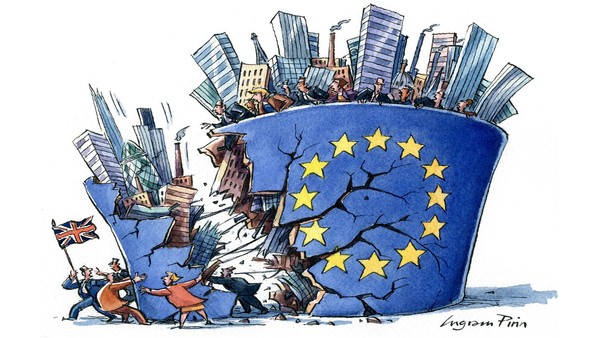
The campaign to leave the European Union repeatedly urged Britain to “Take back control”. It is now a week since voters narrowly opted for Brexit, and the country has seldom looked so wildly off the rails. The Prime Minister has handed in his notice. The leader of the opposition is struggling to survive a coup. Boris Johnson has distanced himself from the top job.  The pound hit a 31-year low against the US dollar and the banks lost a third of their value, before stabilising. Meanwhile there is talk in Scotland and Northern Ireland of secession.

Every one of these calamities was predicted in the event of a Leave victory, and yet still the country seems transfixed by what it has brought upon itself. It is time to snap out of the daze. The country needs a new leader, a coherent, intelligent and non-nationalist approach to negotiating with the EU, and a fair settlement with those nations within its own union that voted Remain. The damage to Britain’s prosperity and to its standing in the world is already grave, and will become far worse if the country now fails to “take back control” of its future.

Brexit’s grisly first week, and the misery ahead, have already provoked buyer’s remorse. More than 4 million people have signed a petition calling for a re-run of the vote. An instant rejection of the result would be wrong. Although we regret the Brexit vote, 34 million people have cast their ballot and the result is clear. A straight rematch would be no fairer than allowing England’s footballers another crack at Iceland, which inflicted a second humiliation a week after the referendum.

And yet Britain’s fate is still highly uncertain. Although Britons opted to leave the EU, Brexit comes in 57 varieties. The mildest sort would be an arrangement like Norway’s, involving continuing access to Europe’s “single market” in return for the free movement of people from EU countries and a contribution to the EU budget. At the opposite extreme, Britain could cut its ties entirely, meaning no more payments into the EU budget and no more unlimited migration—but no special access to the market which buys nearly half Britain’s exports, either. Voters were told they could have it all. They cannot.

The Norwegian option would do the least damage to the economy. It would also be the best chance to preserve the union with Scotland and Northern Ireland, both of which voted Remain. The ruling Scottish Nationalists, who lost an independence referendum in 2014, always said that Britain’s leaving the EU would justify another ballot on independence. They are right—especially since in 2014 many Scots voted to stay in Britain in order to remain in the EU. But independence would be painful: it might mean promising one day to adopt the euro and hardening the border with England, with which Scotland trades more than it does with the EU. Under a Norwegian-style deal, Scots might prefer to stick with England. The Nationalists should wait to see a deal before asking for a new referendum.

In Northern Ireland, Brexit raises other problems. One is the prospect of resurrecting the border between north and south – although that’s unlikely – a dismal piece of symbolism which might be avoided if Britain got a Norwegian settlement. Another shamefully overlooked snag is that Britain’s exit from Europe will break the Good Friday Agreement of 1998, in which Northern Ireland’s peace process was underpinned by the EU. This treaty has kept the peace in the UK’s most troubled region for nearly 20 years. Fixing the mess will be an urgent task for the Prime Minister.

The PM of no Breturn

Who should that be? Tory party members, who have the final say, may favour one of the victorious Leave campaigners, a mediocre bunch who have disgraced themselves during the campaign: lying about inflated budget payments and phantom Turkish migrants, before vanishing after the vote when the Brexit hit the fan, none of them faster than Boris Johnson. None of them would make a worthy prime minister anyway. And yet the very falseness of the prospectus they flogged may be their best qualification for the job. Britain’s next leader must explain to 17 million voters that the illusion they were promised—all the EU’s benefits with none of its obligations—does not exist. Only when the authors of the Brexit fantasy themselves return from Brussels without this magical deal might Leave voters accept that a compromise is necessary.

European leaders are in no mood to negotiate with their bolshie neighbour. That is why Britain should delay as long as it can before invoking Article 50 of the Lisbon treaty, the mechanism for a Brexit negotiation, which sets a two-year deadline. For every extra month that the cost of Brexit sinks in, the possibility of a fudge will increase. Angela Merkel, a champion procrastinator who, like her French and Dutch counterparts, faces angry elections next year, may also feel that accommodating some British demands, such as allowing an emergency brake on the free movement of people during “surges” (perhaps applied across the EU), would be possible, though she may find it hard to sell the idea to other European leaders. She may be lucky to keep Germany in the EU? Her “open door” policy towards Syrian refugees no doubt assisted the Leave campaigners!

Given that nearly half of British voters did not want out, it is likely that a majority might prefer a Norwegian compromise to complete isolation. Whatever deal takes shape in Brussels will be so far from what was promised by the Leave campaign that it will surely have to be put to the British public again, through a general election, another referendum or both. It is even possible that the whole notion of Brexit may stall. A thin majority have said they would prefer life outside the EU to life inside. But it may be that, when faced with the question of whether to endorse a Norway-like deal that entails many of the costs of being in the single market without having a say in the rules, many would rather stay in the EU after all.

Negotiating over Brexit will stretch the tolerance of both British voters and European leaders. Yet the EU specialises in muddled compromises and talking its way around referendums. After months of economic hardship, and a recession-induced fall in immigration, British voters may be ready to think differently about the balance between immigration, the economy and their place in Europe. By far the most likely outcome of this sorry situation remains Brexit. But it would be wrong completely to discount the possibility of an inelegant, humiliating, and yet welcome, Breversal.

Source: The Economist

More to Leave the European Union?

Posted by George Brown on 27/06/2016
Posted in: businees, Democracy, economy, Europe, Government, History, Law, Parliament, Politics, Uncategorized. Tagged: Brexit, economic union, EU unrest, European Union, Finexit, Frexit, Hungexit, Italexit, political subordination. Leave a comment

Le Pen Marine

Brussels has simply gone too far. They have crossed the line moving from an economic union to the political subordination of Europe. Now five more countries seek to hold referenda to exit the EU – France, the Netherlands, Italy, Austria, Finland and Hungary all could leave. With Hollande approval rating at about 11%, Merkel is lucky that she is not tarred & feathered, the Front National leader Marine Le Pen has pledged to hold a French referendum. If she emerges victorious in next year’s presidential elections, that means the next major player in the EU after Germany is out and there goes the EU.

This entire civil uprising in Europe is underway ever since two months ago when Dutch voters overwhelmingly rejected a Ukraine-European Union treaty. Angela Merkel’s Germany now faces having to pay an extra 3 billion euros a year to the annual EU budget once Britain leaves. This alone is prompting German government officials to propose that Britain is offered “constructive exit negotiations” to keep their dues coming in. Some are now talking about a quasi-membership for the UK calling it an “associated partner country” to keep the money flowing.

Yet the French government of Hollande just does not understand. The governor of the French central bank will exert pressure on UK banks. They are taking the view that it would be paradoxical if Britain could retain privileges after the withdrawal from the EU. First Banks are preparing apparently preparing to shift part of its employees in London to the continent. They obviously fail to grasp that it is European continental banks that are on the brink of collapse – not British.

Italian ministers warned on Saturday that the European Union MUST change course or risk total collapse after Britain’s vote to leave the bloc. The Italian  Finance Minister Pier Carlo Padoan said. “A double reaction to Brexit is under way, one financial, one political. The financial one, at least until now, is limited. I am more worried about the political one.” Indeed, the unthinkable is happening. And they worry the pound might crash? Pay attention to the euro.

Meanwhile, another critic of the EU has been the leader of Poland’s ruling party. Poland’s Foreign Minister Witold Waszczykowski also now responded and said that the UK referendum result shows the need for reform of the EU. “This is bad news for Europe, for Poland.  This is a great dilemma for the eurocrats, we all want to keep the EU, the question is in what shape.” He continued: “We will be trying to use this situation to make the European politicians aware why this happened. And it happened because this concept, which was created some time ago, is no longer popular in Europe.”  Then again, the Hungarian Prime Minister Viktor Orbán intends to campaign in the British press for the UK to remain in the EU, according to a Hungarian government spokesman. Orbán is clearly one of those who is out of touch with the people and fails to understand that a federalized Europe is not going down very well with the people. He is extremely arrogant to think that he has any right to intervene or suggest that the vote be ignored.

To add insult to injury, Turkey proclaims the “Crusader union falls apart” demonstrating that memories in Europe go back centuries, and yet they might be fast-tracked into the Union. Americans did not want to enter World War II. Roosevelt even traveled to Boston promising that American boys would never defend Europe. Boston was a very Irish community and they were upset at being asked to defend Britain after their migration to the USA because of Britain. Old wounds never quite die.

Source: Armstrong Economics

Brexit – Where to from here?

Posted by George Brown on 27/06/2016
Posted in: Culture, Democracy, economy, Finance, Parliament, Uncategorized. Tagged: Brexit, Brussels, EU, European Union, referendum, UK. Leave a comment

index

The European Union has clarified the way the UK can kick-start formal negotiations to exit the bloc following Thursday’s referendum.

It says Britain can trigger Article 50, which sets a two-year deadline for a deal, by making a formal declaration either in a letter or a speech.

UK PM David Cameron has said he will step down by October to allow his successor to conduct the talks.

But EU foreign ministers have urged Britain to start the process soon.

Since Thursday’s vote there has been intense speculation about when, and how, the UK might begin formal negotiations.

A spokesman for the European Council, which defines the EU’s political direction and priorities, reiterated on Saturday that triggering Article 50 was a formal act which must be “done by the British government to the European Council”.

“It has to be done in an unequivocal manner with the explicit intent to trigger Article 50,” the spokesman said.

“It could either be a letter to the president of the European Council or an official statement at a meeting of the European Council duly noted in the official records of the meeting.”

On Saturday, German Chancellor Angela Merkel said the EU had “no need to be particularly nasty in any way” in the negotiations with Britain.

She said that deterring other countries from leaving the EU should not be a priority in the talks.

Mrs Merkel added that she was not in favour of pushing for a speedy withdrawal.
“No need to be particularly nasty” and “It shouldn’t take forever, that’s right, but I would not fight for a short time-frame,” she said.

In other developments, UK Labour leader Jeremy Corbyn, facing a no-confidence vote following the referendum, has sacked shadow foreign secretary Hilary Benn

Scotland’s First Minister Nicola Sturgeon says she will seek “immediate discussions” with Brussels to “protect Scotland’s place in the EU”

A petition calling for a second referendum on UK’s membership of the EU has gained more than two million signatures

There are warnings British financial institutions could lose their prized access to the EU if the UK leaves the single market
Britain’s European Commissioner, Lord Hill, who oversees financial services, is to resign

Mrs Merkel was speaking after several EU foreign ministers, including Germany’s, had urged Britain to quickly implement its exit.

“This process should get under way as soon as possible so that we are not left in limbo but rather can concentrate on the future of Europe,” German Foreign Minister Frank-Walter Steinmeier said.

His Dutch counterpart Bert Koenders said the continent could not accept a political vacuum, saying “this will not be business as usual”.

Speaking later to the BBC, Estonian President Toomas Hendrik Ilves said he didn’t think it was “even legally possible” to force the UK to speed up the exit process.

“I understand it is very difficult for Prime Minister Cameron, who was against leaving the European Union, to now go ahead and do this,” he told the BBC World Service’s Newshour program.

“I think we should give them time; let them decide how quickly they want to do it.”

He described Britain’s exit from the bloc as “a disaster” saying Estonia had often aligned itself with the UK and had counted on Britain to present their shared views.

The UK’s decision to leave the EU has sent shock-waves across the continent with leaders of Eurosceptic parties in France, the Netherlands and Italy demanding referendums in their own countries.
New road map

In response, some EU politicians have called for speedy reforms to quell further unrest.

French economy minister Emmanuel Macron suggested a new mission statement should be drafted and put to a referendum of all EU citizens.

“We’ve never had the courage to organise a true European referendum in its real sense,” he told a conference.

“We would first build this new project with European peoples and then submit this new road map, this new project, to a referendum [across the bloc].”

The first summit of EU leaders with no British representation will be held on Wednesday, a day after Mr Cameron holds talks with members.

Global stock markets and the pound fell heavily on the news of the so-called “Brexit”, while credit rating agency Moody’s cut the UK’s outlook to “negative”.
What comes next?
Image caption The process to take the UK out of the European Union starts with invoking Article 50 and will take at least two years from that point

Brexit: What happens now?
What is Article 50 of the EU Treaty?

  • In force since 2009 but never tested
  • Allows governments to notify intent to leave.
  • Talks then begin on a range of issues between the leaving nation and other EU members.
  • If no deal is reached, membership will automatically cease two years after notification.
  • The article is only a basic template for leaving, settling the date and some other matters. It does not automatically include issues such as movement of people or trade. The latter could take years to conclude.

Source: BBC


Russian Sabre-rattling?

Posted by George Brown on 24/06/2016
Posted in: Democracy, Government, Military, Politics, Security, Uncategorized, Warfare. Tagged: Crimea, military build-up, NATO, Putin, Russia. Leave a comment
Vladimir Putin

Vladimir Putin

President Vladimir Putin has said Russia must boost its combat readiness in response to NATO’s “aggressive actions” near its borders.

Addressing the Russian parliament Putin also criticised the West for its reluctance to build a collective security system with Russia.

‘‘NATO is strengthening its aggressive rhetoric and its aggressive actions near our borders. In these conditions, we are duty-bound to pay special attention to solving the task of strengthening the combat defences of our country,” he declared.

Last month, Moscow announced plans to create three new divisions to meet what it described as a dangerous military build-up on its borders.

NATO chief, Jens Stoltenberg urged dialogue.

“The important thing is that we need the NATO/Russia Council to have a chance of political dialogue open with Russia and especially when tensions are high. It is important that we talk, that we meet and that we do whatever we can to prevent misunderstandings, miscalculations, and try to reduce tensions,” Stoltenberg said.

NATO is also set to send four battalions to Poland and the Baltic states of Estonia, Latvia and Lithuania in an attempt to prevent a repeat of Russian actions, such as the annexation of Crimea in 2014.

Russia has openly stated that it wishes to regain those states or territories lost after the break-up of the former Soviet Union. The simple solution to this problem is for Russia not to covet those now independent states and to clearly and unequivocally denounce any intention to attempt to annex them.


New Coffee Shop for Grumpy Folk!

Posted by George Brown on 22/06/2016
Posted in: Advertising, Humour, News, Uncategorized, Workplace. Tagged: Cardiff, Coffee, Grumpy, Wales. Leave a comment
grumpy-fuckers-coffee-shop

A coffee shop has opened in Cardiff, Wales for people who hate mornings.

Grumpy Fuckers’ Coffee Shop opened its door yesterday and was overwhelmed by demand.

Manager Clive GrimGrits told WalesOnCraic: “I had to get up at 5am to get the bastard shop open. I hated it. Most people are still sleeping at that time. We opened the shop at 6am and by 7am, we’d already sold out of ‘Fuck You Frappuccinos’ as well as our ‘Piss Poor Tea’. Every fucker who came in had a face on them like a slapped arse so I closed the shop at 8am so I could go home and get some proper sleep like most people do.”

One customer said that she would visit the coffee shop again, despite everyone bumping into each other and not saying a word.

“It was perfect for me. I could just sit there, thinking how shit my life is and how I hated going to work. They guy next to me was asking whether they did any cooked breakfasts but the manager told him to fuck off and get a life. Everyone was grumpy, which was fine because we were all grumpy together.”

What will happen if the UK votes for Brexit?

Posted by George Brown on 22/06/2016
Posted in: Defence, Democracy, economy, Government, Law, Opinion, Parliament, Politics, Uncategorized. Tagged: Brexit, EU, European Union. Leave a comment

In a matter of days, the UK electorate faces its biggest choice in more than a generation — whether to remain in the EU.

While the campaign to exit the bloc says a decision to remain would be the bigger risk, its opponents contend that breaking up with Brussels would be a leap in the dark.

 Here is a selection of Financial Times news and analysis of the steps after Brexit.

The promise: the UK would seek to leave the EU by 2019 and would be prepared to defy Brussels over immigration laws, according to a leading pro-Brexit minister.

The risk: George Osborne, the chancellor of the exchequer, has warned of a £30bn black hole in public finances if Britain should vote to leave on June 23.

The immediate aftermath: David Cameron would probably face the end of his career as prime minister as EU membership was put aside.

The politics: the political and constitutional questions caused by a vote to leave could open up a period of profound uncertainty for the UK and the EU.

The legal analysis: the referendum is advisory rather than mandatory; what happens next is a matter of politics, not law.

The mechanics: the UK would have two years to negotiate a deal after triggering the exit clause of the EU treaties; extending talks beyond that would require unanimity.

The economics: the professional consensus is clear – leaving the EU would hit growth. The size of that impact would depend on factors such as trade, productivity and foreign direct investment. But champions of Brexit argue that the economy would prosper outside the EU.

Immigration: the record influx of EU nationals has proved a powerful rallying call for the Leave campaign. Some three-quarters of EU citizens working in the UK would not meet current visa requirements for non-EU overseas workers if Britain left the bloc. But such restrictions are likely to apply to new entrants rather than to EU migrants already in the UK.

Trade options: leading Leave campaigners say they would not seek to join the EU’s single market — which requires free movement of labour. Instead they would seek a trade deal with the bloc. Treatment of the service sector, which accounts for 80 per cent of UK gross domestic product, would be a huge issue.

The European response: European leaders have stepped up secret discussions for an EU without Britain, drawing up a plan B focused on closer security and defence co-operation.

Source: Financial Times

Why are the RSL Clubs dying out?

Posted by George Brown on 11/06/2016
Posted in: businees, Culture, History, Humanity, Military, Opinion, Public Opinion, tradition, Uncategorized. Tagged: demographics, generational shift, RSL clubs, veterans. Leave a comment

AS the final waves of World War II Diggers pass away and social and demographic trends shift, many of the registered RSL clubs across the nation are closing down in the face of unprofitability.

Once considered a bastion of the nation’s social fabric, particularly in rural cities and towns, the registered RSL clubs’ demise is causing dilemma for many who have long called their local RSL a second home.

In NSW, 43 RSL clubs have been closed or amalgamated since 1995 while in Queensland, country areas such as Goondiwindi, and even the mining boom town of Mount Isa  has recently seen the doors to their local RSL club permanently closed.

“It’s just devastating what’s happening to the clubs,” said Paul Phillips, a former Goondiwindi RSL president who had worked for the club for 30 years.

“For so many people, the local RSL has long been a way of life, the lifeblood of communities.”

There are a varied number of reasons for the closure facing many RSL clubs, but according to Victorian RSL president David McLachlan, the biggest culprit is nature. “As a consequence of the Second World War veterans going to their maker, we are seeing a lot of closures,” Major General McLachlan said.

Peter Lanigan, the president of the RSL in the affluent eastern Melbourne suburb of Hampton, which is facing severe financial difficulties, agrees.

“The traditional market base of WWII returned servicemen has almost disappeared and the children of those people haven’t got the same emotional connection to the clubs their parents had,” he said.

“There is no doubt a lot of pressure on borderline gaming venues and old-style branches.

“It’s a constant rationalisation. The number of clubs is reducing and will continue to close because a lot of them are past their use-by date”.

RSL Queensland branch chief executive Chris McHugh said one reason for the pressure on RSL clubs — and many clubs in general — was shifting social trends.

“In a lot of occasions, closure has been due to a combination of poor management, market forces, demographic changes and societal changes that have affected the industry,” Mr McHugh said.

“Younger people on a night out are opting for bars, cafes and nightclubs. They’re not going to clubs anymore.” It is clearly evident that RSL clubs have failed to identify this and failed to adapt to the shifting needs of the younger generation.  It is has been too an attitude of “more of the same” when it has come to running the clubs, and the younger generation feel to see its relevance to their needs.

In the cities, particularly in NSW, where poker machines are entrenched in the RSL club culture, there is a split between the affluent inner city and less well-to-do outer suburbs branches. The nation’s biggest RSL club, the Rooty Hill RSL in Sydney’s outer west, is hugely profitable.

800px-Rooty_Hill_RSL_Club_with_Holiday_Inn_Rooty_Hill

Rooty Hill RSL and Holiday Inn Phoo: Wikipedia

Last year, its patrons collectively lost an average of $1 million each week in the club’s poker machines and other forms of gambling — $48.8m for the year — which was about two-thirds of the club’s revenue. Take away the gambling revenues and it can be seen that the club is not doing as well. In clubs were members can not afford to use the poker machines, and revenues are much less, these are the clubs going to the wall.

Chief executive Richard Errington said the club had in recent years reduced its dependence on poker machine revenue, opening a major childcare centre, a bowling alley and a hotel.

“Gaming is still an essential part of our business but it is not the only reason we are here,” Mr Errington said.

At Cabra-Vale Diggers in Canley Vale in outer southwestern Sydney,the second-most profitable NSW RSL last year in terms of gaming revenue, punters collectively lost $47.5m in poker machines and other gambling.

But poker machines were not a panacea for all RSL clubs, said Mr Lanigan, as residents of richer regions were less inclined to use the machines.

In Sydney’s east, many RSL clubs have been closed down or amalgamated, including in Clovelly, Bronte, Maroubra, Botany and Mascot.

In Newcastle, north of Sydney, clubs have closed in Merewether, Hamilton, Adamstown, Lambton-New Lambton and Belmont. Some of these to close were the big, prosperous clubs, that perhaps failed to adapt to the generational changes required of them to attract younger patrons. In the case of Lambton-New Lambton its location in the shadow of a large and profitable leagues club, a bowling club and successful  pubs did not help its operating position.

The RSL Sub-branches themselves are facing a similar dilemma, as they too fail to attract the young veterans from conflicts in Iraq, Afghanistan, the Solomon Islands and Timor-Leste into their midst. With strategic changes to RSL policy which enable all ex-serviceman — whether veteran or non-veteran — to join as full members, sub-branches have still failed to grow their numbers, as young servicemen and women perceive the sub-branches as old, conservative and out of touch. What the young veterans fail to identify is the mateship, camaraderie and mutual support that the members can offer them.

What is the future for these sub-branches as the older members die out? Only time will tell.

Australian Milk Wars

Posted by George Brown on 26/05/2016
Posted in: Advertising, businees, News, Uncategorized. Tagged: $1 milk, Coles, dairy farmers, Milk wars, supermarkets, Woolies. Leave a comment

There has been a great of information and misinformation in respect of the marketing and sale of milk in Australia.  There is an under-current from dairy farmers suggesting that they cannot exist under the rates that they are being paid for their milk, as a result of the pressure of supermarkets to sell their milk at a subsidized rate.

It is appalling the amount of misinformation that is being spread. I want to support our farmers but the reality is all our milk comes from Australian producers. Dairy farmers get paid based on global supply and demand pricing. Check all the producer web sites. It is not clear if any brands are paying farmers more, but those branded “Aussie milk” are populated by companies that appear to be paying the same prices, and most of the companies have multiple brands just with different labeling and marketing. It is not just Coles and Woolies but other retailers too.

There is an opportunity here for an independent review of which companies and brands actually filter dollars through to their farmer suppliers, not just to their shareholders.

Australia’s diary industry has repeatedly said that milk at these prices is not sustainable for dairy farming, and it has resulted in many farmers leaving the industry altogether.

”The last time milk was valued at $1 a litre was in 1992. No one can live on the same wage they did in 1992. Why should farmers have to?”

I have a colleague who is a store manager for one the major supermarket chains.  He states that ALL milk (in NSW at least) comes from from the same supplier, irrespective of how it is packed and what label or sticker is attached to that package.

He further states that the Woolies or Coles brand is subsidised at the point-of-sale, and like “home brand” bread, is sold at below cost.  The loss on these items is compensated by the range of other items sold through the stores.

This seems to fly in the face of media reports that consumers are the winners as a result of the “milk wars” between the major retailers.  Perhaps if they buy milk and nothing else!

Therefore photos of stores with shelves empty of national brands, and with “home brand” milk untouched, is therefore misleading.

milk

The suggestion that farmers are being under-paid is interesting.  In a world of supply and demand, farmers could withhold their product until and favourable price is negotiated, and the response of retailers will be to pass that cost onto their customers.

The shareholders will still do well.

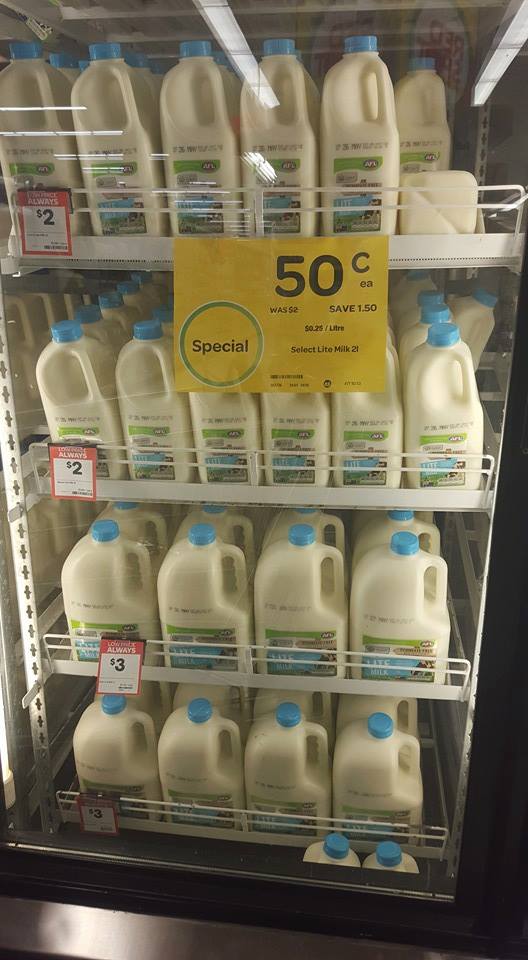
As of 26/05/2016, some Woolworths stores have slashed home brand milk prices to 25c per litre, as Australian shoppers continue their revolt against cheap in-house dairy.

A photo from Woolworths’ Redlands store (near Brisbane) uncovered the discounted two-litre bottles of home brand skim milk.

milk50c

The photo – which showed two-litre cartons of Woolworths’ skim milk sold for 50c each (or 25c a litre) – was then repeatedly posted to Woolworths’ Facebook page by irate customers.

“Hey Woolies people, can you tell me which stores are selling milk for $0.50 for 2 litres? You should be ashamed of yourselves.” Lisa Rowntree wrote.

Woolworths’ response was: “Hey Lisa, due to the close expiry date, these items are being sold at $0.50 to clear the unused stock.”

As if?  Either way the discount price will be absorbed with the other groceries sold by Woolworths!

Airservices Australia guilty over fatal crash

Posted by George Brown on 22/04/2016
Posted in: Aviation, Emergency Services, Fire, Health, Legal, Road Safety, Safety, Transportation, Uncategorized. Tagged: Airservices Australia, Comcare, fatal road accident, NT Fire Service. Leave a comment

The operator of an airport fire engine that ran a red light and killed three people in a crash has been ordered to pay $160,000 to the Commonwealth for breaching the Occupational Health and Safety Act.

See original post here

NT News

Photo: NT News 2015

Renowned architects Greg McNamara, his wife Lena Yali, and Kevin Taylor died when the fire truck, which was on its way to assist at a fire at Wyuna, collided with their car in Darwin in 2011.

The airport fire trucks occasionally assisted on jobs outside of the airport grounds.

Airservices Australia admitted fault in 2013 during a coronial inquest, and conceded the training provided to drivers was not adequate.

But the legal battles have continued, as federal workplace safety organisation Comcare launched additional action against Airservices Australia earlier this year.

They argued it breached the Occupational Health and Safety Act.

The main argument was that Airservices failed to give appropriate training to its employees and did not identify risks to its employees or other road users.

Justice John Reeves today handed down his judgment finding Airservices breached the act and ordered it to pay the fine.

Justice Reeves noted the “airport fire engine was much larger than the majority of other vehicles driven on public roads, and the potential for serious injury and damage if they come into collision with another vehicle or a pedestrian is obvious”.

Posts navigation

← Older Entries
Newer Entries →
  • Calender

    December 2025
    S M T W T F S
     123456
    78910111213
    14151617181920
    21222324252627
    28293031  
    « Nov    
  • Visitors

    • 29,495 hits
  • Enter your email address to follow this blog and receive notifications of new posts by email.

    Join 167 other subscribers
  • Currently Reading

  • My Flickr

    VH-JQG
    More Photos
  • George’s Tweets

    Tweets by georgebrown99
  • Blogs I Follow

    • Ambulance Visibility Blog
    • ryanbreeding's Blog
    • As My Camera Sees It
    • Writings of a Mrs
    • Australian Emergency Law
    • Emerging
    • World Of Alexander The Great
    • Psyche's Circuitry
    • European Scientist
    • Macedonian Orthodox Church Property Trust Bill 2010
    • philosoffer
    • Permalife: an FPS
    • Fortyteen Candles
    • Jeyna Grace
    • About Film
    • onethousandsingledays.wordpress.com/
    • SimplePolitiks
    • retireediary
    • Semper Quaerens
  • This Is Me

    George Brown is a decorated soldier and health professional and 40 year veteran in the field of emergency nursing and paramedical practice, both military and civilian areas. He has senior management positions in the delivery of paramedical services. Opinions expressed in these columns are solely those of the author and should not be construed as being those of any organization to which he may be connected.

    He was born in the UK of Scottish ancestry from Aberdeen and a member of the Clan MacDougall. He is a member of the Macedonian community in Newcastle, and speaks fluent Macedonian. While this may seem a contradiction, it is his wife who is Macedonian, and as a result he embraced the Macedonian language and the Orthodox faith.

    His interests include aviation and digital photography, and he always enjoys the opportunity to combine the two. Navigate to his Flickr site to see recent additions to his photo library.

    Me

    Џорџ Браун е украсени војник и професионално здравствено лице и 40 годишен ветеран во областа на за итни случаи старечки и парамедицински пракса, двете воени и цивилни области. Тој има високи менаџерски позиции во испораката на парамедицински услуги. Мислењата изразени во овие колумни се исклучиво на авторот и не треба да се толкува како оние на било која организација тој може да биде поврзан.

    Тој е роден во Велика Британија на шкотскиот потекло од Абердин и член на Kланот MacDougall. Тој е член на македонската заедница во Њукасл, и зборува течно македонски. Иако ова можеби изгледа контрадикција, тоа е неговата сопруга кој е македонски, и како резултат научил македонскиот јазик и ја примија православната вера.

    Неговите интереси вклучуваат авијација и дигитална фотографија, и тој секогаш ужива во можност да се комбинираат двете. Отиди до неговиот Фликр сајт да видите последните дополнувања на неговата слика библиотека.

  • My Community

    • Unknown's avatar
    • Kunal Rane's avatar
    • Unknown's avatar
    • Unknown's avatar
    • Unknown's avatar
    • Chris Nicholas's avatar
    • Jude's avatar
    • Unknown's avatar
    • Unknown's avatar
    • Gerard's avatar
    • mc cezet's avatar
    • fitrichbitch's avatar
    • Unknown's avatar
    • Andrea Giang | Cooking with a Wallflower's avatar
    • Unknown's avatar
    • Alex Markovich Art's avatar
    • Unknown's avatar
    • LittleFears's avatar
    • Unknown's avatar
    • Unknown's avatar
    • Unknown's avatar
    • Noah's avatar
    • Cristian Mihai's avatar
    • Unknown's avatar
    • Unknown's avatar
    • Unknown's avatar
    • Unknown's avatar
    • MovieBabble's avatar
    • Unknown's avatar
    • Beejai's avatar
    • Unknown's avatar
    • kamalathompson's avatar
    • Unknown's avatar
    • Unknown's avatar
    • throughopenlens's avatar
    • Unknown's avatar
    • Unknown's avatar
    • Unknown's avatar
    • texaslawstudent's avatar
    • feynman's avatar
    • Unknown's avatar
    • Somali K Chakrabarti's avatar
    • Erica's avatar
    • Ruben Arribas | Gamintraveler's avatar
    • Shuttle to Port Canaveral Transportation's avatar
    • Harley's avatar
    • Lilly's avatar
    • Unknown's avatar
    • Rabia 🌿's avatar
    • Unknown's avatar
Create a free website or blog at WordPress.com.
Ambulance Visibility Blog

Emergency vehicle visibility and conspicuity research & comments for the Police, Fire, EMS and Ambulance: The AV Blog is written by John Killeen

ryanbreeding's Blog

Smile! You’re at the best WordPress.com site ever

As My Camera Sees It

Focus, Fun, and Creativity

Writings of a Mrs

I write, blog, vlog and poet...I wander, I ponder and I recollect ...DIGITAL NOMAD & PHILOSOPHER

Australian Emergency Law

Discussion on the law that applies to or affects Australia's emergency services and emergency management, by Michael Eburn, PhD, Australian Lawyer. Email: meburn@australianemergencylaw.com

Emerging

The Butterfly counts not months but moments, and has time enough.

World Of Alexander The Great

"Everything is possible to him who will try"

Psyche's Circuitry

Thoughts on growing up and growing old in the digital age

European Scientist

Blog with Journalistic and Historical articles

Macedonian Orthodox Church Property Trust Bill 2010

Macedonian Orthodox communities in Australia

philosoffer

EVERYTHING AND ANYTHING

Permalife: an FPS

a Feminist Phenomenology (or something)

Fortyteen Candles

Oh, let's see...distinguished Gen-X'er, frustrated writer and mom living in the confines of a small town that thinks it's a big deal. And have I mentioned Walmart yet?

Jeyna Grace

A Story Begins

About Film

Film, Life and Culture

onethousandsingledays.wordpress.com/

SimplePolitiks

retireediary

The Diary of a Retiree

Semper Quaerens

Words, By George!
Create a free website or blog at WordPress.com.
Privacy & Cookies: This site uses cookies. By continuing to use this website, you agree to their use.
To find out more, including how to control cookies, see here: Cookie Policy
  • Subscribe Subscribed
    • Words, By George!
    • Join 167 other subscribers
    • Already have a WordPress.com account? Log in now.
    • Words, By George!
    • Subscribe Subscribed
    • Sign up
    • Log in
    • Report this content
    • View site in Reader
    • Manage subscriptions
    • Collapse this bar
 

Loading Comments...