
Sometimes something that looks legitimate is not always what it seems.
For example, have look at the clip below were UK police pulled over and booked the driver of an ambulance responder unit. The public would have perceived this as an incredulous situation! But, the ambulance turned out to be a bogus unit.
A quick look a the vehicle should have raised suspicion, as the vehicle clearly has no specific ambulance service markings on it, only than the generic word “AMBULANCE” on the front and rear, and the Battenburg pattern hi-viz pattern applied to the exterior of the vehicle, and the blue light bar on the roof.
What the driver of the vehicle expected to achieve by this subterfuge beggars belief! There is no financial reward as a result of this behaviour. Delusions of granduer, perhaps?
However, senior ambulance officers in Britain’s NHS trusts say the ongoing privatisation of ambulance services has meant “sham” crews are able to operate legally. There is nothing illegal in writing “Ambulance” in bold letters across your car or wearing a flashy jumpsuit with “paramedic” emblazoned on it. The use of blue lights and sirens on public roads would constitute an offence.
John Divall, principal training officer of the Royal Berkshire NHS Trust, who has gathered nationwide reports on paramedic impersonators, said: “The NHS Executive Intelligence Unit are aware of this. They’ve been gathering cases of these Walter Mitty people who seem to want to trade on the prestige of real crews. And there is nothing we can do about it.
The other thing of note here is the quiet professional way the police went about their business. No throwing the “offender” against the vehicle, no raised voices, no slamming of doors, no behind-the-back handcuffing. All very quiet and purposeful.
The offender attended caught and was convicted and was fined for his efforts. I am led to believe that he re-offended, and received a prison sentence. He has since been at it again. refer to this article.
A very sad affair, with a man with clear mental health issues. Hopefully whist in prison he may receive treatment for this.
Questions asked of Australia by would be tourists, as posted on the official Australian Tourism Website. The answers are the actual responses by the website officials, who obviously have a great sense of humour and probably also have a low tolerance threshold for stupidity!
Q: Does it ever get windy in Australia ? I have never seen it rain on TV, how do the plants grow? (UK).
A: We import all plants fully grown and then just sit around watching them die.
__________________________________________________Q: Will I be able to see kangaroos in the street? (USA)
A:Depends how much you’ve been drinking.
__________________________________________________Q:I want to walk from Perth to Sydney – can I follow the railroad tracks? (Sweden)
A: Sure, it’s only three thousand miles, take lots of water.
__________________________________________________Q: Are there any ATMs (cash machines) in Australia ? Can you send me a list of them in Brisbane , Cairns, Townsville and Hervey Bay ? (UK)
A: What did your last slave die of?
__________________________________________________Q:Can you give me some information about hippo racing in Australia ? (USA)
A: A-fri-ca is the big triangle shaped continent south of Europe .
Aus-tra-lia is that big island in the middle of the Pacific which does not.Oh forget it. Sure, the hippo racing is every Tuesday night in Kings Cross. Come naked.
__________________________________________________Q:Which direction is north in Australia ? (USA)
A: Face south and then turn 180 degrees. Contact us when you get here and we’ll send the rest of the directions.
_________________________________________________Q: Can I bring cutlery into Australia ? (UK)
A:Why? Just use your fingers like we do…
__________________________________________________Q:Can you send me the Vienna Boys’ Choir schedule? (USA)
A: Aus-tri-a is that quaint little country bordering Ger-man-y, which is
Oh forget it. Sure, the Vienna Boys Choir plays every Tuesday night in Kings Cross, straight after the hippo races. Come naked.
__________________________________________________Q: Can I wear high heels in Australia ? (UK)
A: You are a British politician, right?
__________________________________________________Q:Are there supermarkets in Sydney and is milk available all year round? (Germany)
A: No, we are a peaceful civilization of vegan hunter/gatherers. Milk is illegal.
__________________________________________________Q:Please send a list of all doctors in Australia who dispense rattlesnake serum. (USA)
A: Rattlesnakes live in A-meri-ca which is where YOU come from.
All Australian snakes are perfectly harmless, can be safely handled and make good pets.
__________________________________________________Q:I have a question about a famous animal in Australia , but I forget its name. It’s a kind of bear and lives in trees. (USA)
A: It’s called a Drop Bear. They are so called because they drop out of gum trees and eat the brains of anyone walking underneath them.
You can scare them off by spraying yourself with human urine before you go out walking.
__________________________________________________Q:I have developed a new product that is the fountain of youth. Can you tell me where I can sell it in Australia ? (USA)
A: Anywhere significant numbers of Americans gather.
__________________________________________________Q:Do you celebrate Christmas in Australia ? (France)
A: Yes, but only at Christmas.
__________________________________________________Q: Will I be able to speak English most places I go? ( USA )
A: Yes, but you’ll have to learn it first.
I have always said that wee drop of whisky (in moderation) was good for you. I have a large collection of whiskies (usually single malt) which I enjoy on special occasions.
I recently found this article which seems to support my belief:
The Health Benefits of Whisky:
1. Memory Boost: Whisky contains antioxidants that help improve the health of the brain. Additionally, alcohol boosts blood circulation, both of which contribute to your memory. Also, the ethanol in whisky helps your neurons function properly, which further aids recall.
Whisk(e)y made in the US is referred to as bourbon
2. Stress Relief: In moderation, whisky can reduce stress and calm the nerves. The combination of slowing down brain activity and increasing circulation (which helps provide the body with oxygenated blood), are essential for achieving tranquility.
3. Fight Weight Gain: Compared to its counterparts, whisky is a low-calorie alcohol, free of fat and cholesterol. If you’re on a diet but still want a drink – it’s your best choice.
4. Reduce the Risk of a Stroke: Whisky prevents cholesterol from accumulating in the cardiovascular system and can help remove excess cholesterol from the body. It also relaxes the walls of the arteries, reducing the risk of obstruction. All of these factors help reduce the risk of stroke considerably.
5. Reduce the Risk of Cancer: Whisky contains an antioxidant called ‘ellagic acid’, an acid that stops DNA from coming in contact with cancer-causing compounds, such as nitrosamines and polycyclic aromatic hydrocarbons. It is also beneficial in protecting the body from damage during chemotherapy.
6. Helps with Digestion: For centuries, whisky was considered a digestive aid, to be consumed after a heavy meal. Whisky’s composition and high alcohol percentage also make it an effective appetite suppressant.
7. Live Longer: The antioxidants in whisky help fight free radicals – the number one cause of aging, as well as prevent various diseases. This double-whammy helps your body live a longer, healthier life.
8. Diabetic-Friendly: Containing zero carbs, whisky won’t readily elevate blood sugar levels, making it the number one choice for diabetics. However, alcohol intake significantly increases the risk of hypoglycemia (low blood sugar levels). So if your diabetes is already well controlled, a moderate amount of alcohol may be fine either before, during or soon after a meal. Alcohol (whisky or otherwise) should be drunk in moderation and avoided on an empty stomach. Always consult your doctor for specific advice.
9. Improve Your Heart’s Health: Drinking whisky actually helps your heart stay healthy, similarly to red wine. It reduces the risk of blood clots, thus it can prevent strokes and heart attacks. The antioxidants in the whisky also inhibits the oxidation of low density lipoprotein – a main factor in heart disease.
10. Improve the Health of Your Brain: A 2003 study found that, thanks to the antioxidant qualities of the ellagic acid, moderate consumption of whisky reduces the risk of Alzheimer’s and dementia, and also improves cognitive functions. Basically, one drink a day will keep the brain doctor away.
11. Prevent & Treat Cold and Flu: Whisky is known for its positive effects in battling allergies and colds. It’s an effective cough syrup for people suffering from an itchy throat, and the alcohol helps kill bacteria in the throat. The best results are achieved by adding a little bit of whisky to a cup of hot water and lemon.
Source: Babamail


Some of the legal decisions that come out of the USA, never cease to amaze me. Now a US federal court has ruled that it is OK to wear military medals that you did not earn, and to lie about earning those medals. The wearing of an unearned medal, in my opinion, dilutes the intent conveyed by the medal, thus making the public skeptical when accepting the legitimacy of any medal. That said, the sheer number of medals (144 at last count) available to US servicemen and women, for all aspects of service, weapons handling etc., serves to foster that dilution on its own.
Consider this:
A federal law that prohibited people from wearing military medals they didn’t earn is unconstitutional for the same reason as a law that made it a crime to lie about earning a medal, a US federal appeals court ruled on Monday. It’s a falsehood that is protected by freedom of speech.
In an 8-3 ruling, the Ninth U.S. Circuit Court of Appeals in San Francisco said the now-repealed law against wearing unearned military decorations was a ban on a type of “symbolic speech.” Although the government can forbid falsehoods that cause tangible harm, like fraud or perjury, the Constitution restricts government regulation of expression based solely on its content, the court said.
“Suppressing a symbolic communication threatens the same First Amendment harm as suppressing a written communication,” Judge Sandra Ikuta said in the majority opinion. “Wearing a medal has no purpose other than to communicate a message.”
She cited the U.S. Supreme Court’s ruling in 2012 striking down a related law that prohibited lying about receiving a military honor. That 5-4 decision said the law punished speech without requiring proof of intent to defraud, and that the government had other ways of protecting the public from deception — for example, an easily accessible database of legitimate medal recipients.
A year after that ruling, Congress enacted a revised law that makes it a crime to lie about military honors, but only if the liar intended to profit or defraud someone. The new law does not punish someone solely for wearing an unearned medal.
Dissenters from Monday’s ruling said falsely wearing medals is conduct, not speech, and is potentially more harmful than lying about them.
“The wearing of an unearned medal dilutes the message conveyed by the medal itself,” making the public less likely to accept the legitimacy of any medal, said Judge Jay Bybee, who was joined by Judges N. Randy Smith and Paul Watford. “The lie here is told in a more effective way.”
The ruling came in the case of Elven Swisher, an Idaho man who served in the Marines from 1954 to 1957. In 2001, Swisher filed a claim for Post-Traumatic Stress Disorder benefits, saying he had been wounded and traumatized in a secret combat mission in North Korea in 1955, two years after the Korean War ended. He said an unnamed captain had awarded him a Purple Heart and told him he was entitled to other service medals.
After initially rejecting his claim, the government reversed itself and granted Swisher benefits in 2004 for PTSD from the secret mission. The government canceled the benefits in 2006 after concluding that Swisher’s claims about the mission, the harm he suffered and the medals he earned were fraudulent.
In the meantime, Swisher wore his unearned Purple Heart when he testified as a prosecution witness against David Hinkson, convicted in 2005 of plotting to murder three people, including a federal judge. Despite learning of Swisher’s apparent deception, the appeals court later upheld Hinkson’s convictions.
Swisher, who has never recanted his claims, was convicted of the false-medal charge and three other crimes and has served his one-year sentence. His lawyer, Joseph Horras, said Monday’s ruling was a worthwhile expansion of First Amendment protections.
San Francisco Chronicle, Published: January 12, 2016
The Sydney Daily Telegraph (29/12/2015) headline “Thin Blue Fine” details that NSW Police “Push for more speeding tickets, RBTs to curb (road) toll.” The article goes on to say that traffic cops in NSW are being told to increase the number of random breath tests (RBTs) they perform and to issue more speeding tickets in response to the state’s “soaring” number of fatal road crashes. The NSW road toll for 2015 is 345, which is increase of 34 over 2014.

Highway patrol officers are concerned that their managers have an unrealistic expectation about the number of infringements that can be issued, and the number of RBTs that can be performed.
During my tenure as an emergency services officer, the yearly road toll in NSW has been reduced by 75%, from 1200 deaths annually, to 300. This is due in part to a combination of better car design, more safety features, seat belts, air bags, ABS, traction control and the introduction of RBT and other high profile policing measures. Driver training, experience and ability have remained unchanged. Speeding fines have had no effect in reducing road fatalities.
However, senior police deny that there is “quota” system in place, and emphasise that it is “their duty” to book speeding and drunk or drugged drivers. This author supports this approach, as dangerous and illegal behaviour needs to be eliminated from the roads.
However the issuing of more speeding fines will not stop drivers from speeding. The use of fixed and mobile speed cameras has exploded in NSW with mobile speed cameras now being used for 7,000 hours per month, up from 930 hours per month. But this has done little to reduce speeding. Moreover, the use of these cameras is seen as blatant revenue-raising by the NSW state government, rather than an emphasis on safety. Data reveals that over 50% of all speeding fines issued in NSW are for offences in the lowest category; 1-10 kmh over the speed limit. Less than 1% of fines issued have been for speeds greater than 30 kmh over the speed limit. Revenue from all speed and red-light cameras will be directed into a community road safety fund, the Road & Maritime Service spokesman said.

Government agencies maintain steadfastly that speeding increases the chances of a crash, as well as the likelihood of serious injury or death in a crash. While the latter is true, the former is not so accurate; many drivers who speed and are never involved in an incident or accident. Speed on its own is not the issue. Crashes (including fatalities) occur at all speeds, both high and low. But when speed is combined with alcohol, drugs, fatigue, inexperience, aggression, testosterone, inclement weather or any combination of these factors, the outcomes can be severe. An aggressive driver under the influence of “ice” is a recipe for disaster! Governments steadfastly state that speed cameras help reduce the road toll and lower the chances of having a crash. Our annual reviews show that speed cameras continue to improve road safety in NSW. In my professional experience, speed cameras make drivers slow down, while they pass them, and then drivers resume their usual behaviour thereafter.
Point-to-point speed cameras are used to measure the average speed of heavy vehicles over long distances, there is serious doubt as to the value or effectiveness of these as heavy vehicle drivers are very aware of their existence and adjust their driving accordingly, once past the average speed check zone, truckers resume their usual driving habits. Even if these cameras were used for all vehicles their effectiveness would be suspect.
There is no real effective way to combat all speeding, and many of those detected speeding are repeat offenders who do not seem to learn from the experience. Perhaps mandatory disqualification and/or impounding of vehicles of habitual speeders may be a solution!
In conclusion, there needs to be a greater emphasis on RBT and drug testing, as these two factors will have the greatest impact on reducing road crash fatalities in NSW. Highly visual mobile speed cameras and fixed speed cameras will have no effect on driving habits. Covert detection, where any car or object on the side of the road could be a mobile speed camera, will have the greatest effect on reducing speeding.
 Posted on Friday 4 December 2015
The Forth Road Bridge is to remain shut until the new year after faults were discovered in its steel work, Scotland’s Transport Minister Derek Mackay has said.
The decision to close the bridge was taken by the Scottish Government after inspections carried out by specialist engineers and following advice and
assessment of the fault by independent experts.
Work is already under way to repair the crossing and it is expected to be reopened to traffic in January.
The complete closure of the bridge came into force at midnight, with major tailbacks experienced on diversion routes at rush hour.
Mr MacKay said the decision was “not taken lightly”, and steps are being taken to lessen the impact of the closure.
The problem was first identified during a routine inspection on Tuesday.
Traffic was restricted that evening but it was later decided that the bridge should be closed entirely.
Additional rail, ferry and park-and-ride facilities are to be put in place.
Emergency service vehicles will still be able to use the bridge when responding to calls.
Engineers said a 20mm crack in a truss under the southbound carriageway close to the bridge’s north tower could not have been predicted and happened quickly.
Continuing to allow traffic to use the bridge would “increase the risk of causing extensive secondary damage to the structure”.
Mr Mackay said: “Every effort is being made to open the bridge as quickly as possible but safety is the main priority, however these works are weather dependent given the height and location of the bridge.
“We are aware of the potential economic impact, for strategic traffic in the east of Scotland and on people living in local communities.
“This is an unprecedented challenge in the maintenance of the Forth Road Bridge. On balance following advice from engineers and independent experts, the full closure is essential for the safety of the travelling public and to prevent further damage to the structure of the bridge.
“The bridge operators Amey have a robust inspection team in place and these defects are problems that have only occurred in the last number of weeks.
“We are taking every step we can to lessen the impact of this closure. Action now will mean that any closure is much shorter than it might be if we waited.”
Chartered engineer Mark Arndt, from Amey, said: “This is a complex engineering challenge. The component failure is in a difficult-to-access location and our response is also highly dependent on weather conditions.
“We continue to work around the clock on inspections, assessments and calculations along with the development of designs to effect the necessary repairs, while at the same time mobilising all the resources required to reopen the bridge as soon as is possible.”
Concorde, one of only two commercial supersonic jets ever created, may take to the skies again if an ambitious and dedicated crew of enthusiasts is successful in bringing it back from the dead. Club Concorde, as the group is called, is comprised of former pilots and frequent Concorde fliers and charterers that have kept the spirit of the plane alive over the years. The group now thinks it has enough cash in the bank from private investment to both open a Concorde tourist attraction in London and restore another Concorde for use in air shows and for private charters, according to a report in The Telegraph today.
Concorde, constructed by French aerospace company Aérospatiale and British Aircraft Corporation, was retired after 27 years of commercial service in 2003 due to a number of factors. Those included the plane’s only crash in 2000 and Airbus, the successor to Aérospatiale, ultimately deciding to stop maintenance on the aircraft. A handful of the planes have since become idle displays at airports in the United Kingdom and France. Concorde Club, with around £160 million, wants to purchase two planes located in Paris airports. The first would be turned into a £16-a-person tourist attraction near the London Eye ferris wheel on the waterfront of the River Thames. The proposed attraction would include a restaurant featuring meals originally served on Concorde flights.

Concorde (G-BOAF) – Photo provided by The Verge
Supersonic flights are gaining newfound momentum
The more ambitious initiative is to purchase the second plane, have it restored, and get it in the air once more. Concorde Club president Paul James is aiming to resume flights by 2019, while the tourist attraction would be opened around 2017 if all goes according to plan. British Airways and Air France have no plans to resume commercial Concorde flights, meaning it would likely cost quite a lot of money to grab a private ticket if and when the plane gets off the ground again.
There are a good number of near-flight-ready Concorde aircraft out there, making a Concorde revival more realistic than it sounds. Granted, groups in the past have tried and failed to revive Concorde. Helping the cause this time around are a number of other aviation companies that have begun toying with the idea of supersonic flights. Airbus is looking into a “Concorde Mark 2” supersonic jet that would ferry passengers between New York and London in an hour. Meanwhile, Boston-based Spike Aerospace’s S-512 supersonic jet project, which would encase the interior of a $80 million jet with curved displays, is supposed to enter the manufacturing phase by 2018.
When deposed as prime minister, Tony Abbott pledged: “There will be no wrecking, no undermining, and no sniping.” We all knew what he meant: he would be no Kevin Rudd.
His pledge lasted all of a week before the wrecking, undermining and sniping began. It’s continued this weekend. L’esprit de Rudd is back in the air.
In two interviews with News Corp since his demise – the first brief, the next long and considered – Abbott has shown an embarrassing determination to play the sore loser in spite of his promise that he would not.
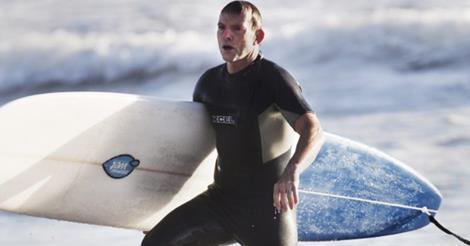
A post-spill surf: Tony Abbott. Photo: Nick Moir
He first undermined Scott Morrison’s reputation just as he took over as Treasurer by effectively calling him a traitor, telling the Daily Telegraph after the top job was already long lost: “I’m afraid Scott badly misled people. He badly misled people. I was doing all I could to save the government, that’s what I was doing.”
Then on Saturday, in another interview with News Corp, he doubled down, this time wrecking Malcolm Turnbull’s pitch that his is a new administration – new people, new approach. As George Brandis went on to fashion it on Insiders on Sunday: “This is a very different government.”
Except not really, according to the leader of the old one. “In a policy sense there is very little departure,” Abbott said, referring to the differences between the Turnbull administration from his. “Border protection policy the same, national security policy the same, economic policy the same … even same-sex marriage policy the same, and climate-change policy the same.
“The policy hasn’t changed and indeed the rhetoric hasn’t changed. Again, it is not about me but obviously these are questions that people may ponder.”
Yet, in giving those interviews, he has made it all about him. He seeks to salvage his trashed reputation, aiming for a long-term revision of it from a disastrous premiership into faithful service of the Australian people which was not given credit for the far-reaching, future-proofing measures he introduced.
His attempt to fashion himself as hero misunderstood is classic myth-making, glossing over the greatest failure of a prime ministership since, well, the last two.
Anyone so brutally kicked out of a job – even if he was not up to it – is entitled to be bitter and surly for a while, but only if kept to a small circle. You can whinge to your family, and to your mates at the pub, but being bitter in public helps no one but your opposition.
Abbott has now managed to kick his successor, his party’s bid for re-election and only helped Labor in its attack lines.
In doing so, he has confirmed the correctness of the Liberal party room’s decision to dump him, and increased the community’s relief that he has gone.
For his sake, and for the prospects of the Turnbull government, he should finish off the business of his departure. Given an apparent inability to play the elder statesman with more grace than he led the nation, he should leave the Parliament and give his reputation a chance of some small recovery with time, service and silence.
He should read The President’s Club, a 2012 account of how former US presidents have found their feet – or not – after leaving office. No one wins when former leaders carp about new ones or the manner of their demise. Reputations are built not by revisionism as to their time in office, but by later actions for the good of the country. Even Richard Nixon managed to recoup some of his lost reputation through service to subsequent presidents.
Abbott’s inspiration should be more George Bush the elder, not Rudd the underminer.
Bush was a oncer, like Abbott, although he got four years in power rather than two. He was defeated by Bill Clinton in a bruising election.
Yet he wrote his successor a letter, left in the White House to be read after the inauguration, which read: “You will be our President when you read this note. Your success now is our country’s success. I am rooting hard for you.”
Leaving the odd Americanism aside, the sentiment is astonishing, not that it should be. Bush was no longer his nation’s leader; Clinton was. The patriotic duty of a patriotic American was to wish for the team leader to succeed.
If Abbott was serious about his team Australia rhetoric, he would see that the country would be better served by him leaving politics. He doesn’t need to be Pope Benedict and disappear, but there’s nothing as damaging to the country than the presence of a bitter ex who’s outstayed his welcome.
Source: Tim Dick is a Sydney lawyer. Twitter: @dick_tim Sydney Morning Herald 27/09/2015
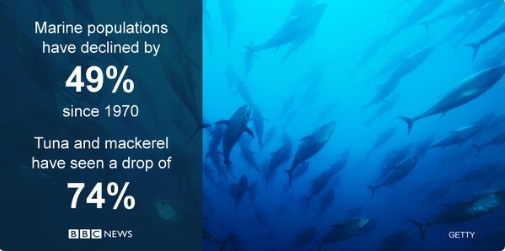
Overfishing. Courtesy: BBC


 Words, By George!