To piously impose a pay freeze on the men and women who keep the state running, paramedics, nurses, firefighters and teachers, while simultaneously helping themselves to tens of thousands of dollars – often for doing absolutely nothing – is an absolute farce.
It is a damning indictment on Premier Mike Baird and Gladys Berejiklian when they declare the state is broke when it comes to improving the modest salaries of public sector workers, but they can easily find a lazy two million to shovel at their mates.
New South Wales is a state being run for the one per cent, and the first members of the elite to get their gravy train top ups are the members of the Baird Government.
It seems Mr Baird is never short of a quid when it comes to bonuses for his MPs and funding for his social media advisers. But when it comes to paying public sector workers with dignity suddenly there’s not a cent.
The State’s public services have been cut to the bone. If there is money to spent it should be on these emergency service personnel and teachers, and not on wholly unnecessary bonuses to government MPs.
Like their Federal Liberal counterparts, the NSW politicians too have their snout in the pay and allowance trough!
Primarily, the Russian people have only been driving for a short time. Prior to the fall of communism in 1989, private ownership of motor vehicles was severely restricted by cost, but more importantly, to restrict the free movement of the population within the former Soviet Union. Access to motor vehicle ownership in the last 27 years has increased exponentially! What has not increased however is the skill, ability, psyche and consideration that goes with the operation of a motor vehicle. Accompanied by this, is a distinct lack of experience, discipline and courtesy needed when driving on a public road.
There also appears to be no concept of consequence in Russia. This results from a lack of lateral thinking which is not nurtured in Russian society as well as their education. So they drive like aggressively without regard for road rules believing they’re not causing any harm. Russians believe the bigger the car they drive, the safer they are. Hence why drivers of 4x4s tend to be even more aggressive then drivers of a Fiat Punto.
Russia: The only place where you can be rear-ended whilst overtaking, driving the wrong way up a one way street!
Corruption
Corruption is rife in Russian which means that money can buy anything, including a driver’s licence. Russian get drivers licences with no knowledge of road rules or even the ability to drive a car! As a result there is little reason to learn the highway code. Thus everyone has their own view as to what the laws of the road really are. Continuing with corruption, if you drive like a idiot and get stopped, you can generally bribe your way our of being punished. Thus there is basically no fear of punishment which reinforces the belief that Russian drivers can behave at the wheel as they wish with impunity. Police are generally nowhere to be seen. They might occasionally pull you over nearer the centre of a city by being flagged down but a police car pulling someone over? Never! There are no cameras, except around the city centre but even if you are sent a fine, there is no system in place to actually guarantee payment of that fine. Many Russians who have been sent a fine have never paid it. So again, you can act without fear of punishment,
“There are only two types of Russians – those who give bribes and those who take them.”
So all in all, this theme finds its way into the Russian psyche. The Russians are not stupid because, if you are stupid, you still know the difference between right and wrong. 80 years of communism has lead Russians to be disillusioned and somewhat primitive. There is a big difference.
Driving in Russia is hazardous: Last year, 200,000 traffic accidents killed 27.025 people in Russia in 2013. Addressing those high levels, President Dmitry Medvedev blamed the “undisciplined, criminally careless behaviour of our drivers,” along with poor road conditions. However, Medvedev made no mention of the totally dysfunctional Russian traffic police!
Russians consistently ignore red lights, overtake on the inside, overtake on the outside when unsafe or blind, speed and couple this with little or no technical expertise or driving ability, this is a recipe for disaster!
While accepting that drivers certainly play a role, Medvedev did not mention Russia’s traffic police, which, “is known throughout their land for brutality, corruption, extortion and making an income on bribes.”
According to information published by New Times(2009), one day’s corrupt income for a traffic policeman is $1000. Everyone regards the law enforcement agencies, chiefly the police, as extortioners in uniform and it is generally recognised that a policeman’s official salary is only part of his income. Medvedev’s police reform, carried out by the police establishment itself, has failed. The overwhelming majority of Russians have no more faith in the police than they did in the Soviet past.
Russia ranks 133rd among the world’s nations in corruption (where number one is the least corrupt), according to Transparency International. So going to the police with a legitimate complaint is far from sure to produce a good result.
In addition to authorities they deem untrustworthy, Russian drivers must contend with the possibility of being attacked by another driver. The below video compiles fights between drivers that feature crowbars, slapping, punching, and worse.
Then there are pedestrians who get themselves hit by cars on purpose, for a payoff. A video compilation (below) of failed scams offers a few examples.
Overall, in a country where traffic conditions are horrible, insurance scams and roadside fights are always a possibility, and the police are widely viewed as corrupt, video evidence of one’s innocence can be a very valuable thing.
There are are number of things which also contribute to this situation:
Harsh climate. It means foggy mornings in the summer, rainy autumns, snowy winters notorious of its blizzards and ice, springs with huge lots of wet dirt.
Poor road conditions. Yes, that is no secret, that the bigger part of roads in Russia are not good. Perestroika, the crisis of 90’s and other economic problems including theft and corruption inside the Road construction department resulted in poor roads conditions
Large distances. It is much more easy and convenient to build and service roads in a small country, neither in Russia where distances between settlements sometimes can be counted in hundreds of km. Living in Siberia, one can take a ride from one city to another and not see civilisation for hours with only taiga forest around. In Australia, large distances are also an issue, but Australians do not have the poor driver behaviour as exhibited in Russia!
The Russian government did not expect people to have so many cars. The number rose dramatically over the last 25 years. In the west, the culture of proper driving was formed over a longer period, while in Russia it just boomed. The problem is much worse for big cities of 1 million citizens or more. Here we see too many cars on tiny roads and a lack of parking spaces. It makes people nervous while driving.
The other factor is culture. Russian people today haven’t learned to respect each other. And they won’t until the economic situation improves.
Vehicles and Vodka
Russia has a long history of alcohol consumption. The average Russian drinks 20 litres of pure alcohol per annum, nearly twice as much as their nearest rival. This of course carries onto the streets of Russia.
According to data, the number of drunk drivers has been steadily increasing in the past few years. In the last eight months of 2012, the number of accidents caused by drunk drivers rose by 3.5%. In that time, there were 152 alcohol related accidents in Moscow, which caused 15 deaths. And Moscow is far from being the worst city in Russia: in the Krasnoyarsk region there were 433 drunk driving accidents over the same period.
Some worry that stricter laws will mean serious punishment even for drivers who don’t drink, since Russia’s laws don’t specify a blood alcohol level at which one is considered drunk. United Russia lawmakers think that establishing specific criteria for drunk drivers is essential to the success of a stricter law. A threshold is important because human blood will always contain some alcohol, which could be detected in blood tests. Russia had an alcohol limit until 2010, but then-President Medvedev thought drivers interpreted the law to mean they could drink up to that point, and changed the law to zero-tolerance.
On the other hand, people who knowingly drink and drive might not be deterred by the new law at all. The police say people who regularly drive under the influence and accumulate suspended licenses for years simply ignore the sanctions (such as the driver in the recent accident in Moscow, whose license had been suspended in 2010 for drunk driving).
In the past two years, more than 18,000 drivers have had their license suspended for drunk driving. Among those drivers, some had been punished for drunk driving 100 times or put in administrative arrest 16 times for driving without a license. The law has no effect on this type of person, so a completely different approach is needed with them. It has been suggested that if they can’t stop themselves from drinking and driving, they need to be under the strict control of the courts and medical staff.”
The Russian Dash-Cam
In Russia, everyone should (and does) have a camera on their dashboard. It’s better than keeping a lead pipe under your seat for protection (but you might still want that lead pipe).
The conditions of Russian roads are perilous, with an insane gridlock in the city and gigantic ditches, endless swamps and severe wintry emptiness of the back roads and highways. Then there are large, lawless areas you don’t just ride into, the police with a penchant for extortion and deeply frustrated drivers who want to smash your face.
Psychopaths are abundant on Russian roads. You best not cut anyone off or undertake some other type of maneuver that might inconvenience the 200-pound, six-foot-five brawling children you see on YouTube hopping out of their SUVs with their dukes up. They will go ballistic in a snap, drive in front of you, brake suddenly, block you off, jump out and run towards your vehicle. Next thing you start getting punches in your face because your didn’t roll up your windows, or getting pulled out of the car and beaten because you didn’t lock the doors. These fights happen all the time and you can’t really press charges. Point to your broken nose or smashed windows all you want. The Russian courts don’t like verbal claims. They do, however, like to send people to jail for battery and property destruction if there’s definite video proof. That is why there’s a new, growing crop of dash-cam videos featuring would-be face-beaters backing away to the shouts of “You’re on camera, fucker! I’m calling the cops!”
Dash-cam footage is the only real way to substantiate your claims in the court of law. Forget witnesses. Hit and runs are very common and insurance companies notoriously specialize in denying claims. Two-way insurance coverage is very expensive and almost completely unavailable for vehicles over ten years old–the drivers can only get basic liability. Get into a minor or major accident and expect the other party to lie to the police or better yet, flee after rear-ending you. Since your insurance won’t pay unless the offender is found and sued, you’ll see dash-cam videos of post hit and run pursuits for plate numbers.
And sometimes drivers back up or bump their pre-dented car into yours. It used to be a mob thing, with the accident-staging specialists working in groups. After the “accident,” the offending driver–often an elderly lady–is confronted by a crowd of “witnesses,” psychologically pressured and intimidated to pay up cash on the spot. Since the Age of the Dash-cam, hustle has withered from a flourishing enterprise to a dying trade, mainly thriving in the provinces where dash-cams are less prevalent.
And then, sometimes, someone will jump under your car at a crossing, laying on the asphalt, simulating a badly hurt pedestrian waiting for that cop conveniently parked nearby. This dramatic extortion scheme was common, until the Age of the Dash-cam. Oh, and there are such juicy, triumphant tales about of would-be extortion victims turning the scheme around and telling the cast members to pay them money or they’re going to jail for this little performance! Don’t try it.
While those lucky enough to traverse the Russian roads with an American or other Western passport are hassled less, the Russian Highway Patrol is notorious throughout their land for brutality, corruption, extortion and making an income on bribes.
Russian websites go for the uncut, the horrible accidents–trucks flipping over, people being smashed into pieces and sedans flying up in the air and exploding. Given that television programing is mostly vacuous and heavily censored, dash-cam videos are very popular in Russia. It’s uncensored–drama, comedy, tragedy, horror, thriller and educational genres fused into one super-genre of “dash-cam.” Who needs Klitschko when you can watch to tough guys box in the street?
To better understand and navigate this “community service”, here’s a Russian Dash-cam Video Thesaurus for the blog tag cloud. It is comprised of purposely misspelled hick and thug slang and phrases used sarcastically…while people die. Ah, Russian humour.
поциент – “Patient.” The poor bastard, the dumb idiot in the video getting pulverized, run over or smashed into. A wordplay of “potz,” the Russian translation of the Yiddish “schmuck.”
летчик – “Pilot.” The idiot who zooms by and crashes in the grand finale of a video.
слабоумие и отвага – “Courage and dementia.”
последние секунды жизни – “Last seconds of life.” Videos featuring persons before and after fatal accidents.
кетай как всегда пиздец – “China is always fucked.” Clips from China that feature severe crashes and frequently feature passersby ignoring the bodies and car debris.
кирпичи – “Bricks” (as in “shitting bricks.”) The audio track often features the driver panting or shouting the entire Russian vocabulary of swears at the top of their lungs. Used for videos with near misses or close shaves.
железобетонное очко – “Anus of Concrete.” Honorific given to drivers who, faced with sudden danger like a huge truck coming head-on, remain calm, only saying “shoot” or “darn” quietly in the background, and efficiently steer away from danger, displaying some seriously fucking great driving skills.
наварра – The infamous video featuring a black Nissan Navarra SUV swerving to the oncoming freight liner and being smashed into a cloud of small pieces. It is the metaphor for a gruesome, intense, fatal accident.
But there are moments of humanity among the Russian people,. At a city accident scene, you could see as many as twenty cars pulling over, drivers running out to the scene. This comes from the recognition of the fact that on a 300-mile stretch of uninhabited territory, help can only come from passing vehicles and not emergency services. Most Russian long-distance routes East of the Ural Mountains are that way. There is really only one highway like that in North America: the Western Canadian to Alaskan Stretch of the Pan-American Highway. The camaraderie between strangers, shoveling the snow and hailing a freight truck or tractor to pull the car out. The kudos. The cheers. The knowledge that you could be very well be next.
And don’t you forget it. Aside from the kindness of strangers, it’s just you and that little gadget versus the hell that is the Russian people on the road.
Sometimes something that looks legitimate is not always what it seems.
For example, have look at the clip below were UK police pulled over and booked the driver of an ambulance responder unit. The public would have perceived this as an incredulous situation! But, the ambulance turned out to be a bogus unit.
A quick look a the vehicle should have raised suspicion, as the vehicle clearly has no specific ambulance service markings on it, only than the generic word “AMBULANCE” on the front and rear, and the Battenburg pattern hi-viz pattern applied to the exterior of the vehicle, and the blue light bar on the roof.
What the driver of the vehicle expected to achieve by this subterfuge beggars belief! There is no financial reward as a result of this behaviour. Delusions of granduer, perhaps?
However, senior ambulance officers in Britain’s NHS trusts say the ongoing privatisation of ambulance services has meant “sham” crews are able to operate legally. There is nothing illegal in writing “Ambulance” in bold letters across your car or wearing a flashy jumpsuit with “paramedic” emblazoned on it. The use of blue lights and sirens on public roads would constitute an offence.
John Divall, principal training officer of the Royal Berkshire NHS Trust, who has gathered nationwide reports on paramedic impersonators, said: “The NHS Executive Intelligence Unit are aware of this. They’ve been gathering cases of these Walter Mitty people who seem to want to trade on the prestige of real crews. And there is nothing we can do about it.
The other thing of note here is the quiet professional way the police went about their business. No throwing the “offender” against the vehicle, no raised voices, no slamming of doors, no behind-the-back handcuffing. All very quiet and purposeful.
The offender attended caught and was convicted and was fined for his efforts. I am led to believe that he re-offended, and received a prison sentence. He has since been at it again. refer to this article.
A very sad affair, with a man with clear mental health issues. Hopefully whist in prison he may receive treatment for this.
The Forth Road Bridge is to remain shut until the new year after faults were discovered in its steel work, Scotland’s Transport Minister Derek Mackay has said.
The decision to close the bridge was taken by the Scottish Government after inspections carried out by specialist engineers and following advice and
assessment of the fault by independent experts.
Work is already under way to repair the crossing and it is expected to be reopened to traffic in January.
The complete closure of the bridge came into force at midnight, with major tailbacks experienced on diversion routes at rush hour.
Mr MacKay said the decision was “not taken lightly”, and steps are being taken to lessen the impact of the closure.
The problem was first identified during a routine inspection on Tuesday.
Traffic was restricted that evening but it was later decided that the bridge should be closed entirely.
Additional rail, ferry and park-and-ride facilities are to be put in place.
Emergency service vehicles will still be able to use the bridge when responding to calls.
Engineers said a 20mm crack in a truss under the southbound carriageway close to the bridge’s north tower could not have been predicted and happened quickly.
Continuing to allow traffic to use the bridge would “increase the risk of causing extensive secondary damage to the structure”.
Mr Mackay said: “Every effort is being made to open the bridge as quickly as possible but safety is the main priority, however these works are weather dependent given the height and location of the bridge.
“We are aware of the potential economic impact, for strategic traffic in the east of Scotland and on people living in local communities.
“This is an unprecedented challenge in the maintenance of the Forth Road Bridge. On balance following advice from engineers and independent experts, the full closure is essential for the safety of the travelling public and to prevent further damage to the structure of the bridge.
“The bridge operators Amey have a robust inspection team in place and these defects are problems that have only occurred in the last number of weeks.
“We are taking every step we can to lessen the impact of this closure. Action now will mean that any closure is much shorter than it might be if we waited.”
Chartered engineer Mark Arndt, from Amey, said: “This is a complex engineering challenge. The component failure is in a difficult-to-access location and our response is also highly dependent on weather conditions.
“We continue to work around the clock on inspections, assessments and calculations along with the development of designs to effect the necessary repairs, while at the same time mobilising all the resources required to reopen the bridge as soon as is possible.”
Consider the above Youtube video. A car passes a cyclist, the cyclist thinks he is too close and decides to pursue the car driver!
I think the cyclist is the road rager here! He actively pursed the car driver through numerous streets through town before catching up with him. The cyclist nearly collides with pedestrians during the pursuit! He deserves being verballed. How much room did the cyclist think he needed and how much room was actually available? Camera wearing cyclists, contrary to their belief, do not own the roads! I know who the Old Bill would be charging. It wont be the car driver!
What do you think?
And it’s not the first time that this camera toting cyclist has had “incidents” with car drivers!
I have often noted the aircraft VH-UER depicted on the Australian $20, and have wondered what it’s history was.
VH-UER on the AU $20 note.
The aircraft was original registered G-AUER was a De Havilland D50A and was used for general aviation until 1928 when it was refurbished for use as the first air ambulance for the Australian Inland Mission (AIM) – as can be seen by the small Maltese Cross under the pilot’s cockpit. Upon starting service under contract for the AIM, The Rev John Flynn, the famous Flying Doctor, renamed it ‘Victory’.
The AIM was the founding organisation of the now Royal Flying Doctor Service, bringing medical services to remote Australian outback communities.
De Havilland D50A VH-UER
This De Havilland could carry a pilot and four passengers at a cruising speed of eighty miles per hour for a range of 500 to 600 miles. In those days, not much territory was charted, and so pilots were forced to navigate by river beds, fences, telegraph lines and other familiar landmarks. Despite these obstacles, in its inaugural year, the Aerial Medical Service (which changed its name to the Flying Doctor Service in 1942 and the Royal Flying Doctor Service in 1955) flew 50 flights to 26 destinations and treated 225 patients. Flynn’s dream had become a reality.
A South Korean court Friday suspended the prison term of the former Korean Air executive whose onboard “nut rage” tantrum delayed a flight last year, immediately ending her incarceration.
Cho Hyun-ah, who is the daughter of the Korean airline’s chairman, did not violate aviation security law when she ordered the chief flight attendant off a Dec. 5 flight, forcing it to return to the gate at John F. Kennedy Airport in New York, according to the Seoul High Court.
Photo: Associated Press
The upper court sentenced Cho to 10 months in prison and then suspended the sentence for two years. It said she was guilty of assault. A lower court had earlier sentenced Cho to a year in prison. She has been locked up since her December arrest.
She achieved worldwide notoriety after an onboard tantrum triggered when a first class flight attendant served her macadamia nuts in a bag instead of on a dish. Cho, head of the airline’s cabin service at the time, had a heated, physical confrontation with members of the crew.
Swarmed by reporters at the court, she made no comment in front of the TV cameras, bowing her head and burying her face in her hands as the media pressed in and yelled for her to say something.
The incident was a lightning rod for anger in a country where the economy is dominated by family-run conglomerates known as chaebol that often act above the law.
Kim Sang-hwan, head of the three judge upper court panel, said that even though Cho used violence against crew members, she should be given a second chance. The judge also cited her “internal change” since she began serving her prison term as a reason for lessening the sentence.
The upper court also took into consideration that Cho is the mother of 2-year-old twins and had never committed any offence before. She has resigned from her position at the airline.
And it seems that chaebol justice has prevailed yet again! Not only was her sentence reduced to 10 months, and then suspended for teo years, they cite that people using violence against others is OK, and should be given a second chance.
In Korea, as in Japan, the class system is alive and well. This judgement has shown once again that the upper classes, the chaebol, can do whatever they like and skirt around the judicial system with impugnity.
Had a lesser person carried out these acts, I’m sure they would be languishing in a U.S. Federal Prison for an undetermined period.
While considering the recent insurgent action in the northern Macedonian city of Kumanovo which resulted in the deaths of eight police officers, I found myself thinking that this was not an action for the Macedonian police (PM), but rather an action which falls under the purview of the Army of the Republic of Macedonia (ARM).
Army of the Republic of Macedonia (ARM)
The role or charter of the ARM is
To protect the lives and the personal safety of the people;
To guarantee the independence and the territorial integrity of the state;
To guarantee the material wellbeing and the prosperity of the people.
Deterring aggression;
Defending the country in case of an aggression;
Uniformity and conformity in the international co-operation in the area of defence.
The Republic of Macedonia maintains a defensive potential and combat readiness of its Armed Forces which function as a deterring factor in case of a potential aggression in accordance with our capabilities
The written role or charter of PM is a little harder to identify. In part their role is to obey and enforce the laws of RoM for the people. It also manages entry, exit and visa activities at international borders point, and international airports, provides security for foreign embassies and consular buildings, and manages and issues passport and passport renewals. It provides policing on the lakes of Macedonia which form international boundaries with Greece and Albania. Again, this is seen as an army role, as they manage the country’s borders generally. Some of these roles are not policing in nature, and can (or should) be managed by other agencies. The Police of the Republic of Macedonia also works closely with the NATO peacekeepers in patrolling areas with high numbers of ethnic Albanians along its borders with Kosovo and Serbia.
It has been stated in the media that the rebel uprising was led by five Kosovars supported by ethnic Albanians from the Kosovo region. As it would appear that this threat arose in a foreign or neighbouring country, repelling it would be a matter for ARM rather that PM.
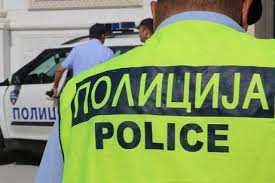
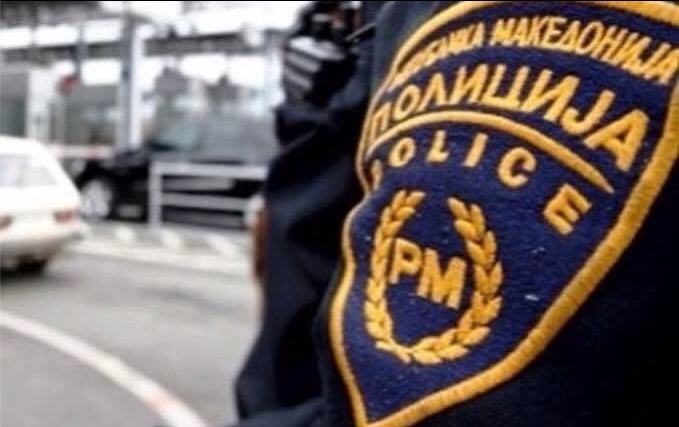
Policija
However, PM sees itself as the superior or premier law enforcement organisation in RoM, with the ARM playing a very clear and distinctly minor secondary role in defence of the country. In the case of this rebel uprising from Kosovo it is clear the police saw this as their role to manage rather than that of the ARM. PM is largely an inefficient, inflexible, authoritarian organisation, political in nature, with many ideas and functions relating to its socialist past. However its role is purely domestic in nature, protecting the citizens of the Republic.
Eight police officers and 14 alleged members of an armed group were killed in fighting in a northern Macedonian town of Kumanovo authorities have said, amid increased concern about the political stability in the Balkan nation that has a history of minor ethnic hostilities.
Interior ministry spokesman Ivo Kotevski said another 37 police officers were wounded in the clashes that started on Saturday. By Sunday Kotevski stated that the police operation was now over and that “one of the most dangerous terrorists groups in the Balkans has been neutralised”.
He said police stated the 14 individuals were believed to be members of the armed group. Some of the killed wore uniforms with insignia of the disbanded Kosovo Liberation Army. No identification documents were found on the deceased.
Macedonia has announced two days of official mourning for the eight PM officers killed in action.
Macedonia says five Kosovars led the armed group which was involved in deadly clashes with security forces in the northern town of Kumanovo.
Northern Macedonia
Eight officers and 14 gunmen were killed in the fighting, Interior ministry spokesman Ivo Kotevski said.
Those named were members of the now dismantled Kosovo Liberation Army.
Mr Kotevski said the operation near the Serbian-Kosovan border was now over and the armed group had been “neutralised”, with a large amount of weapons seized.
Last month, about 40 ethnic Albanians from Kosovo briefly took over a Macedonian police station in the village of Gosince near the border, demanding the creation of an Albanian state within Macedonia.
In 2001, rebels demanding greater rights for the ethnic Albanian minority launched an uprising against the government, and tensions have continued despite a peace deal.
About a quarter of Macedonia’s two million population are ethnic Albanians.
Macedonian police officer on duty.
Sami Ukshini, Beg Rizaj, Dem Shehu, Muhamet Krasniqi and Mirsad Ndrecaj were the leaders of the armed group that clashed with police in a suburb of Kumanovo, some 40km (25 miles) north of the capital, Skopje on Saturday, the interior ministry spokesman said. Only one of the 14 uniformed bodies had been identified – that of another Kosovo national, named Xhafer Zymberi, said the spokesman.
“More than 30 terrorists, mainly Macedonian nationals and one from Albania, surrendered yesterday [Saturday] to the police forces,” Mr Kotevski added. He said 37 police officers were also wounded in the clashes.
Residents returning to the city are finding many of their homes damaged as a result of the fighting, one Reuters reporter at the scene says. “It’s total destruction. Thank God we’re safe,” Haki Ukshini said after finding his home largely destroyed.
The men who surrendered would face Macedonian justice, Prime Minister Nikola Gruevski said.
Macedonian Translation
Македонија вели декапет Косоварипредводешевооружена групакојабеше вклучена восмртоноснитесудирисо безбедносните силивосеверниот градКуманово.
Northern Macedonia
Осумполицајции 14вооружени лица беаубиениво борбите, изјави портпаролот на Министерството за внатрешни работи, Иво Котевски.
Оние што се именуванисечленови на сега веќераспуштенатаОслободителна војска на Косово.
Г-динКотевскирече дека операцијатаво близина насрпско-косовската граница есега повеќеивооружена групабиле “неутрализира”, соголемо количество оружјезапленето.
Минатиот месец, околу 40 етнички Албанци одКосовократкоја презедемакедонскиполициската станицаво селотоГошинцево близина на границата, барајќи создавање на албанскадржава воМакедонија.
Во 2001 година,бунтовницитекои бараа поголеми праваза етничкото албанскомалцинствозапочнавостание против владата, а тензиите продолжијаи покрајмировниот договор.
Околу една четвртинаод двамилиони жителина Македонијасе етнички Албанци.
Macedonian police officer on duty.
СамиUkshini, БегРизај, DemШеху, Мухамет Красниќи иМирсадNdrecajбиле водачи навооружената групакојасе судрија со полицијатаво предградието наКуманово, некои 40 километри (25 милји) северно од главниот град, Скопје, во саботата, портпаролот наМинистерството за внатрешни работирече. Самобиле идентификуваниеден од 14-униформирани тела –на другаКосовонационална,именуванXhaferZymberi, изјави портпаролот.
Жителитесе враќаат воградотсе најдатмногу однивните домовиоштетени како резултатна борбите, еденновинарна Ројтерсна местото на настанот, вели. “Тоа ецелосно уништување.Фала му на Боганиесме безбедни“, рече ХакиUkshiniпо наоѓање нанеговиот домво голема мера уништен.
Мажитекоисе предадоаќе се соочи сомакедонското правосудство, рече премиерот НиколаГруевски.
George Brown is a decorated soldier and health professional and 40 year veteran in the field of emergency nursing and paramedical practice, both military and civilian areas. He has senior management positions in the delivery of paramedical services. Opinions expressed in these columns are solely those of the author and should not be construed as being those of any organization to which he may be connected.
He was born in the UK of Scottish ancestry from Aberdeen and a member of the Clan MacDougall. He is a member of the Macedonian community in Newcastle, and speaks fluent Macedonian. While this may seem a contradiction, it is his wife who is Macedonian, and as a result he embraced the Macedonian language and the Orthodox faith.
His interests include aviation and digital photography, and he always enjoys the opportunity to combine the two. Navigate to his Flickr site to see recent additions to his photo library.
Џорџ Браун е украсени војник и професионално здравствено лице и 40 годишен ветеран во областа на за итни случаи старечки и парамедицински пракса, двете воени и цивилни области. Тој има високи менаџерски позиции во испораката на парамедицински услуги. Мислењата изразени во овие колумни се исклучиво на авторот и не треба да се толкува како оние на било која организација тој може да биде поврзан.
Тој е роден во Велика Британија на шкотскиот потекло од Абердин и член на Kланот MacDougall. Тој е член на македонската заедница во Њукасл, и зборува течно македонски. Иако ова можеби изгледа контрадикција, тоа е неговата сопруга кој е македонски, и како резултат научил македонскиот јазик и ја примија православната вера.
Неговите интереси вклучуваат авијација и дигитална фотографија, и тој секогаш ужива во можност да се комбинираат двете. Отиди до неговиот Фликр сајт да видите последните дополнувања на неговата слика библиотека.
Discussion on the law that applies to or affects Australia's emergency services and emergency management, by Michael Eburn, PhD, Australian Lawyer. Email: meburn@australianemergencylaw.com
Oh, let's see...distinguished Gen-X'er, frustrated writer and mom living in the confines of a small town that thinks it's a big deal. And have I mentioned Walmart yet?
 Posted on Friday 4 December 2015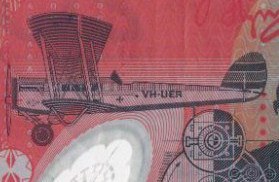





 Words, By George!